
Federal Circuit entry shows another old Trump fight still lingering
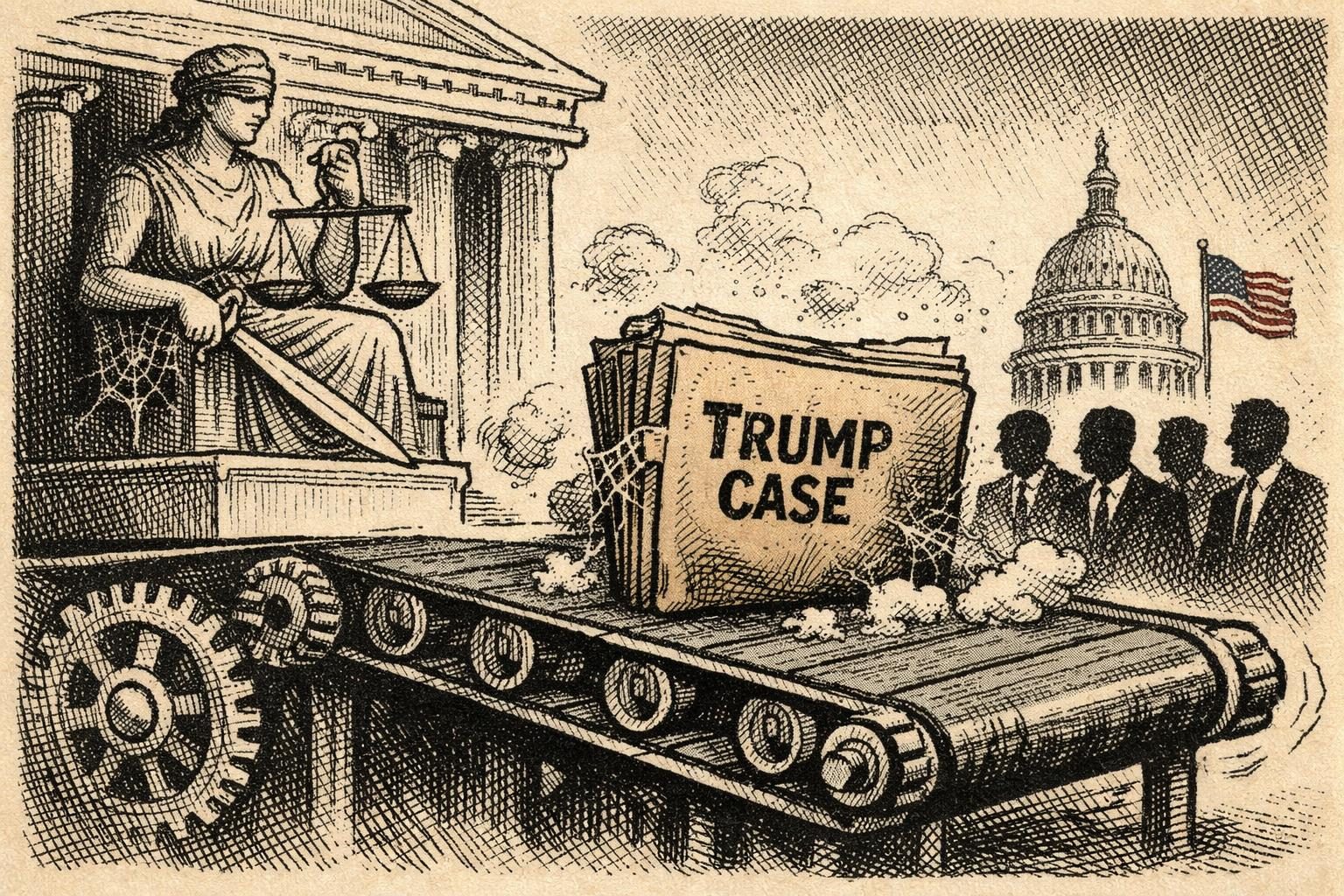
A fresh entry on the federal appellate docket suggests that at least one older Trump-related case is still grinding along long after the political moment that produced it first came and went. On Aug. 29, 2026, a Federal Circuit matter tied to the Trump era remained visible in the court record, a small but unmistakable sign that the legal afterlife of that period is still very much with us. The update itself is procedural and, by ordinary standards, not especially dramatic. Even so, procedural updates are often the clearest evidence that a case has not disappeared, been mooted, or otherwise slipped out of the system. In a political environment as litigation-heavy as the one that developed around Trump, that kind of continued docket presence is its own form of news.
What makes this entry worth noting is not that it appears to alter any policy outcome or resolve any major legal dispute. It does not, at least on its face, point to a sweeping ruling, a new emergency, or a fresh constitutional confrontation. Instead, it underscores how much of the federal judiciary’s workload remains occupied by disputes seeded in the last cycle and never fully cleared away. The courts have a way of moving at their own pace, but that pace becomes more visible when older cases keep resurfacing alongside the next round of election-season and governance fights. The result is an institutional overlap in which yesterday’s grievances keep sharing space with today’s power struggles. Even when a filing is minor, it reminds everyone involved that the system is still carrying unfinished business.
That lingering quality matters because it creates a kind of legal and political drag that is easy to overlook in the moment and harder to ignore over time. Judges, clerks, lawyers, and litigants are forced to keep revisiting disputes that might have seemed dormant if one looked only at the political calendar. For the public, the effect is subtler but still real: the same conflicts continue to appear in slightly revised forms, under new captions, with new deadlines, but often with the same underlying tensions intact. There is a difference between a case that is truly over and one that is merely quiet, and docket entries like this one tend to expose that difference. They show that the federal courts are not only deciding the present; they are also still cleaning up the residue of the last political era. That is not a sensational development, but it is an important one for understanding how much unresolved litigation still defines the national backdrop.
The practical consequences of this particular filing may be limited for now, and it would be overstating things to claim that a single docket update changes the balance of power. Still, the cumulative effect of these small entries can be significant. Each time an old Trump-related matter appears again, it reinforces the sense that the justice system never quite gets a clean break from the previous round of conflict. That can be frustrating for courts that would prefer a tidy queue and for political actors who would rather move on to fresh fights. Yet the legal system, especially in high-profile political disputes, rarely offers that kind of closure on command. The broader picture is one of repetition and persistence, with old cases continuing to consume attention, resources, and calendar space even as new controversies arrive. In that sense, the filing is less a dramatic twist than another reminder that the legal machinery set in motion during Trump’s rise is still turning, and may keep turning for some time to come.
Comments
Threaded replies, voting, and reports are live. New users still go through screening on their first approved comments.
Log in to comment
No comments yet. Be the first reasonably on-topic person here.