
The Fifth Circuit’s weekend posture shows the federal courts still grinding through August
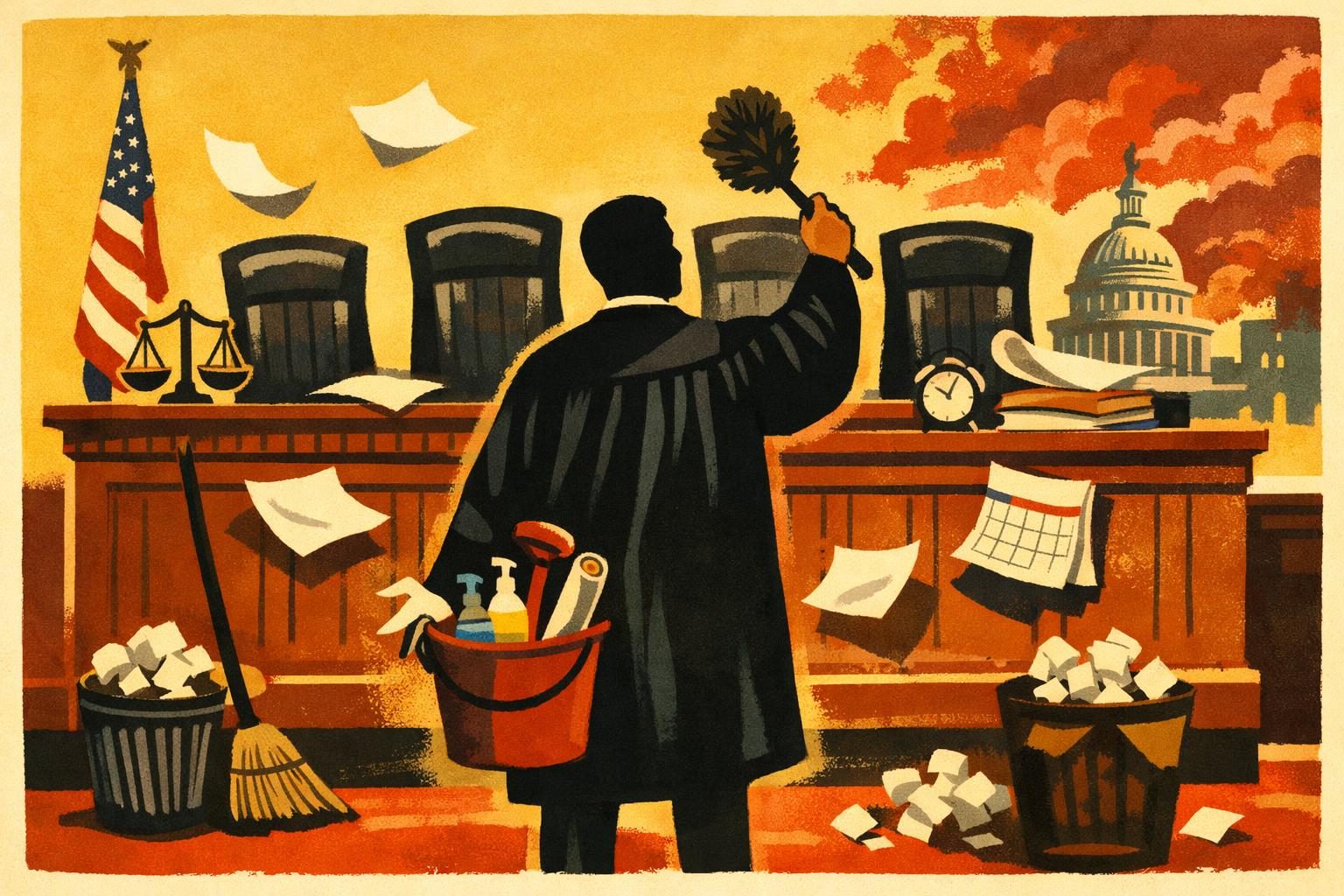
The Fifth Circuit’s public website on Aug. 29 presented a fairly ordinary weekend picture: no oral argument session on the calendar, and recent administrative notices still sitting in view on the court’s front page. That may sound like the sort of institutional housekeeping only lawyers and court-watchers notice, but it is still a live snapshot of a federal appellate court doing business on a Saturday. The absence of a hearing calendar is not itself a story of conflict or consequence, and it should not be overstated as one. Still, the page reflects the court’s active posture on the date in question, which is enough to make it part of the current record rather than a dead archival detail.
That matters because federal courts are often where political fights eventually become operational realities. When the elected branches spend the week producing arguments, orders, and outrage, the judiciary is usually the place that has to sort out the practical aftermath. A light weekend docket does not mean the court is idle; it usually means the institution is doing the quieter work that keeps a calendar, a caseload, and a chain of notices functioning. Those administrative notices on the front page are a reminder that courts do not only issue major opinions when everyone is watching. They also manage filings, deadlines, scheduling, internal procedure, and all the background machinery that makes the system usable when a high-stakes case suddenly lands.
The Fifth Circuit in particular tends to occupy a consequential space in the federal system because its decisions often intersect with major disputes over regulation, criminal law, administrative power, and the boundaries of government authority. That is one reason even a plain weekend status update can be worth noting. It underscores the difference between the noisy politics of Washington and the slower, more procedural life of the judiciary. The court’s public-facing materials do not need to announce a bombshell to matter; they show how the institution is working in real time, including during a quiet August weekend. For observers trying to understand how federal power actually moves, these mundane details can be more revealing than the grandstanding that dominates the political cycle.
There is no scandal buried in this specific item, and no reason to manufacture one. The significance here is modest and institutional: the court remained open in the sense that it was still maintaining its public docket, still displaying administrative notices, and still reflecting the ongoing business of the federal judiciary as of Aug. 29. That is especially relevant in a season when the country’s political branches can seem permanently overheated, while the courts continue carrying out a different kind of work, usually without applause. The judiciary’s routines are easy to ignore until they are not. And when a controversial case does arrive, the world tends to rediscover that the court system is not a theatrical backdrop at all, but the mechanism that has to absorb the consequences of everyone else’s chaos. In that sense, the Fifth Circuit’s weekend posture is a small but useful reminder that the federal courts keep grinding through August whether the rest of Washington feels like cooperating or not.
Comments
Threaded replies, voting, and reports are live. New users still go through screening on their first approved comments.
Log in to comment
No comments yet. Be the first reasonably on-topic person here.