
House schedule shows lawmakers back Monday with shutdown-season pressure building
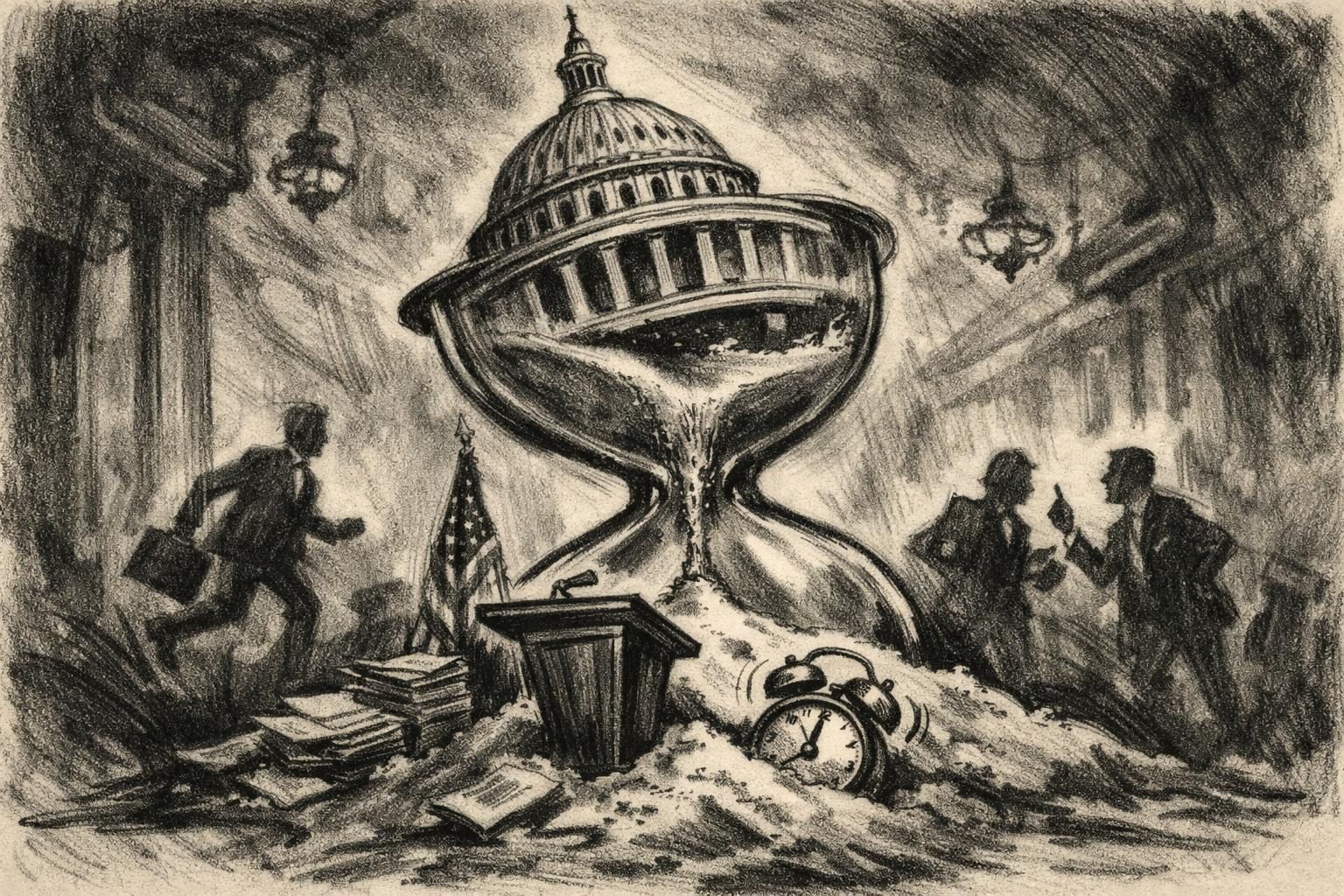
The House is set to come back into session on August 31 at noon, according to the chamber’s public calendar, and the timing says as much about Washington’s condition as the agenda itself. On paper, this is just a return to work after a break. In practice, it lands in the middle of a period when lawmakers are staring down a crowded slate of unfinished business, with basic governing choices still unresolved and the next budget confrontation already hanging over the Capitol. A simple date on the schedule becomes more meaningful when the institution behind it has spent so much of the year moving from one deadline to the next. The return does not solve any of the larger problems waiting on members’ desks, but it does force those problems back into the room.
That room is not starting from a position of ease. House leadership has a pile of issues to manage, including records legislation and other business that has not yet been settled, while the broader fight over federal spending keeps inching toward another pressure point. The calendar itself is routine, but the context around it is not. Congress is once again approaching the familiar annual struggle over whether it can keep the government funded without stumbling into another crisis of its own making. That reality gives the return date extra weight, because it means lawmakers are walking back into a chamber where the next few decisions are likely to be judged less by their ambition than by their ability to avoid making everything worse. In a normal year, a resumption of session would be a matter of routine floor scheduling. This year, it reads more like a warning light.
The pressure is amplified by the broader political environment surrounding the chamber. Washington has already spent much of the year defined by high-stakes executive action, legal fights, and an atmosphere in which every governing dispute seems to spill into the next one. In that setting, the House’s return is not just about what bills can move. It is about whether Congress can still perform the basic work that keeps the federal government functioning while the rest of the political system continues to generate noise, conflict, and instability. The Senate remains divided, the White House has little incentive to reduce the temperature, and that leaves the House with the burden of trying to produce some kind of order out of a schedule that is already crowded with unresolved conflicts. The institution is not being asked to solve every national problem at once, but it is being asked to show it can still handle the ordinary mechanics of governance. That is a lower bar than leadership usually wants to admit, and one that has become harder to clear.
What makes the August 31 return notable is not that it marks some dramatic turning point. It does not. It is notable because it underscores how often Congress now operates under the shadow of the next deadline instead of in command of the calendar. The House will gavel back in with enough unfinished work to keep members busy and enough looming fiscal danger to keep the atmosphere tense. Whether leadership can move records legislation, clear other pending items, and prepare for the budget fight without another round of internal paralysis remains to be seen. But the broader pattern is already clear: a legislature that keeps arriving late to its own crises is helping create the conditions for yet another avoidable mess. That is what makes this seemingly mundane schedule item matter. It is less a sign of normalcy than a reminder that, in Washington, even a return to session can feel like another stress test for the system.
Comments
Threaded replies, voting, and reports are live. New users still go through screening on their first approved comments.
Log in to comment
No comments yet. Be the first reasonably on-topic person here.