
Texas releases ICE officer sought by Minnesota in shooting case, escalating an ugly interstate fight
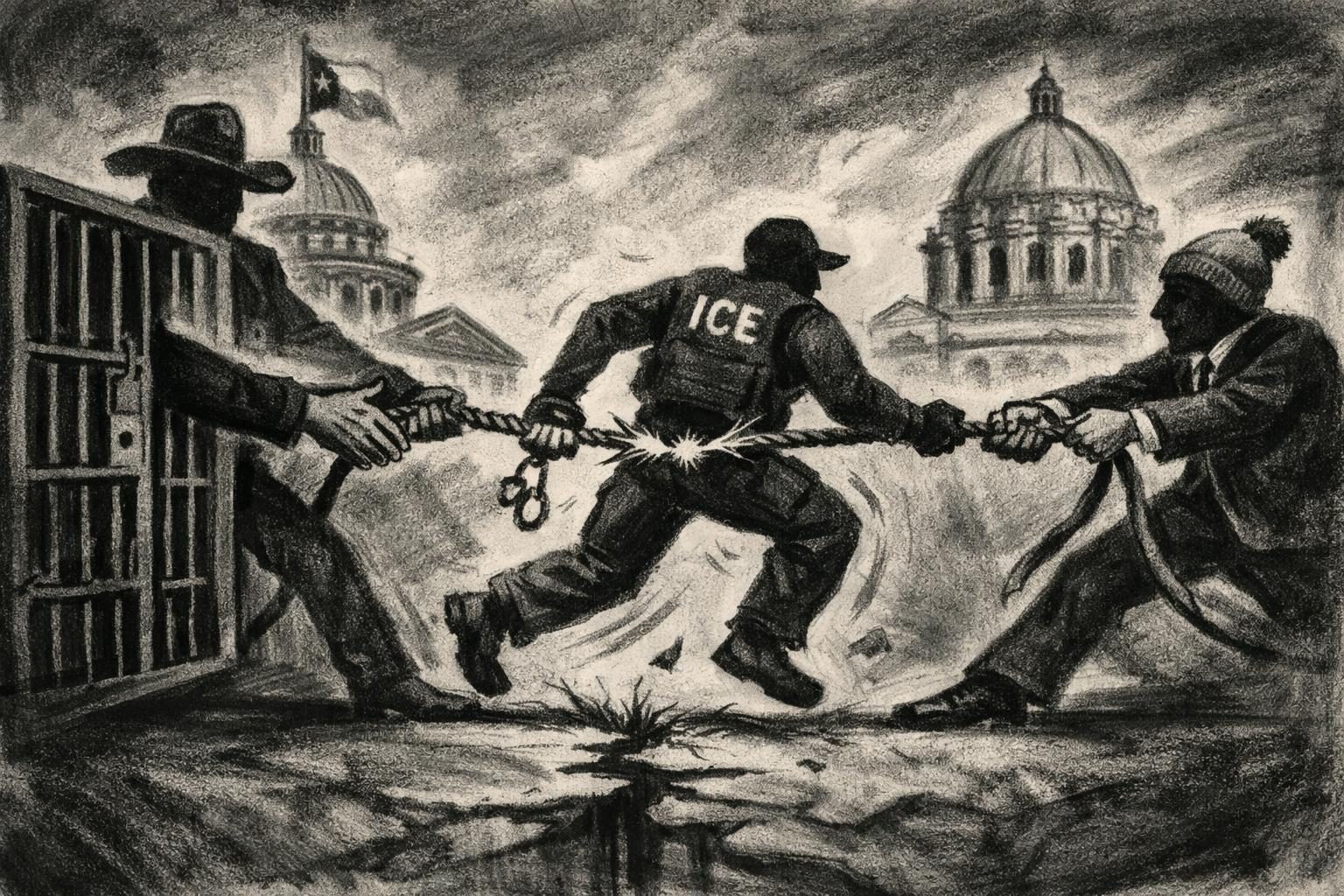
A Texas detention facility’s decision to release ICE officer Christian Castro on Aug. 28 has turned a criminal case into a broader interstate showdown, one that now sits at the uncomfortable intersection of immigration enforcement, state prosecution power and basic questions of accountability. Minnesota prosecutors say Castro shot a man and then lied about it during an immigration crackdown earlier this year, and they have been trying to bring him back north to face charges. But after a federal judge declined to block the release or force Texas officials to honor Minnesota’s extradition request, Castro walked free instead of being transferred back into Minnesota custody. The immediate result is more than a procedural hiccup. It is a live political dispute with legal consequences, and it is already forcing officials in both states to defend choices that look, from the outside, like they were designed to keep the case from moving cleanly forward.
The core problem is straightforward, even if the legal path is not. Minnesota wants Castro returned so its prosecutors can pursue charges tied to the shooting and the statements they say he made afterward. Texas, meanwhile, did not immediately sign the extradition warrant, and that hesitation proved enough for Castro to avoid being sent north. In practical terms, a federal-state custody question became a race between paperwork, judicial restraint and political will, with no one stepping in fast enough to stop the release. The result has infuriated Minnesota officials, who fear that Castro could flee and become harder to reach if the legal process drags on. It also raises the obvious question of whether a defendant who is accused of serious conduct while carrying out immigration enforcement duties can, in effect, end up insulated by the very system meant to hold him to account. For critics, the optics are terrible: a man accused of violence in the line of duty, and accused of dishonesty afterward, is not being swiftly returned to face a local prosecution but instead is slipping through the cracks of a divided system.
The case is gaining outsized significance because it is no longer just about one officer or one shooting. It is now being read as a test of whether federal immigration agents can be treated like anyone else when serious allegations arise, or whether the machinery of enforcement can produce a kind of built-in protection once the political stakes get high enough. That concern is not merely rhetorical. If one state can effectively prevent another state from securing custody in a criminal case involving an ICE officer, then future cases involving police, federal agents or politically volatile enforcement actions could get stuck in the same kind of standoff. Legal experts are already warning that the release may encourage defendants to exploit jurisdictional seams, especially when custody and authority are split among state, federal and local actors. In that sense, this is not just an extradition mess; it is a stress test for the entire idea that legal responsibility should follow the person, not the office they hold. And if the system cannot answer that question cleanly now, it is not hard to imagine how many other cases might be delayed, diluted or redirected when the next high-profile arrest lands in the middle of a political fight.
The Trump administration’s reported argument that ICE agents have “absolute immunity” for on-duty conduct only sharpens the stakes, because that claim would turn a narrow custody dispute into a sweeping theory of protection. If such a view were accepted broadly, accountability for serious wrongdoing by immigration officers would become much harder to enforce, and public confidence in the fairness of the process would take another hit. That is especially corrosive in an immigration climate already defined by suspicion, hardline rhetoric and a growing sense among critics that enforcement is being insulated from ordinary legal checks. Minnesota officials are trying to move a criminal case forward. Texas officials, or at least the state machinery around them, have not moved fast enough to ensure that happens. Federal courts have so far declined to force the issue in the way Minnesota wants. All of that leaves Castro in a legal gray zone where the public can see the outline of responsibility but not the certainty of consequence. The longer that ambiguity lasts, the more it invites the suspicion that power, rather than law, is deciding who actually faces the courtroom.
The fallout from this episode is likely to be messy and prolonged, with state-federal tension now layered on top of an already volatile immigration debate. Public trust is likely to erode further if people conclude that officers are shielded from the same processes that apply to everyone else, or that extradition rules can be slowed, sidestepped or ignored whenever the politics become inconvenient. That perception would be damaging even if the underlying legal disputes eventually resolve in one direction or another, because the damage comes from the uncertainty itself. Every future immigration-enforcement incident now carries the shadow of this case, and every delay in Castro’s return will only deepen the sense that the system has trouble policing its own. If law is supposed to create a shared standard, this episode is doing the opposite by teaching everyone involved how to dodge one. Whether that outcome was intentional or simply the result of bureaucratic and judicial hesitation, the message is already clear: when accountability collides with politics, the road to justice can disappear into a border crossing, a filing deadline and a government that cannot decide who is really in charge.
Comments
Threaded replies, voting, and reports are live. New users still go through screening on their first approved comments.
Log in to comment
No comments yet. Be the first reasonably on-topic person here.