
Another judge blocks Trump’s mail-ballot order, for now
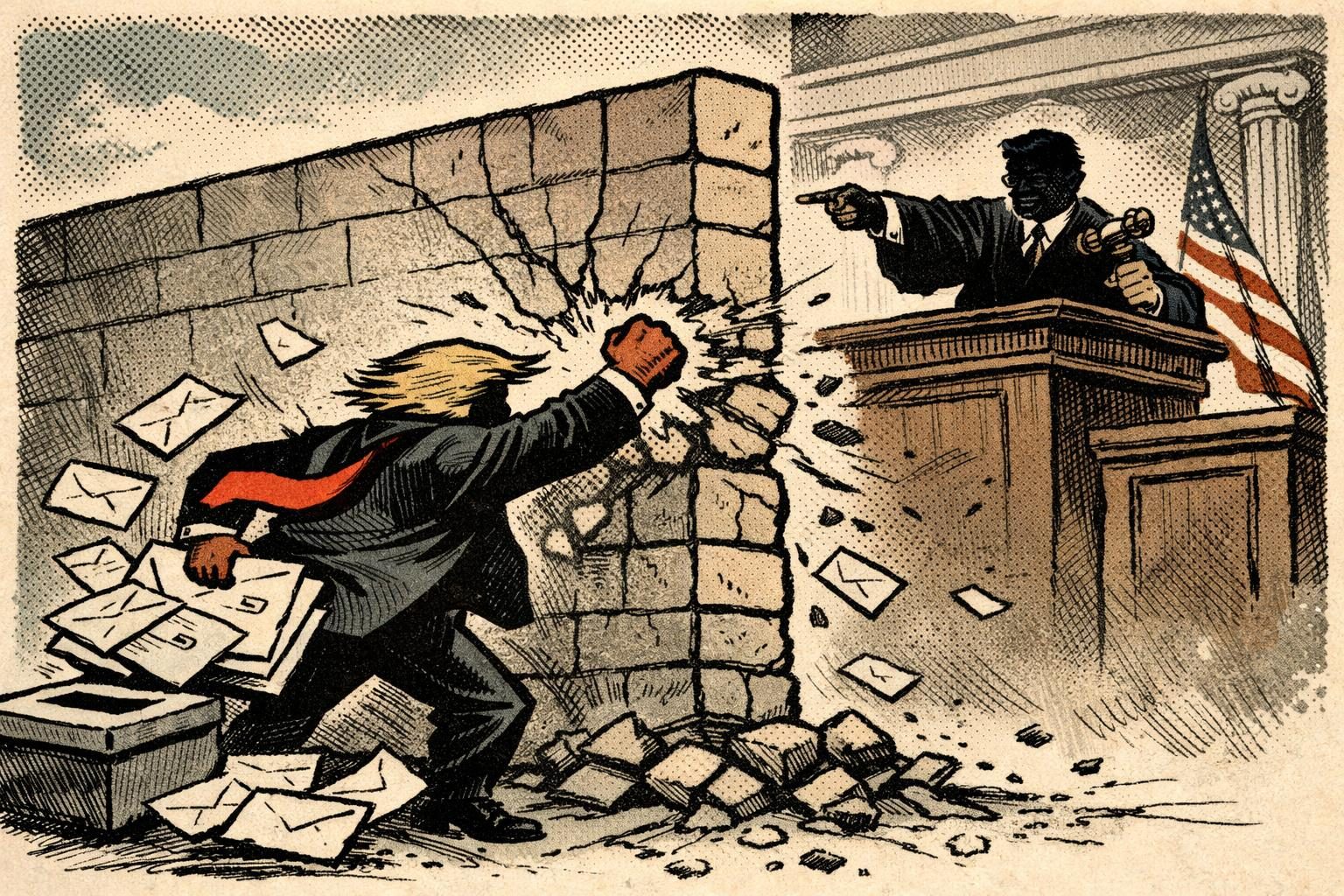
A federal judge in Massachusetts has again put a temporary stop to President Trump’s effort to impose new limits or changes on mail voting by executive order, leaving the administration once more on the losing end of a fight it has tried to frame as a common-sense cleanup of election rules. The order issued on August 29 does not end the dispute, and it does not settle the larger constitutional questions around the White House’s authority. But it does do the same thing the court has been doing throughout this legal scramble: it blocks the government from turning presidential preference into election procedure before the case is fully resolved. That is a meaningful interruption, not a technicality. When the machinery of voting is involved, even a temporary stop can matter a great deal because election officials need certainty, not improvisation. The result, for now, is that the administration’s mail-ballot order remains stuck in court instead of moving into practice.
The ruling fits into a broader pattern of judicial resistance to attempts to centralize election administration in the executive branch. Voting rules in the United States are not supposed to be whatever the White House wants them to be on a given week, and the courts have been repeatedly forced to remind the administration of that basic fact. Mail voting, in particular, is governed by a mix of federal, state, and local rules that involve election administrators, legislatures, and statutory procedures. A president can certainly criticize those systems, but criticism is not the same as authority. The judge’s latest intervention suggests that the court is still unconvinced that the administration can simply dictate new ballot-handling rules from Washington and expect them to stick. It also shows that the legal theory behind the order remains vulnerable. If the executive branch cannot point to clear legal power to make the changes it wants, then every attempt to move ahead invites the same response: a pause, a challenge, and likely more litigation.
That is why this dispute matters beyond the immediate paperwork fight. The administration has presented its approach as an effort to tighten election integrity, but critics see a solution in search of a fraud problem. Mail voting has become a recurring target because it is both widely used and easy to cast as suspicious, even when the evidence does not support sweeping claims of abuse. Courts do not have to resolve the broader political debate to see the legal problem. They only have to ask whether the president can unilaterally reshape the mechanics of how ballots are issued, returned, processed, or counted. So far, the answer keeps coming back as no, or at least not without much stronger legal footing than the administration has shown. That is not just an embarrassment for the White House; it is a warning to any administration tempted to treat election law like an executive directive instead of a statutory system. Every time the government pushes the envelope, it risks another injunction, another emergency motion, and another reminder that federal power has limits.
For election officials, the practical consequence is continued uncertainty at exactly the wrong time. Local and state administrators are expected to prepare for a federal election without knowing whether a court will block the next step, modify the next rule, or leave the current order in place. That kind of instability is costly, time-consuming, and disruptive, especially when ballots, deadlines, voter education materials, and processing procedures all have to be set well in advance. The legal fight also creates political damage for the administration, because repeated losses make the effort look less like a serious reform agenda and more like a campaign against the courts themselves. When the subject is voting, that is not a good look. It signals a White House willing to test the outer edge of its authority and a judiciary still prepared to push back. For now, the administration has been told once again that it cannot simply declare a new election policy and expect it to take effect. And unless the legal basis for the order becomes a lot sturdier, this is likely to remain a recurring lesson rather than a one-time setback.
Comments
Threaded replies, voting, and reports are live. New users still go through screening on their first approved comments.
Log in to comment
No comments yet. Be the first reasonably on-topic person here.