
The Kennedy Center renovation fight just got more absurd, and more legally fraught
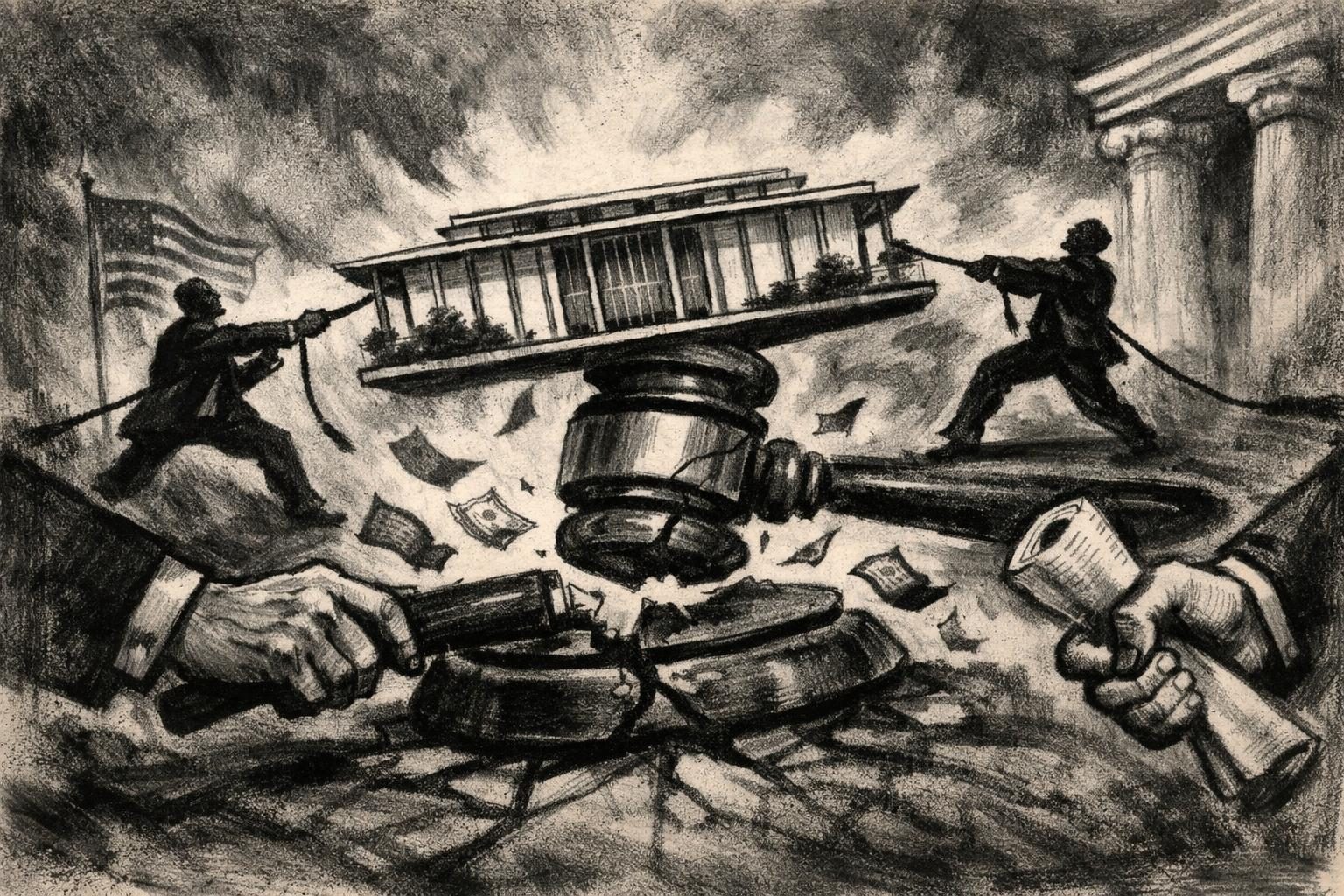
The Kennedy Center’s long-running renovation dispute took a stranger and more ominous turn this week, after Justice Department lawyers floated the possibility that parts of the complex could be taken down if the current plan is blocked. The filing did not present demolition as a casual aside, and it was not written like the kind of dry procedural footnote that normally disappears into the legal weeds. Instead, it read like a signal that the fight over the project has moved well beyond ordinary questions of architecture, budgeting, or construction sequencing. What began as an institutional dispute over how to manage a major public venue is now being framed in language that suggests the administration is prepared to consider drastic remedies rather than lose control of the project. That is not just unusual; it is the sort of move that makes a routine dispute feel like a constitutional mood piece.
At the center of the fight is a familiar Washington problem: who gets to decide how a public institution is run, who gets credit for shaping it, and who is allowed to say no. The Kennedy Center is not some private club where a donor can quietly swap out the wallpaper and move on. It is a federally significant cultural institution with symbolic weight far beyond its walls, which means any attempt to assert control over its future tends to carry political consequences. Renovation plans are normally the sort of thing that generate engineering headaches, cost overruns, and squabbling about aesthetics. Here, though, the dispute has become entangled with questions of authority, patronage, and whether a government project can be used as a pressure point in a broader power struggle. The filing’s tone suggests that the administration is treating the renovation not merely as a public works issue but as a test of who sets the terms when institutional resistance gets in the way. That gives the whole affair a sharper edge, because it implies the project may be less about restoring a building than about demonstrating dominance.
The legal posture matters because it changes the stakes for everyone involved. Once demolition enters the conversation, even hypothetically, the debate stops being about preserving a design or protecting a budget line and starts becoming about potential damage to a national arts institution. Preservationists will hear that as a warning flare, lawmakers are likely to hear it as a threat, and the public is left to wonder why a renovation disagreement has started to sound like a coercive bargaining tactic. In ordinary circumstances, an administration would be expected to defend its preferred plan, negotiate around obstacles, or revise the scope of work if legal or practical limits intervene. What makes this episode so jarring is the suggestion that the response to resistance may be to escalate until the institution itself becomes the object of pressure. That is an especially volatile posture when public money, public ownership, and public symbolism are all in play. It also raises a basic governance question: if a major cultural facility can be put on the table as something that might be torn apart rather than compromised over, then what exactly is off limits when policy disputes become personal or political?
The broader pattern is recognizable even if the specifics are a little surreal. The Trump-era habit of turning discretionary government action into a loyalty test has already shown up in different forms: institutional reshuffling, threats of retaliation, and an instinct to convert procedural disagreements into demonstrations of force. The Kennedy Center dispute fits that mold neatly, because it takes a cultural asset that should be governed with a measure of stability and turns it into another arena for asserting control. That does not mean the demolition language will necessarily translate into actual demolition, or that every hard line in a filing reflects a settled plan. It does mean the administration appears willing to contemplate severe consequences in order to preserve leverage, and that is telling on its own. The immediate legal issue may still be narrow, but the political meaning is broad: a public arts institution is being treated less like a shared civic landmark than like a bargaining chip in a struggle over authority. If that is where this is headed, then the renovation fight has already become something much larger than a construction dispute. It has become a test of how much damage politics is allowed to do before anyone decides the building matters more than the grudge.
Comments
Threaded replies, voting, and reports are live. New users still go through screening on their first approved comments.
Log in to comment
No comments yet. Be the first reasonably on-topic person here.