
Trump’s noncitizen-voting crusade keeps running into fact and law
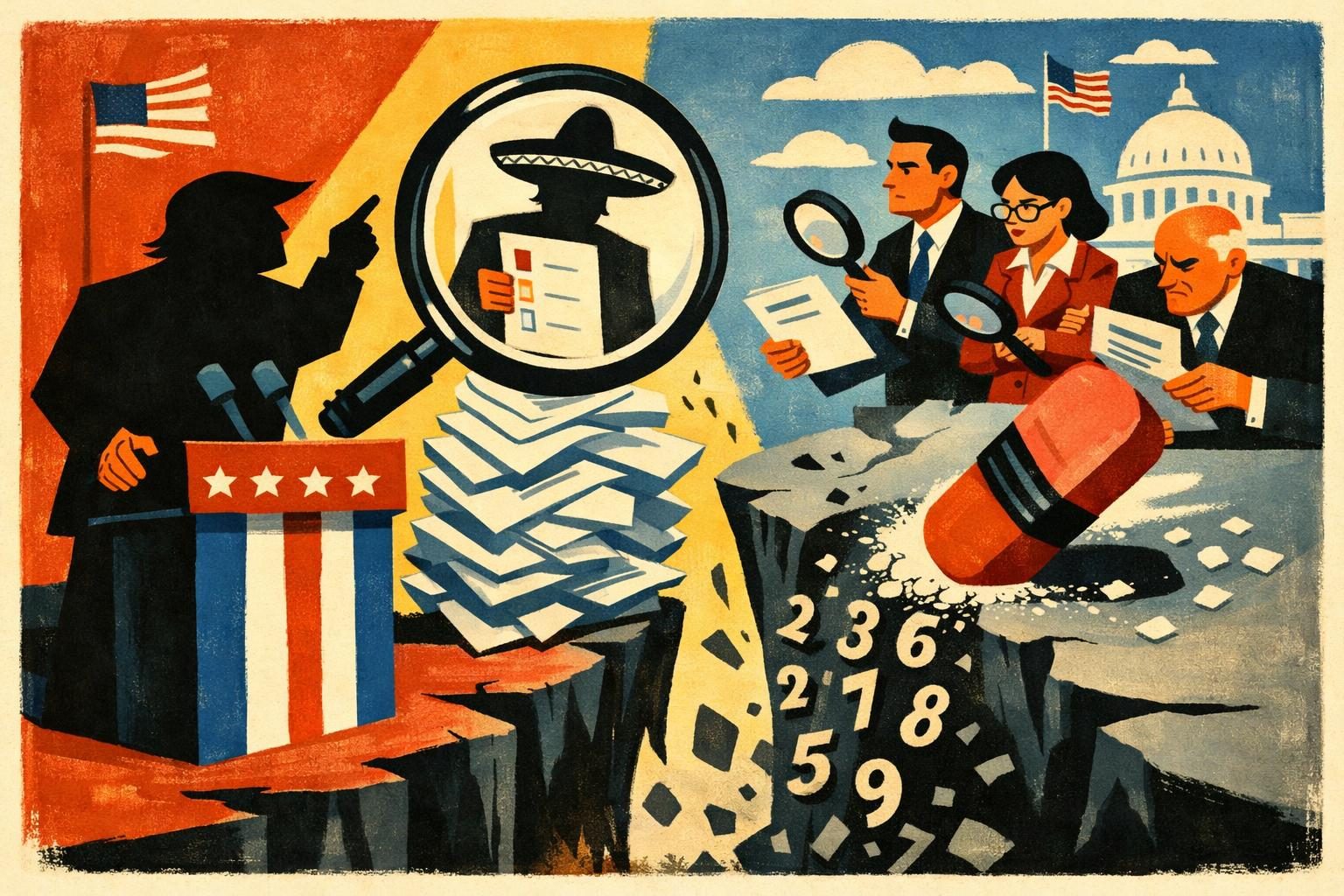
President Donald Trump and his allies spent the weekend pushing harder on a familiar claim: that noncitizen voting is a meaningful threat to the midterms and that the federal government should do more to stop it. The message is not new, but the intensity is increasing, with the administration again pressing for tighter citizenship checks on registration forms and ballots while accusing opponents of ignoring the problem. State election officials, meanwhile, are pushing back and saying the public case has moved faster than the evidence. The result is another round of dueling assertions in which the White House is talking as if the threat is proven, while the people who actually run elections say the numbers still do not justify the alarm.
That gap matters because election integrity claims are only as strong as the proof behind them, and the latest claims are already running into skepticism from officials who say they have not been shown the data the administration is citing. Some of the loudest figures in circulation have drawn immediate questions about how they were assembled, whether the underlying information was complete, and whether federal reviewers even asked states for the records they now say they analyzed. That may sound like a technical dispute, but it goes to the center of the argument. If the federal government is making sweeping claims about illegal voting, election administrators want the receipts, the methodology, and the chance to verify what is being counted. Without that, critics say, the administration is not exposing fraud so much as manufacturing suspicion.
The stakes are larger than one fight over registration lists. Trump’s broader voting message has long depended on turning limited or isolated issues into a sweeping narrative of mass fraud, and that dynamic is showing up again here. Noncitizen voting is illegal, but election experts and state officials have repeatedly said it is not a widespread phenomenon that would explain or threaten the overall integrity of U.S. elections. When federal leaders talk as if it is, they are not just making a policy argument; they are shaping public expectations about the legitimacy of the vote before ballots are even cast. That can have real consequences, from more litigation and more administrative burdens to a deeper sense among voters that the system is suspect no matter what the evidence says. In that sense, the current push is less a narrow security measure than another chapter in the effort to keep fraud fears permanently on the front burner.
The criticism is coming from a predictable but important set of voices: state election officers, voting-rights advocates, and others who say the administration is racing ahead of the facts and using the issue to justify restrictions that could affect eligible voters. Their objection is not that election systems should ignore security; it is that new demands for documentary proof can burden millions of lawful voters while solving a problem that has not been shown to exist at a scale anywhere near the rhetoric. If the government believes it has uncovered credible evidence of illegal participation, those officials say, it should present the evidence clearly and allow it to be scrutinized. Instead, the administration is leaning on broad claims and public suspicion, a strategy that may energize supporters but does little to build confidence among anyone looking for a factual case. Even if some parts of the policy agenda survive legal challenge, the political effect is already visible: more distrust, more confusion, and a louder suggestion that ordinary voting is somehow under siege. That is why opponents see the push not as election security but as election narrowing, a campaign to tighten access under the banner of protecting the system it is also helping to destabilize.
Comments
Threaded replies, voting, and reports are live. New users still go through screening on their first approved comments.
Log in to comment
No comments yet. Be the first reasonably on-topic person here.