
Trump’s Noncitizen-Voting Crusade Is Priming the Midterms for Chaos
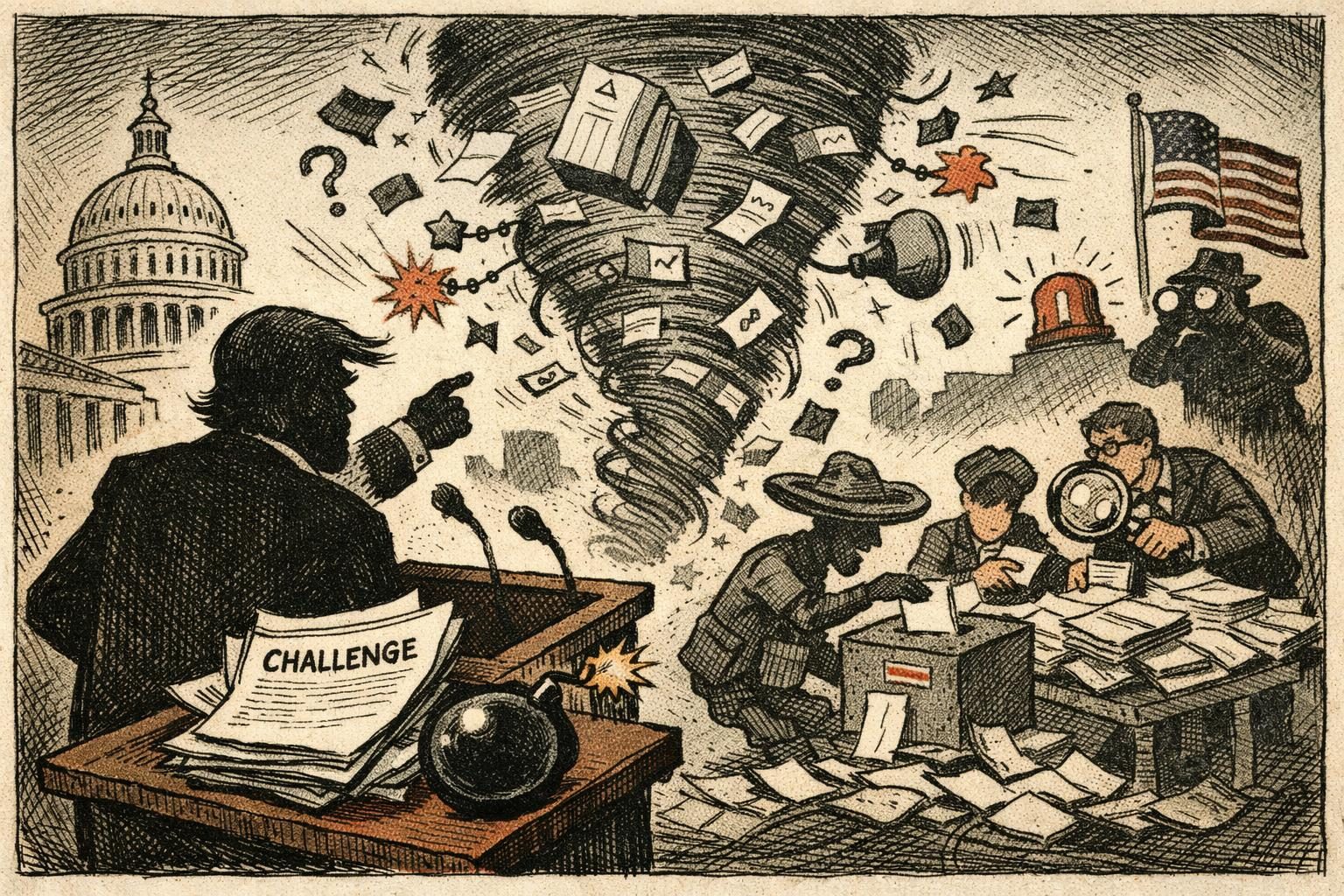
President Donald Trump and his allies spent the run-up to the 2026 midterm campaign pushing a familiar but newly sharpened argument: that noncitizen voting is a dangerous threat to American elections, and that only tougher rules can save the ballot box. The claim is not new, but the timing matters. By elevating the issue now, the White House and congressional Republicans are helping turn a niche election-administration concern into a central piece of partisan messaging just as voters begin to focus on the midterms. The stated goal is integrity, but the political effect is something else entirely. It tells supporters that any unfavorable result should come with suspicion attached. It also gives Republican leaders a ready-made explanation if the electoral map does not cooperate. That is why the latest burst of rhetoric is so significant: it is less about solving a documented problem than about normalizing the idea that the system itself is already compromised.
The administration’s effort has not been limited to speeches and campaign talking points. It has moved into the machinery of government, with the White House pressing the Postal Service and Congress toward changes that would make mail voting harder under the banner of election security. That matters because federal involvement lends institutional weight to claims that might otherwise remain standard partisan grumbling. When agencies start echoing the language of “integrity” and “fraud prevention,” the suspicion can migrate from the campaign trail into public perception, where it can do much more damage. There is still no evidence that noncitizen voting is occurring at the scale required to alter national outcomes, and election officials have repeatedly noted that voting by noncitizens is already illegal and rare. But the political utility of the claim does not depend on proof. It depends on repetition, official amplification, and the steady suggestion that ordinary voting methods cannot be trusted. In that sense, the push is not merely performative. It is a rehearsal for a larger struggle over whether results that frustrate Republicans will be accepted at all.
That is what makes Democrats and election administrators so uneasy. Their concern is not only that the issue will be used to justify stricter rules, longer waits, and more confusion for voters. It is that the rhetoric is laying groundwork for post-election fights before a single ballot is cast. If Republican candidates lose close races, the noncitizen-voting narrative offers an instant frame for challenge-everything politics: demand investigations, question the legitimacy of mail ballots, attack local officials, and insist that courts or legislatures step in. The history of recent election cycles shows how quickly a made-for-TV claim can become a legal strategy once it is repeated enough inside party circles. The administration does not need to prove widespread fraud to cause trouble. It only needs to keep seeding doubt until enough voters, activists, and officeholders believe that a bad result is necessarily a suspicious one. That is why the current campaign feels less like public policy and more like advance preparation for contesting outcomes in advance.
The broader danger is that the federal government itself is helping blur the line between election administration and partisan suspicion. Agencies are supposed to help count ballots, protect access, and keep the process understandable. Instead, they are being pulled into a narrative that treats ordinary mail voting and routine registration questions as evidence of a looming conspiracy. That shift can have real-world consequences even if the underlying allegations remain weak. It can discourage eligible voters, fuel misinformation, and give local officials yet another burden as they try to run clean elections under heavy scrutiny. It can also create a post-election environment where every close result is treated as presumptively illegitimate and every procedural dispute becomes proof of a larger plot. In other words, the point is not simply to make voting harder. The point is to make losing easier to reject. Whether Republicans actually end up contesting the midterms on these grounds will depend on the results, but the script is already being written. And that, more than any single claim about noncitizen voting, is what should worry anyone who still expects the coming election to be settled by ballots rather than by manufactured doubt.
Comments
Threaded replies, voting, and reports are live. New users still go through screening on their first approved comments.
Log in to comment
No comments yet. Be the first reasonably on-topic person here.