
Judge tosses speech-based deportation scheme in Stanford Daily case
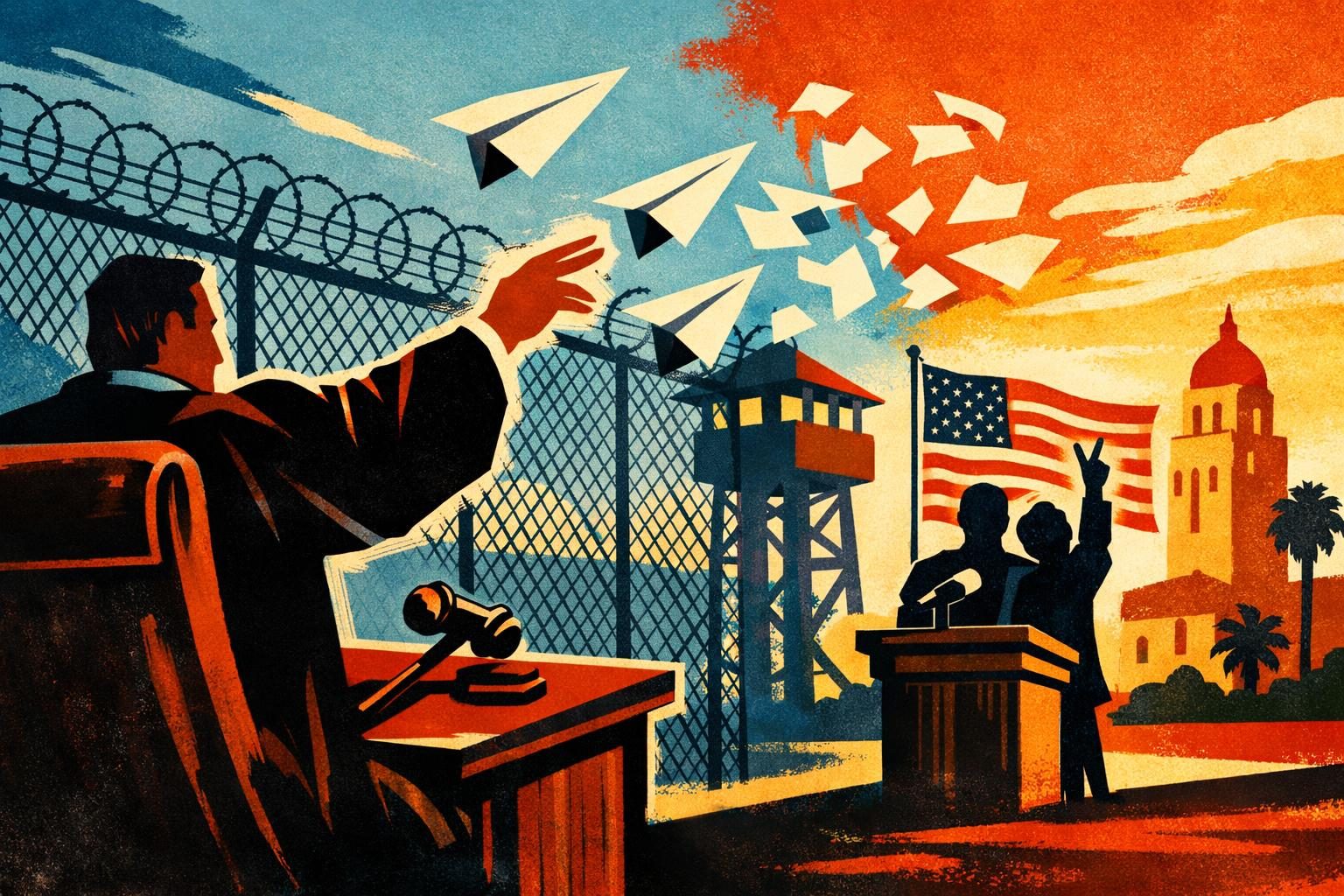
A federal judge in Northern California has dealt a sharp setback to a speech-based immigration enforcement theory that had begun to loom over campuses, newsroom activity, and political protest. In a ruling issued Friday in the Stanford Daily case, the court said the government cannot use two immigration-law provisions to target noncitizens for protected political expression. The decision blocks a deportation-and-visa-revocation approach that critics said was designed to punish people for views the government dislikes rather than for any valid immigration violation tied to conduct. The court’s central conclusion was blunt: the First Amendment does not stop applying just because the person speaking is not a U.S. citizen. That framing makes the ruling more than a narrow procedural win for the plaintiffs. It is a direct rejection of a theory that would have allowed officials to turn immigration status into a leverage point for viewpoint control.
The case mattered because the government’s position, as described by the court and the plaintiffs, threatened to make ordinary speech far more dangerous for noncitizens than for everyone else. Under that logic, campus reporters, student activists, researchers, and other visa holders could face immigration consequences for comments the administration considered politically hostile. The Stanford Daily plaintiffs argued that the scheme chilled journalism and political expression, and the judge agreed that the statutes at issue could not be used as a shortcut around constitutional limits. That is an important distinction: the ruling does not read as a broad endorsement of all noncitizen speech in every context, but it does say the government cannot invoke immigration law simply because it objects to the message. The opinion also undercuts the idea that foreign-policy rhetoric or national-security language automatically dissolves First Amendment problems. Courts do not have to accept that trick, and this one did not. For advocates who have warned that the administration was edging toward viewpoint-based immigration punishment, the decision is evidence that the judicial branch is not entirely willing to let that framework take hold.
The practical consequences extend beyond one student newspaper and one university. The ruling threatens a broader enforcement model that appears to have been available, at least in theory, to officials looking for a way to pressure noncitizens who criticized Israel’s war in Gaza or U.S. policy toward it. That broader universe is what makes the decision so disruptive for the administration’s immigration posture. If visa authority cannot be used as a political cudgel, one of the ugliest pressure points in a speech crackdown weakens considerably. Campus communities that had been operating under uncertainty now have a stronger basis to argue that protected expression cannot be converted into a deportation trigger. Civil liberties lawyers are likely to treat the opinion as a major constitutional rebuke, both because of what it stops and because of the language the court used in rejecting the government’s theory. The ruling may also influence similar challenges already underway or soon to be filed, especially where noncitizens say they were singled out for their views rather than any lawful ground for immigration action. Even if the government narrows its approach, the decision suggests the courts will scrutinize attempts to disguise ideological punishment as neutral enforcement.
How much immediate fallout the ruling produces will depend on what the administration does next, but the legal and political signal is already clear. A government that had been flirting with speech-policing through immigration law has now been told, in plain terms, that the Constitution does not bend that far. The opinion strengthens the position of students and activists who feared that speaking out could put their status at risk, and it gives defenders of campus speech a concrete victory to cite in future fights. It also exposes the weakness of a strategy that relies on expansive executive power while assuming the courts will look away from obvious viewpoint discrimination. Whether the administration appeals, revises its posture, or tries to find another route remains to be seen. For now, though, the ruling closes off one of the more brazen avenues for using immigration enforcement as a weapon against dissent, and it does so with unusual clarity. The message from the bench was not subtle: political speech is not deportable just because officials find it inconvenient.
Comments
Threaded replies, voting, and reports are live. New users still go through screening on their first approved comments.
Log in to comment
No comments yet. Be the first reasonably on-topic person here.