
Judge says the government can’t deport students for criticizing Israel
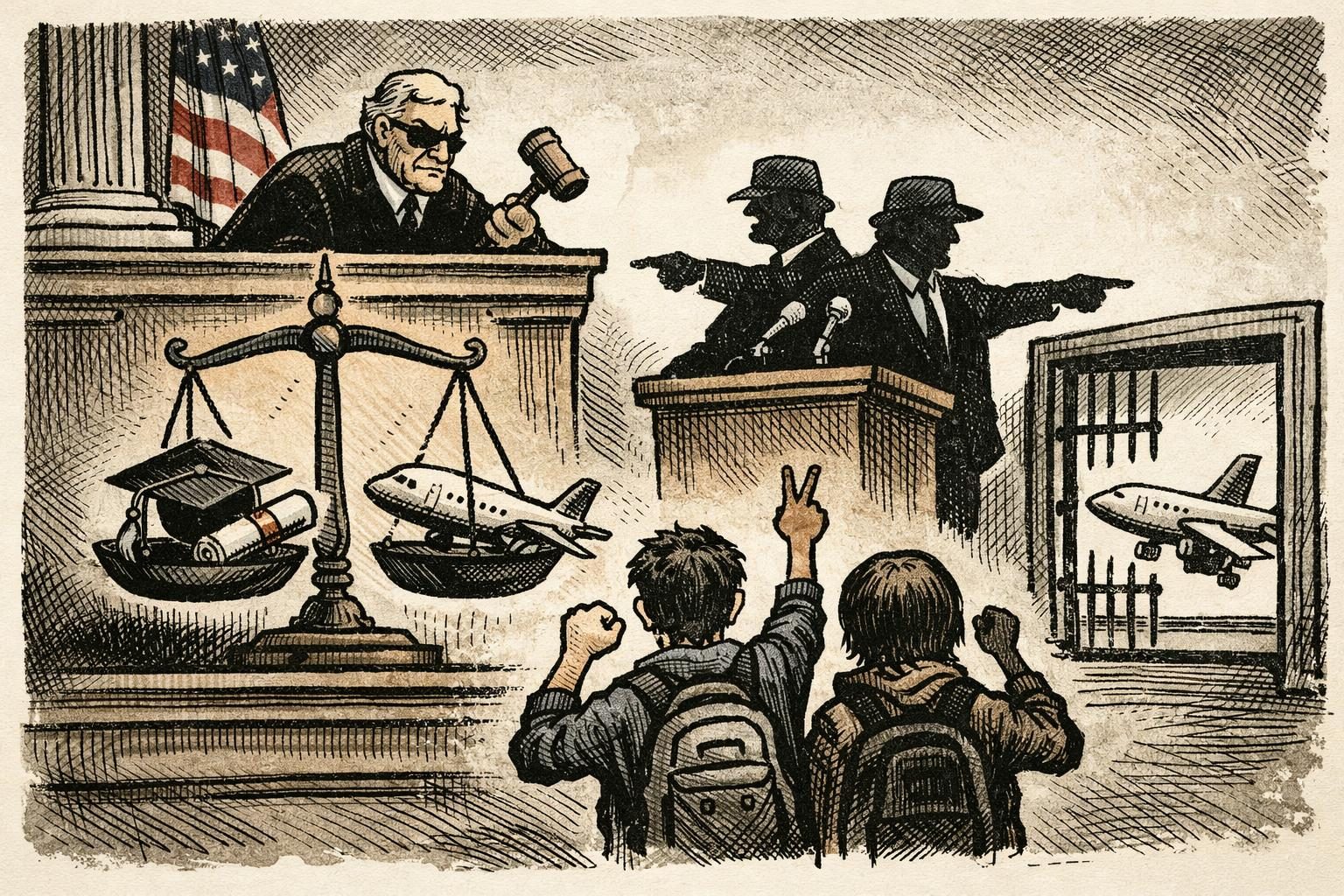
A federal judge in California handed the Trump administration a sharp setback on Aug. 29, ruling that the government cannot use deportation power as punishment for noncitizens who criticize Israel or take part in related campus speech. The decision cuts directly against a strategy that civil-liberties groups say was designed to chill protest by making political expression look like an immigration problem. In practical terms, the ruling says the federal government cannot turn disagreement over Israel’s war in Gaza into a removable offense simply because the speakers are not U.S. citizens. The judge’s finding that the policy was retaliatory raises the stakes beyond ordinary campus discipline or public-order disputes and puts the case squarely inside the First Amendment. That matters because the administration has leaned on broad claims about disorder and disruption to justify a deportation campaign that has alarmed students, faculty members and immigrant-rights advocates alike.
The court’s reasoning reaches into a familiar but unsettling question: how far can the government go in punishing speech when the speaker is a noncitizen? The administration has argued, in effect, that political expression on campuses can carry immigration consequences if officials decide it is disruptive enough or tied to broader security concerns. The judge rejected that theory as unconstitutional when it is used to target criticism of Israel and related activism. That is not just a technical loss for the government; it is a warning that immigration enforcement cannot be used as a shortcut around constitutional limits on viewpoint discrimination. In the judge’s view, the problem was not merely that some students were controversial or unpopular, but that the government appeared to be singling out one kind of political message for punishment. Once a federal court concludes that a deportation policy is aimed at silencing dissent, the government’s discretion stops looking like discretion and starts looking like retaliation.
The ruling also lands in the middle of a larger fight over campus protests, foreign-policy speech and the administration’s willingness to cast dissent as a threat. Universities have been one of the main stages for protests over the war in Gaza, and officials have increasingly treated those demonstrations as if they were intertwined with public safety, national security or support for unlawful conduct. But the court’s decision suggests that even when protests are loud, contentious or deeply offensive to some audiences, the government cannot simply convert that discomfort into deportation authority. Civil-liberties advocates have long warned that such a move would have a chilling effect far beyond a handful of high-profile activists, because students and scholars on visas would have to wonder whether speaking out could jeopardize their ability to stay in the country. The ruling does not settle every legal question surrounding campus demonstrations, immigration status or the limits of protest, but it does undercut one of the most aggressive tools the administration has tried to wield. It also reinforces a basic principle that is easy to invoke and hard to honor when politics are heated: speech does not lose its constitutional protection just because officials dislike its message.
The White House can appeal, and given the administration’s record, it almost certainly will try to keep the fight going. Still, the decision adds to a growing series of judicial rebukes to efforts by the federal government to stretch executive power into areas normally constrained by the Constitution. That pattern is especially awkward for an administration that often presents itself as a defender of free expression while also pursuing policies that critics say punish speech when it becomes inconvenient. The immediate effect is to weaken the deportation strategy in this case and signal to agencies that courts may not tolerate attempts to use immigration law as a political gag order. More broadly, it gives civil-liberties groups another courtroom win in a larger struggle over whether noncitizens can be singled out for expressing unpopular views on matters of public concern. The underlying conflict over Israel, Gaza and campus politics is not going away, but the judge’s ruling makes clear that the federal government has to fight that battle without turning dissent itself into grounds for removal.
Comments
Threaded replies, voting, and reports are live. New users still go through screening on their first approved comments.
Log in to comment
No comments yet. Be the first reasonably on-topic person here.