
State Department quietly loosens UAE travel advisory for family members
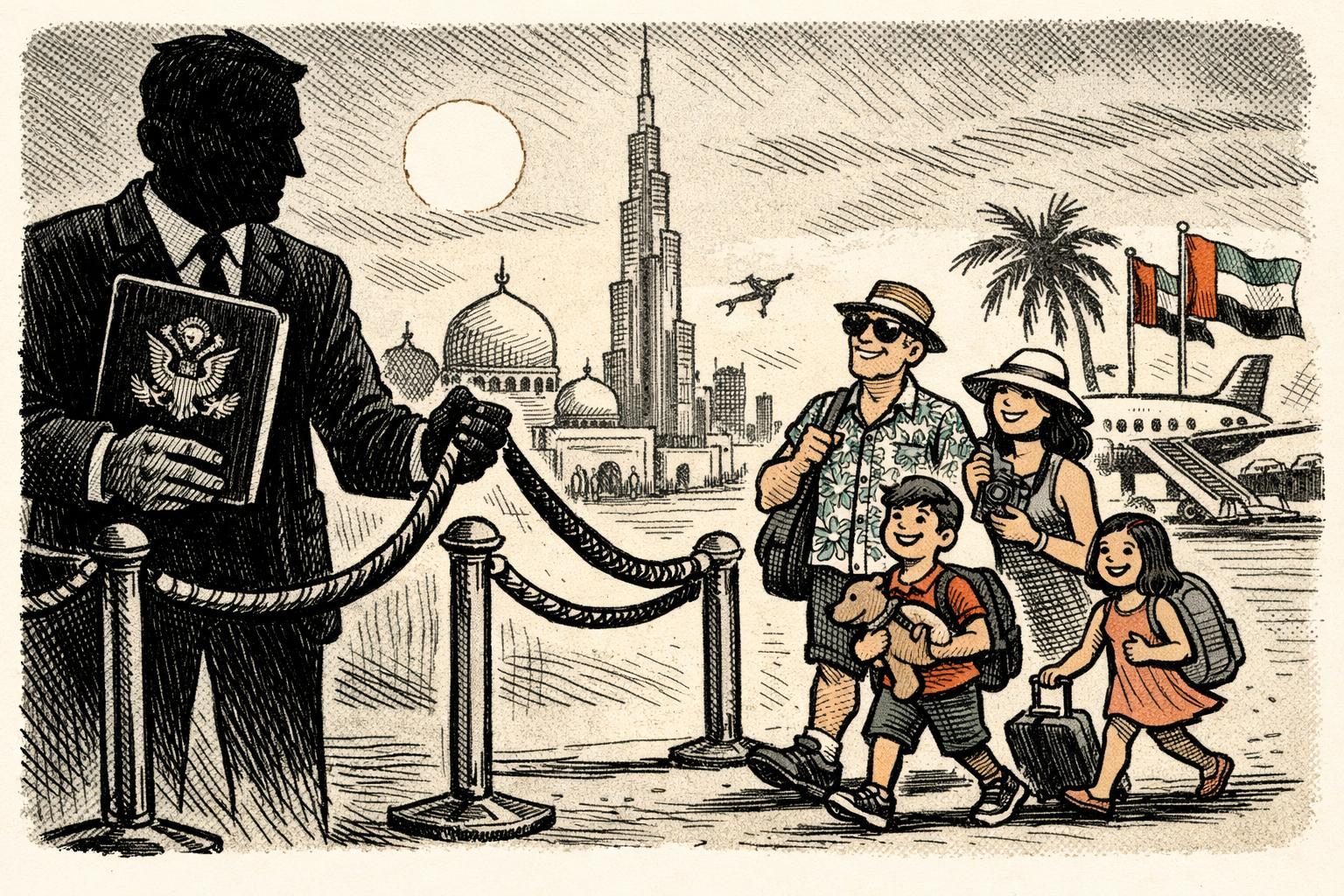
The State Department has quietly loosened one of its restrictions on the United Arab Emirates, updating the country’s travel advisory to say family members may once again join U.S. government employees stationed there. It is a small change in bureaucratic terms, but it is still a meaningful one. The overall advisory level remains in place, so the government is not signaling that the region has returned to full normalcy. Even so, the reversal of a family-member ban suggests officials believe the immediate risk picture has improved enough to ease at least one precaution. In the world of travel advisories, that kind of adjustment is often the closest thing to a public acknowledgment that security conditions are moving in the right direction.
The policy shift matters because advisories are not just generic caution signs. They are among the clearest windows into how the government is reading the threat environment in a given country, especially where U.S. personnel are involved. When the State Department bars family members from accompanying employees, it usually reflects a judgment that a place is too volatile for dependents even if official operations can continue. Lifting that limit does not mean the danger has disappeared, and it does not mean Washington considers the UAE risk-free. But it does mean the government sees enough improvement to modify an operational restriction that had been tied to conflict-driven uncertainty. That makes the update more than housekeeping, even if it does not rise to the level of a dramatic policy announcement.
The broader context is the lingering fallout from months of regional tension and the U.S.-Iran conflict, which has continued to shape security decisions across the Gulf. The UAE has long been one of the region’s more stable and strategically important states, but stability in that part of the world is often relative rather than absolute. U.S. officials have had to balance the practical needs of diplomacy, military coordination, and regional deterrence against the possibility that sudden escalations could put personnel and their families at risk. By keeping the overall warning level unchanged while relaxing the family-member restriction, the State Department appears to be drawing a distinction between serious but manageable conditions and the kind of volatility that justifies more severe limits. That is an important distinction for Americans living and working there, and it is also a sign that the government’s calculations continue to evolve rather than remain frozen in the worst moments of the conflict period.
For the families affected, the change has immediate and practical consequences. It may mean the difference between a lonely rotation and a more normal posting, and it could affect whether employees stationed in the UAE can make longer-term plans with dependents in mind. For the government, the decision is both administrative and symbolic: a narrow rule has been revised, but the revision also tells a story about how Washington sees the security environment. It suggests a cautious step away from emergency posture without pretending that all risks have vanished. That is often how these shifts happen in practice, especially in a region where official warnings can lag behind or outlast the most acute phase of a crisis. The advisory does not declare the UAE safe, and it does not claim the underlying tensions have been resolved. It simply signals that one part of the risk ledger has been reassessed, and that the State Department now thinks the situation allows family members to return to accompanying employees there. In a region still shaped by the aftereffects of conflict, even a modest easing can be a revealing sign of how officials think the balance of danger is changing.
Comments
Threaded replies, voting, and reports are live. New users still go through screening on their first approved comments.
Log in to comment
No comments yet. Be the first reasonably on-topic person here.