
Federal Circuit Hands Down Another Fresh Decision, and the Tariff Fight Keeps Breathing
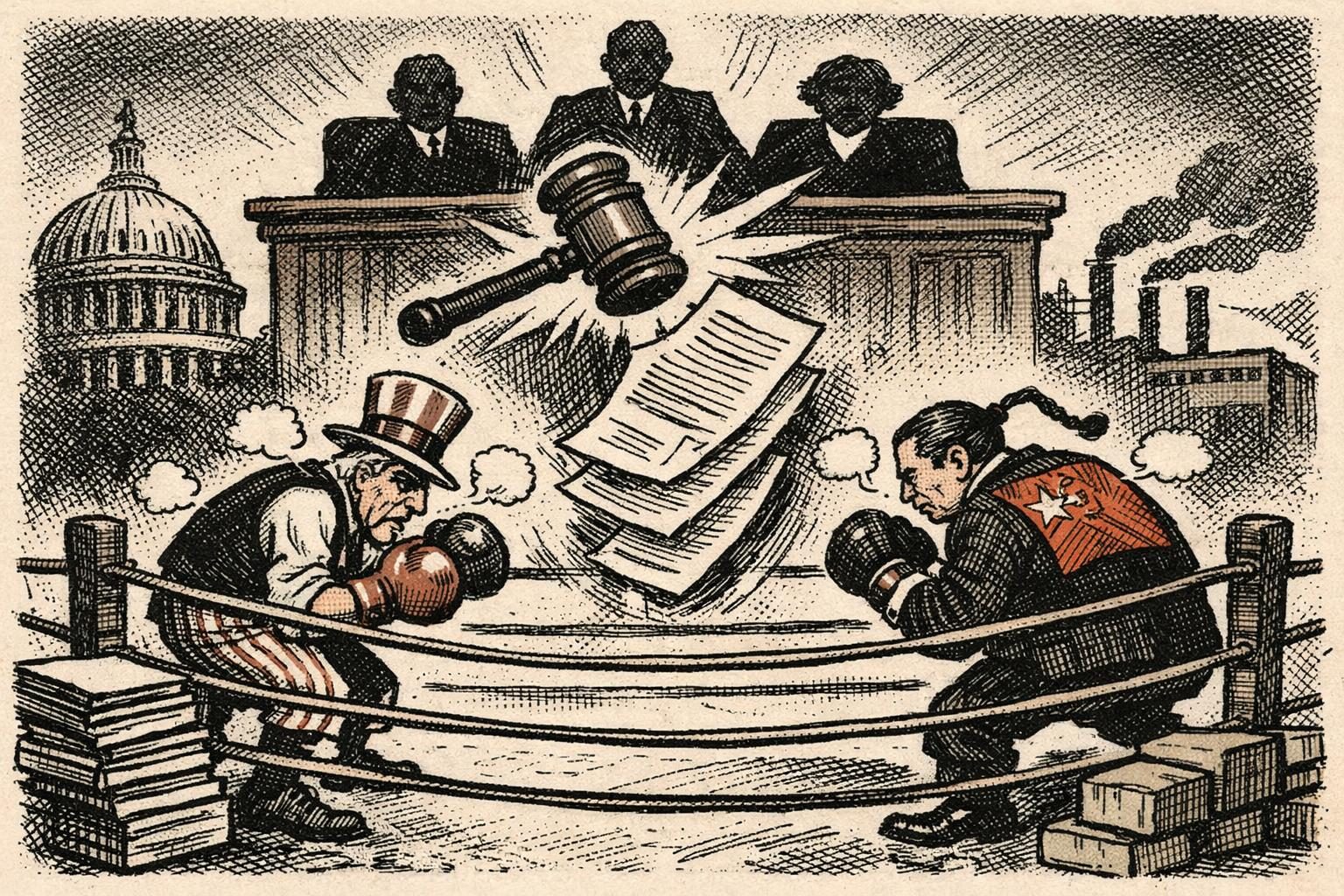
A fresh Federal Circuit opinion landed on August 28, and even though it is nonprecedential, it is another reminder that the tariff and executive-power fights from the Trump era are still generating real appellate work. The case, Augusta v. United States, is not the kind of blockbuster ruling that resets trade policy on its own. It does, however, fit neatly into a larger pattern that has been hard to miss for anyone watching the courts: the legal aftershocks of aggressive tariff policy keep moving through the system, and judges keep being asked to sort out where presidential power ends and statutory limits begin. That alone makes the decision worth noting as more than a routine docket entry. It is part of an ongoing dispute over how far the executive branch can go when it tries to use trade tools as broad instruments of policy. Even when the specific opinion is narrow, the larger message is that the tariff fight is not remotely over.
The basic problem is familiar by now. The government has repeatedly advanced sweeping claims about unilateral authority in trade and tariff matters, while companies, importers, and other affected parties have kept returning to court to challenge those claims. That back-and-forth has created a durable litigation ecosystem, one in which each new order, appeal, or opinion adds another layer to an already cluttered legal landscape. In practical terms, that means the dispute is not just about abstract constitutional theory or administrative law fine print. It affects planning, pricing, contracts, supply chains, and the ordinary business calculations that depend on knowing whether a tariff will stick or disappear after the next round of litigation. When policies are pushed through forcefully and then contested just as forcefully, uncertainty stops being a side effect and becomes the governing condition. That uncertainty is costly, and the cost is borne well beyond the courtroom.
The political dimension matters too, because trade enforcement is one of the clearest ways an administration can project toughness without asking voters to parse page after page of legal justification. The White House has every incentive to frame its tariff agenda as decisive, patriotic, and economically strategic. But the recurring parade of appellate disputes tells a less flattering story: legal exposure, unstable policy footing, and a lot of improvisation that looks sturdier in a speech than it does under judicial scrutiny. None of that necessarily means the government loses every time, and it would be too neat to pretend the courts have delivered a single clean verdict on the broader theory. Still, the sheer volume of litigation is itself informative. If a policy requires constant defense in multiple courts, that is not exactly a sign of settled authority. It suggests the administration is asking a great deal of the legal system in order to sustain a highly contested approach to economic governance.
There is also a reason this latest decision should be treated with some caution. The opinion is nonprecedential, which means it does not carry the same weight as a binding circuit ruling that formally shapes future cases. The underlying tariff landscape is also complicated, with overlapping statutes, administrative actions, and separate disputes playing out in different courts. That lowers the confidence level compared with a sweeping decision on the merits of the tariff program itself. But caution should not be mistaken for irrelevance. A nonprecedential opinion can still signal how the court is handling these disputes procedurally and substantively, and it still reflects the continuing reality that tariff-era questions remain live enough to occupy judges on a regular basis. The bigger picture is plain enough even if this particular ruling is modest: the courts are still dealing with the leftovers of an aggressive trade strategy, and they are doing so in a way that keeps the legal and political consequences in motion. For businesses and policymakers alike, that means the tariff fight keeps breathing, and there is no clear sign yet that the air is running out.
Comments
Threaded replies, voting, and reports are live. New users still go through screening on their first approved comments.
Log in to comment
No comments yet. Be the first reasonably on-topic person here.