
ICE’s end-of-August body-camera rollout exposes how fast the agency is scaling up
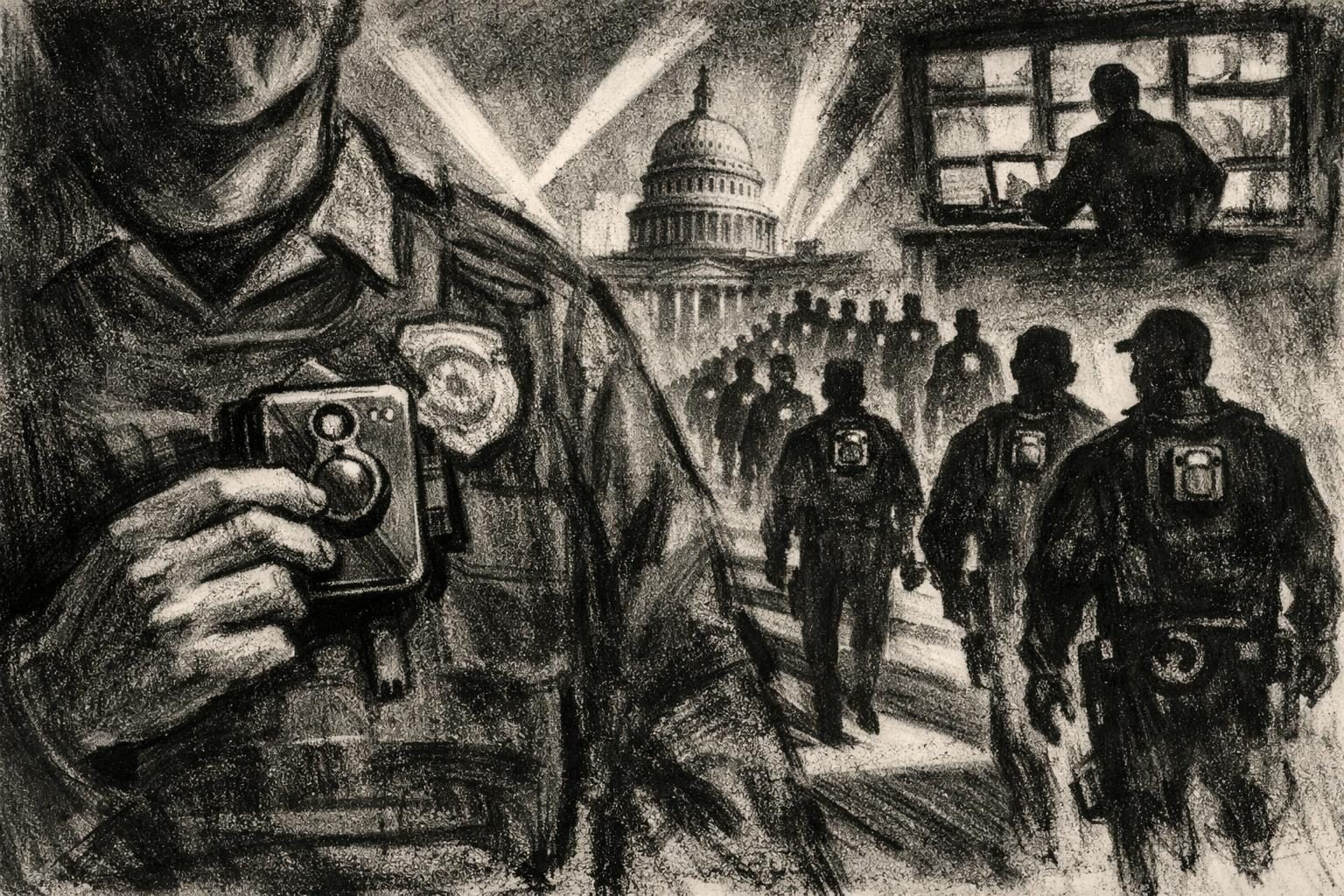
By the end of August, Immigration and Customs Enforcement expects to have every field officer carrying a body camera, a shift that turns a months-long administrative pledge into a live operational reality. The agency announced the rollout earlier this month, but the meaningful date is now here, and that matters because equipment promises only become politically significant once agents are actually wearing the devices in the field. On its face, the move looks like a familiar accountability measure, the kind of reform public agencies reach for when they want to reassure a skeptical public that misconduct will be visible. Yet in ICE’s case, the timing also suggests something else: the agency is expanding at a pace that makes more oversight, more documentation, and more litigation almost inevitable. Body cameras do not just record events after the fact. They also signal that the institution deploying them expects its work to draw scrutiny.
That is the deeper meaning of this rollout. ICE is not simply adding a layer of recording equipment to its uniforms; it is building a larger evidentiary record around an immigration enforcement apparatus that is already under intense political and legal pressure. In theory, more video can protect both the public and the officers involved. It can provide clearer evidence when agents are accused of using excessive force, violating procedure, or mishandling an arrest. It can also help the agency defend itself when complaints are unfounded or when encounters are distorted by incomplete eyewitness accounts. But the other side of that equation is harder to ignore. More cameras mean more footage of raids, detentions, traffic stops, and tense street encounters that can quickly become flash points if the underlying conduct is heavy-handed. In that sense, body cameras may improve transparency while also making the agency’s most controversial work more visible to the public than ever before.
The administration is betting that visibility will help it frame enforcement as lawful, disciplined, and professional. That is a reasonable political calculation, at least in theory, because video evidence can cut through competing narratives and show exactly what happened in a given interaction. But that same video can also complicate official messaging if the footage reveals confusion, escalation, or a level of force that looks harder to justify once replayed in public. For immigration enforcement, the stakes are especially high because the agency’s encounters often involve people who are already vulnerable, frightened, or unsure of their rights. That makes any recording regime inherently consequential, not just for accountability but for the broader story the government tells about its crackdown. If the point of the rollout is to strengthen confidence in ICE, it may succeed only if the footage confirms the agency’s own account. If it does not, the cameras could become a visual archive of controversy rather than a shield against it.
That is why critics are likely to see this move as only the most visible layer of a much larger enforcement expansion. Immigrant-rights advocates are expected to argue that cameras do not prevent overreach, and civil-liberties lawyers will almost certainly focus on the rules governing access to the footage, retention periods, redactions, and the circumstances under which recordings can be withheld. Those are not technical details in a story like this; they are the substance of accountability itself. A body camera can be a tool for oversight, but only if the public, defense attorneys, and watchdogs can actually obtain and review the relevant video when complaints arise. Without that, the camera may function mostly as institutional theater, a way for the agency to claim transparency while preserving the same asymmetry of power that has long defined enforcement encounters. The broader political context makes this even more fraught. The government has been signaling a tougher posture on citizenship, immigration, and enforcement, and a body-camera rollout fits neatly into that larger apparatus of control. But it also underscores how fast the machinery is moving and how much the administration appears to expect public resistance. That is not what a calm bureaucracy looks like. It is what a rapidly scaling enforcement state looks like when it knows it will need to prove, defend, and perhaps litigate its own actions in real time.
Comments
Threaded replies, voting, and reports are live. New users still go through screening on their first approved comments.
Log in to comment
No comments yet. Be the first reasonably on-topic person here.