
Administration appeals another blow to the mail-voting crackdown
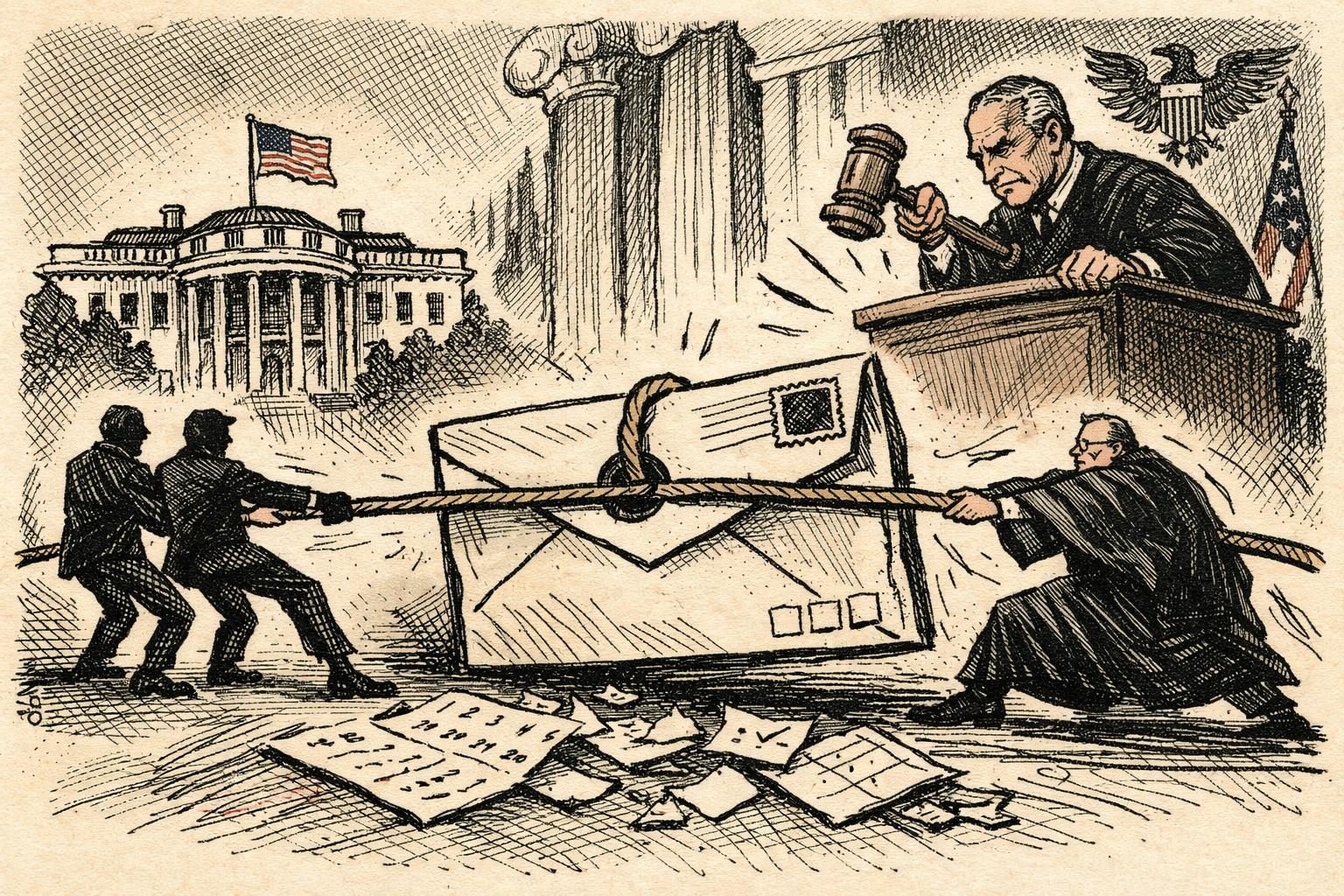
The Trump administration is back in appellate court after another federal judge in Boston blocked enforcement of the president’s mail-voting order, dealing the White House yet another setback in a fight that could shape how absentee ballots are handled across the country. The government filed notice of appeal after the judge extended the block for two weeks, keeping the policy from taking effect while the legal challenge plays out. That may sound like a narrow procedural move, but in practical terms it means the administration still has not cleared the first major hurdle needed to start implementing a rule that would alter election administration in a very direct way. The order is still on hold, the deadlines for election officials are still moving, and the government is once again asking a higher court to step in before the lower court fight has even settled. For a policy that was meant to project strength and decisiveness on elections, the result so far is a familiar pattern of delays, court orders, and uncertainty.
That uncertainty matters because election officials do not get to work on the judiciary’s timetable. States and local administrators have already begun planning for the next cycle, and absentee-ballot systems are not something that can be rewritten overnight without causing disruption. The administration’s order would require changes in how ballots are requested, accepted, and processed, which means officials would need clarity well before voting starts in earnest. Even a temporary pause can force states to hold off on training, software updates, public guidance, and other preparations that depend on knowing which rules will actually apply. Critics of the order say that is the point: not to improve the integrity of mail voting, but to make it harder to use by layering federal restrictions onto systems that states have already built and relied on. Supporters, by contrast, have framed the move as a straightforward election-integrity measure, though the continuing court fight has kept that argument from becoming a working policy. Either way, the practical effect is the same for state administrators, who are left waiting while the legal uncertainty spreads.
The latest ruling is also significant because it suggests the administration is not just running into a delay, but repeatedly being forced to defend the legal foundation of the order itself. That is a more serious problem than an isolated procedural setback. When a court blocks enforcement twice, or keeps a policy frozen while it reviews the merits, it signals that the government has not yet persuaded the judiciary that the order can stand on its own. Opponents are likely to argue that the White House is trying to impose a sweeping voting rule without a stable legal basis, and the judge’s decision gives them more room to say that argument is not far-fetched. The administration can still argue that the policy should be allowed to proceed while the case moves forward, but it now has to do so from a weaker position than it would have liked. Every day spent in litigation also gives the impression that the White House is spending political energy on a policy that may never fully take effect. Even if the administration ultimately prevails, it will have spent weeks, perhaps longer, operating under court-imposed uncertainty rather than under the clean enforcement timeline it wanted.
This is why the appeal is more than a routine legal filing. It is the latest step in a fast-moving battle that has become one of the administration’s biggest election-administration gambits, and one of its most visible sources of friction with the courts. The White House has tried to sell the order as a tough response to weaknesses in mail voting, but the repeated blocks have made it look less like a decisive reform than a legal project still waiting for permission to exist. That does not mean the administration has lost for good, and it does not mean the appellate courts will necessarily agree with the Boston judge. But it does mean the policy remains stuck in the same holding pattern that has defined much of the fight: announcement, challenge, injunction, appeal, and more waiting. For election officials, that is a problem because the calendar keeps advancing even when the litigation does not. For the administration, it is a reminder that bold election rhetoric does not automatically translate into enforceable rules. And for everyone else, it is another example of a voting-policy fight being decided, at least for now, not in the polling place but in the courthouse.
Comments
Threaded replies, voting, and reports are live. New users still go through screening on their first approved comments.
Log in to comment
No comments yet. Be the first reasonably on-topic person here.