
White House opens another tariff lane, this time for beef trimmings
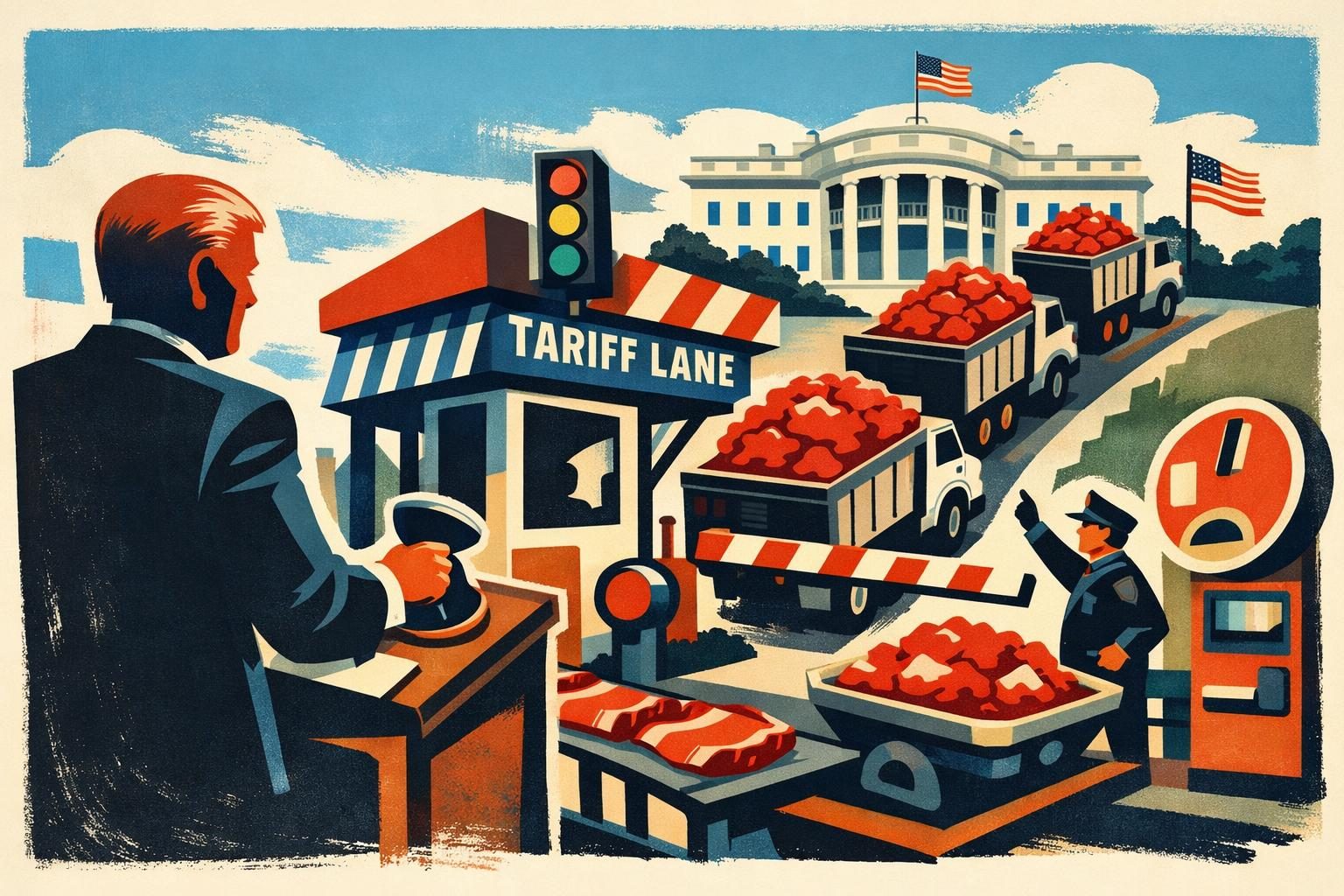
The White House has opened yet another tariff lane, this time for certain lean beef trimmings, and it did so with the familiar snap of a Monday proclamation rather than the slow grind of a broader economic plan. The president increased the in-quota quantity for those imports by 300,000 metric tons for calendar year 2026, a change that will be divided into three tranches and handled on a first-come, first-served basis beginning September 1. That is not a symbolic gesture or a vague promise of future action. It is a concrete shift in market access that can alter import flows almost immediately. The order also directs trade and customs officials to make the change real through the Harmonized Tariff Schedule and related implementation guidance, which means the bureaucracy now has to turn a political decision into operational rules. In other words, the administration has once again reached for the tariff lever as if it were a substitute for a wider economic strategy.
The immediate significance is easiest to see in the supply chain. Lean beef trimmings are not a niche curiosity; they are one of the inputs that can influence ground-beef production, and changes in import availability can ripple through processors, retailers, and eventually shoppers. By setting a new quantity and a fast timetable, the White House is trying to affect domestic supply conditions without waiting for some longer-term structural fix. That may help at the margins if the goal is to keep ground beef available and temper price pressure, but it also introduces a fresh layer of uncertainty into a market that already has enough of its own moving parts. Importers will have to race for access, buyers will have to adjust procurement plans, and sellers will have to decide how much of the change to pass through. The administration is presenting the move as a way to stabilize supply and demand, but the mechanics are more familiar than reassuring: another executive intervention, another deadline, another set of rules that arrives with little notice and broad implications.
That matters politically because the White House has spent a great deal of time talking about affordability while relying on improvisation to demonstrate it. A proclamation that widens a tariff quota may be framed as practical, and in a narrow sense it probably is. It gives the government an immediate tool, and it can have direct effects in the short run. But that is also the problem. The repeated use of proclamations and administrative adjustments makes the administration look less like it is executing a coherent trade doctrine and more like it is assembling one policy fragment at a time. Businesses can work with rules, even tough ones, when they are durable and predictable. They have a harder time when the rules appear to be changing by decree whenever the White House decides it needs to show activity. Consumers tend to feel that instability later, when prices, supply, or both do not behave the way the political messaging promised. If beef costs move the wrong way after this adjustment, the political burden will land on a president who has claimed he can manage inflation with a firm hand and a few dramatic announcements.
The deeper issue is not simply whether this one action helps or hurts beef buyers in the near term. It is what the action says about the administration’s governing style. A tariff quota can be a legitimate trade tool, and there may well be a policy rationale behind increasing access to certain beef inputs. But when the White House keeps reaching for one-off interventions to solve broad economic problems, it invites the suspicion that the machinery of government is being used to stage a performance rather than produce a durable framework. That is convenient in the moment because it looks decisive. It is less convenient afterward, when agencies have to implement the decision, markets have to absorb it, and everyone else has to live with the consequences. The result is a little more beef in the pipeline, a lot more bureaucracy around who gets it first, and another reminder that the administration’s economic agenda often seems to be written one proclamation at a time. For a presidency that likes to project control, this looks a lot like governing by improvisation and then hoping the improvisation counts as strategy.
Comments
Threaded replies, voting, and reports are live. New users still go through screening on their first approved comments.
Log in to comment
No comments yet. Be the first reasonably on-topic person here.