
Justice Department secures denaturalization of convicted rapist from India
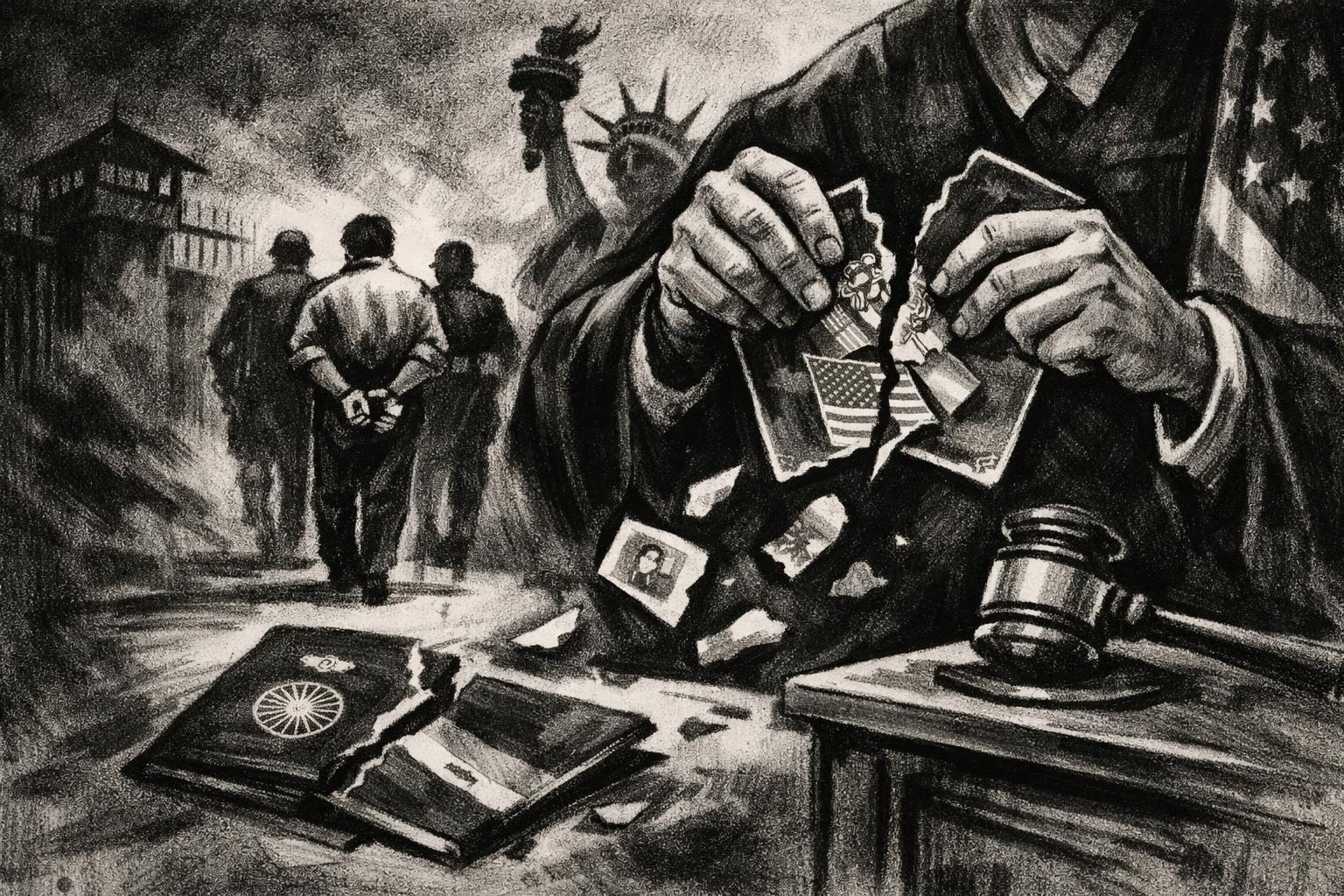
The Justice Department says a federal court in the Eastern District of New York has entered judgment revoking the naturalization of Gurmeet Singh, a man described by the government as a convicted rapist from India. In practical terms, that makes this an actual denaturalization case, not a rhetorical flourish, policy preview, or vague promise about tougher immigration enforcement. The move is being presented as part of a broader effort to use civil denaturalization against people the government believes obtained citizenship while concealing conduct that should have mattered to the naturalization process. It is also a reminder that citizenship, once treated by many Americans as close to permanent, can still be challenged in court under certain circumstances. The government’s announcement puts the case in the center of a larger political and legal fight over how aggressively federal authorities should revisit the citizenship of naturalized Americans.
Denaturalization is one of the most powerful tools available to the federal government because it goes to the core of a person’s legal status in the United States. It is not the same thing as deportation, though the two often intersect, and it is not supposed to be routine. The government generally has to prove its case in court, which is one reason these matters can become long, fact-heavy, and legally fraught. Supporters of the effort are likely to argue that someone with a serious violent conviction should not be insulated by citizenship if the naturalization process was tainted or if key facts were hidden. Critics, meanwhile, will see the case as another example of the state wielding an extraordinary power in a way that can feel punitive even when the formal legal path is civil rather than criminal. That tension is part of why denaturalization cases draw so much attention whenever the Justice Department decides to push one forward.
The Singh case also fits neatly into the administration’s broader messaging around immigration, citizenship, loyalty, and foreign-born offenders. Federal officials have spent considerable time trying to project an image of harder-edged enforcement, and denaturalization is the kind of measure that lets them say they are not only controlling the border but also revisiting the status of people already inside the country. That has obvious political value, especially in a climate where public safety, criminality, and immigration are frequently blended into the same argument. But it also exposes the government to legal scrutiny, because courts will care less about the political symbolism than about whether the underlying facts and procedures satisfy the law. If the government is serious about making denaturalization a more visible part of its enforcement posture, it will need to keep winning cases that can survive close judicial review rather than merely generating strong headlines. A single successful judgment can be used to signal toughness, but a broader campaign would have to stand up to repeated challenges.
That is where the case becomes larger than the individual defendant. On paper, the Justice Department can describe this as accountability for a serious offender and present the result as proof that naturalization is not a one-way door when fraud, concealment, or disqualifying conduct are involved. In the real world, though, these cases invite questions that are both legal and political: what kinds of facts justify stripping citizenship, how far back the government can go, how much deference courts should give to federal prosecutors, and whether the public understands the distinction between a criminal conviction and a citizenship challenge. The department’s announcement suggests it sees denaturalization as part of a normal enforcement toolkit, not a novelty or an emergency measure. That matters because once an administration starts using a tool more openly, it can change the expectations of both immigration lawyers and judges about what the federal government is willing to pursue. The legal system may treat the case as one matter among many, but politically it reinforces a message that citizenship obtained through the naturalization process can be revisited if the government believes the record warrants it. For allies of the policy, that is proof of resolve. For opponents, it is another warning that the line between lawful enforcement and symbolic punishment is becoming easier to cross.
Even so, the case should not be overstated beyond what the court record and the department’s announcement support. A denaturalization judgment is significant, but it does not settle the larger debate about how often the government should use this power or how aggressively it should seek out past cases. The public tends to react strongly when the facts involve a serious violent crime, and that reaction can make the policy seem cleaner than it really is. Yet the legal machinery underneath these cases is still demanding, and the government must persuade courts that the extraordinary remedy is justified on the record before them. If the Justice Department wants to keep expanding denaturalization as a signature move, it will need more than a handful of high-emotion cases to make the approach look sustainable. It will need to show that the law supports the strategy, the evidence is solid, and the process can withstand the kind of scrutiny that naturally comes with revoking a person’s citizenship after the fact. For now, the Singh case stands as a clear example of the administration’s willingness to use that power, and as a test of how far the courts will let it go.
Comments
Threaded replies, voting, and reports are live. New users still go through screening on their first approved comments.
Log in to comment
No comments yet. Be the first reasonably on-topic person here.