
DOJ, DHS, and DOT roll out a truck-fraud crackdown with immigration theater baked in
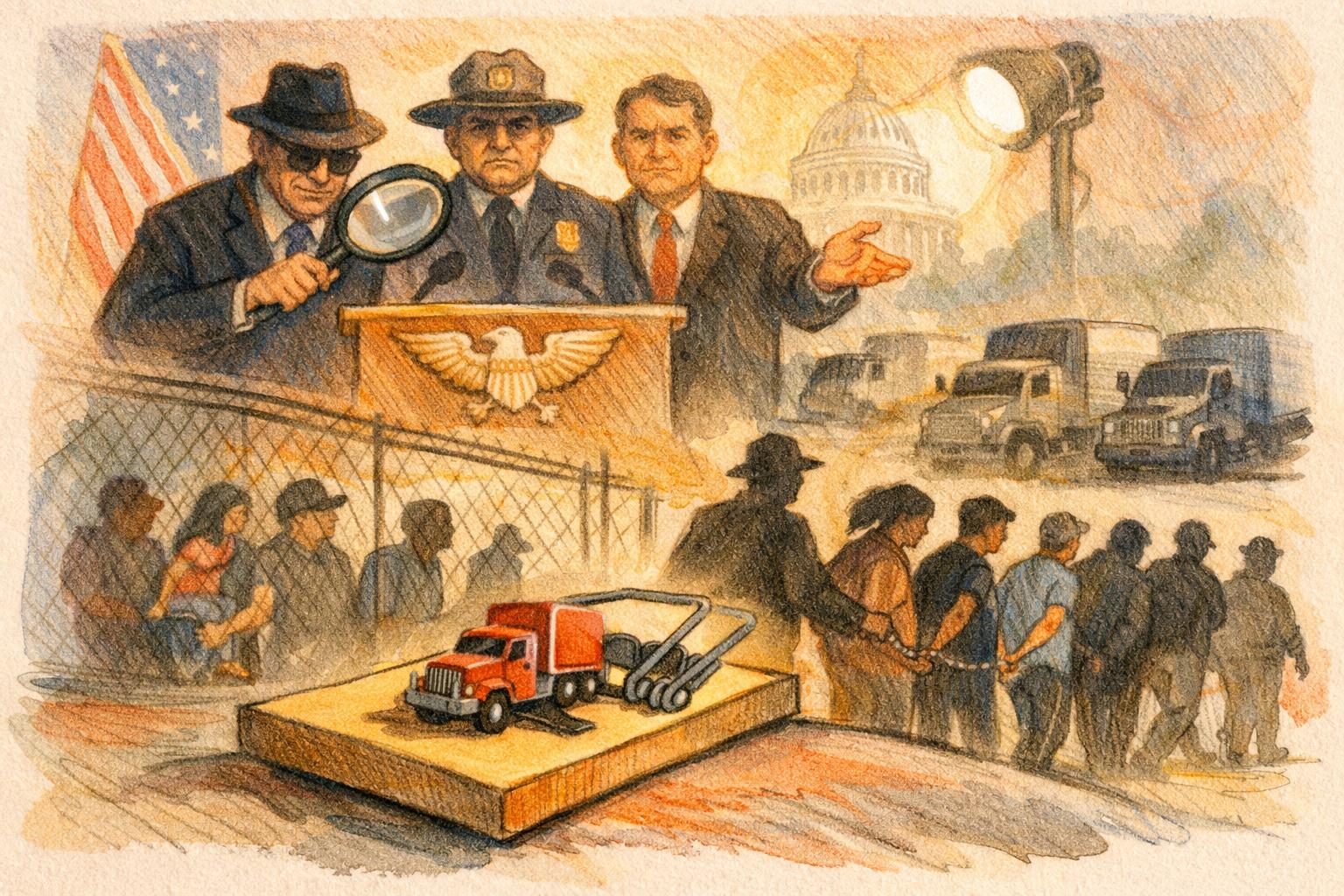
The Justice Department on August 31 rolled out a new interagency crackdown on fraud in the trucking industry, wrapping a straightforward enforcement initiative in the sort of political messaging that now seems to come standard with almost every major federal announcement. The effort brings together the Justice Department, the Transportation Department, Homeland Security, the White House fraud task force, and multiple U.S. attorneys, all of whom are being presented as part of a coordinated push to identify fraud, tighten licensing scrutiny, and improve highway safety. On its face, that is not a controversial goal. Trucking is a heavily regulated industry, and when training schools, brokers, operators, or credential holders are cutting corners, the consequences can spill quickly from paper files into traffic lanes. If the government has actual evidence of fake credentials, sham training programs, or other forms of fraud, then enforcement is not only legitimate but necessary.
But the way the administration chose to stage the announcement makes clear that this was not meant to be a sterile regulatory bulletin. The public framing leaned hard on illegal-immigration language and public-safety panic, turning a potentially serious compliance issue into a political performance with enforcement props. That may play well for an administration eager to demonstrate toughness, but it also muddies the distinction between fraud enforcement and immigration theater. There is a real difference between pursuing fraudulent conduct in a regulated industry and using the existence of noncitizen workers as a broad rhetorical shortcut for disorder. By collapsing those ideas together, officials can claim they are addressing a safety problem while also feeding the same familiar anti-immigrant narrative that has become a reliable feature of their messaging. The result is an announcement that sounds more like a campaign-ready warning than a narrowly tailored law-enforcement initiative.
That framing matters because the trucking sector is exactly the kind of place where genuine oversight failures deserve serious attention without being turned into a culture-war sideshow. Licensing, training, and credentialing all matter in a business that puts massive vehicles on public roads and depends on competence, documentation, and compliance to keep them there safely. If fraud has infected any part of that ecosystem, the government ought to investigate it, and the public would have every reason to expect accountability. The problem is that a crackdown can be both real and politicized at the same time, and this rollout appears designed to be both. Officials are signaling that they will look at schools, licensing practices, and operators more aggressively, but they are doing so in a way that seems calculated to encourage the public to see every enforcement action through an immigration lens. That makes the policy easier to sell to the administration’s base, but it also risks obscuring the actual mechanics of the problem, which may involve everything from bad actors gaming certification systems to businesses exploiting a poorly supervised labor market.
The political logic here is not hard to spot. This administration has repeatedly shown a preference for turning enforcement announcements into proof-of-concept moments, where the federal government is cast as finally exposing hidden rot and restoring order. That approach gives officials a way to fuse legitimate concerns about safety and fraud with the more emotionally potent politics of border control and immigration enforcement. Critics are likely to see the tactic as a familiar substitution: loud federal coordination standing in for the slower, less dramatic work of inspection, licensing reform, and consistent oversight. Supporters will argue that the issue is being taken seriously precisely because it affects public safety and because fraud in a high-risk sector should not be treated lightly. Both things can be true at once. The federal government can be right to investigate real misconduct and still choose to exploit the issue for partisan effect, and that is what makes the rollout so revealing. It suggests the administration wants the optics of enforcement as much as the substance, if not more.
The practical consequences are likely to reach beyond the day’s press release. Trucking companies, training schools, and credentialing entities should expect more scrutiny, more paperwork, and potentially more investigations if the government follows through on what it has promised. That could be a good thing if it leads to the exposure of actual fraud and the removal of unsafe operators from the road. It could also become a blunt instrument if agencies use the crackdown to generate headlines while sweeping broadly enough to chill legitimate businesses and workers. At the same time, immigration hawks are almost certain to point to the announcement as evidence that even routine regulatory problems require more aggressive enforcement against noncitizens, regardless of whether the underlying issue is really fraud, labor abuse, or simply under-resourced oversight. In that sense, the crackdown is more than an administrative action. It is a signal about how this White House wants to talk about safety, labor, and immigration all at once: as if they are the same problem, and as if the solution is always more raids, more press conferences, and more applause for federal toughness.
Comments
Threaded replies, voting, and reports are live. New users still go through screening on their first approved comments.
Log in to comment
No comments yet. Be the first reasonably on-topic person here.