
Labor Department moves to scrap farmworker enforcement rules, setting up a new fight over migrant labor
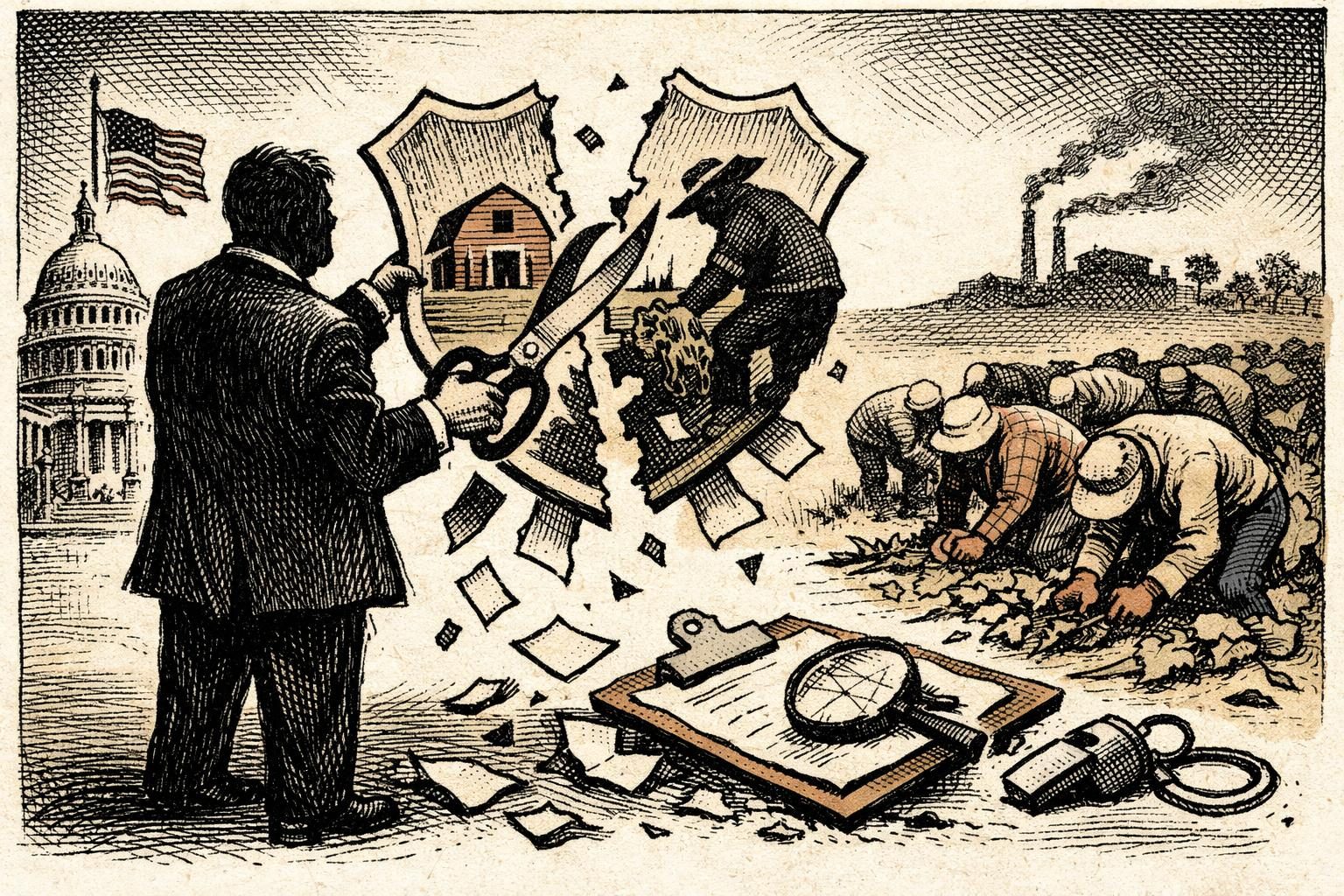
The Labor Department is moving to erase a set of coordinated enforcement rules that were designed to knit together oversight of migrant farm labor, a change that landed in the Federal Register on Aug. 31 and immediately opened a new front in the long-running fight over how much protection agricultural workers should have on the job. The final rule would rescind regulations that help coordinate enforcement in cases involving migrant and seasonal farmworkers, including disputes tied to the H-2A visa program and the Migrant and Seasonal Agricultural Worker Protection Act. On paper, the department says the old framework is outdated and that newer enforcement tools make the coordination rules unnecessary. In practice, the change would pull apart a structure that exists precisely because farm labor violations are often scattered across jobsites, employers, contractors, and agencies. The government is presenting the move as a clean-up of obsolete bureaucracy, but the policy it is cleaning away is one that was built to make enforcement less chaotic in a sector where chaos is often the point.
The stakes are not abstract. Farmworkers, especially migrant laborers, already work in one of the most difficult corners of the labor market to police, with limited bargaining power, language barriers, remote work sites, and a constant fear that speaking up can mean losing a job, housing, or future work. That makes coordination between agencies more than a technical detail; it is one of the few ways the system can keep violations from slipping through the cracks. Wage theft, unsafe housing, retaliation, and threats tied to immigration status have all long been part of the landscape in agricultural labor, and the enforcement rules now on the chopping block were meant to help agencies respond to those problems together instead of in isolated silos. The department’s argument is that modern systems can do the job without this particular regulatory layer, but that claim has to be tested against the realities of a workforce that is often invisible until something goes badly wrong. If the old framework is truly unnecessary, the government will need to show how protections remain intact without it. If it cannot, the rescission starts to look less like modernization than a retreat from oversight.
The rulemaking itself also suggests that the fight is far from settled. Comments referenced in the process show worker advocates warning that the rescission could weaken protections and might even run into conflict with a prior court-approved settlement, an issue that raises the stakes well beyond a simple administrative rewrite. That kind of objection matters because it indicates the department is not merely updating language or consolidating forms; it is potentially reopening a framework that was embedded in legal and enforcement agreements for a reason. The administration may insist that separate mechanisms now handle the same terrain, but critics are likely to argue that coordination is not redundant when the risks are diffuse and the workers affected are among the least able to protect themselves. In labor law, enforcement is often the whole game. Rules that make it easier for agencies to share information, align investigations, and act consistently can be the difference between a remedy and a dead end. Removing those rules, even if the department says the practical effect will be minimal, invites the criticism that the government is weakening the very tools it needs to police an industry already marked by abuse.
This is why the language of efficiency will probably do little to quiet the political backlash. Every administration likes to frame deregulatory action as streamlining, modernization, or elimination of duplication, but farmworker advocates have heard those words before, and they usually arrive with consequences for the people doing the most precarious work. The government is not just rearranging internal procedure here; it is deciding whether to keep a formal structure that was designed to make enforcement more coherent in an industry where the power imbalance between employer and worker is extreme. If the department’s modern mechanisms are truly enough, then the burden is on officials to show that the protections farmworkers currently rely on will not erode in the process. If that proof never comes, then the rescission will read as another familiar kind of Washington maneuver: a policy stripped down in the name of efficiency, with the costs pushed onto workers who have the least room to absorb them. In plain terms, the people harvesting the food would again be asked to pay for a neater spreadsheet, and that is exactly why this rule is likely to become a bruising fight rather than a quiet administrative update.
Comments
Threaded replies, voting, and reports are live. New users still go through screening on their first approved comments.
Log in to comment
No comments yet. Be the first reasonably on-topic person here.