
White House fraud task force expands into trucking enforcement
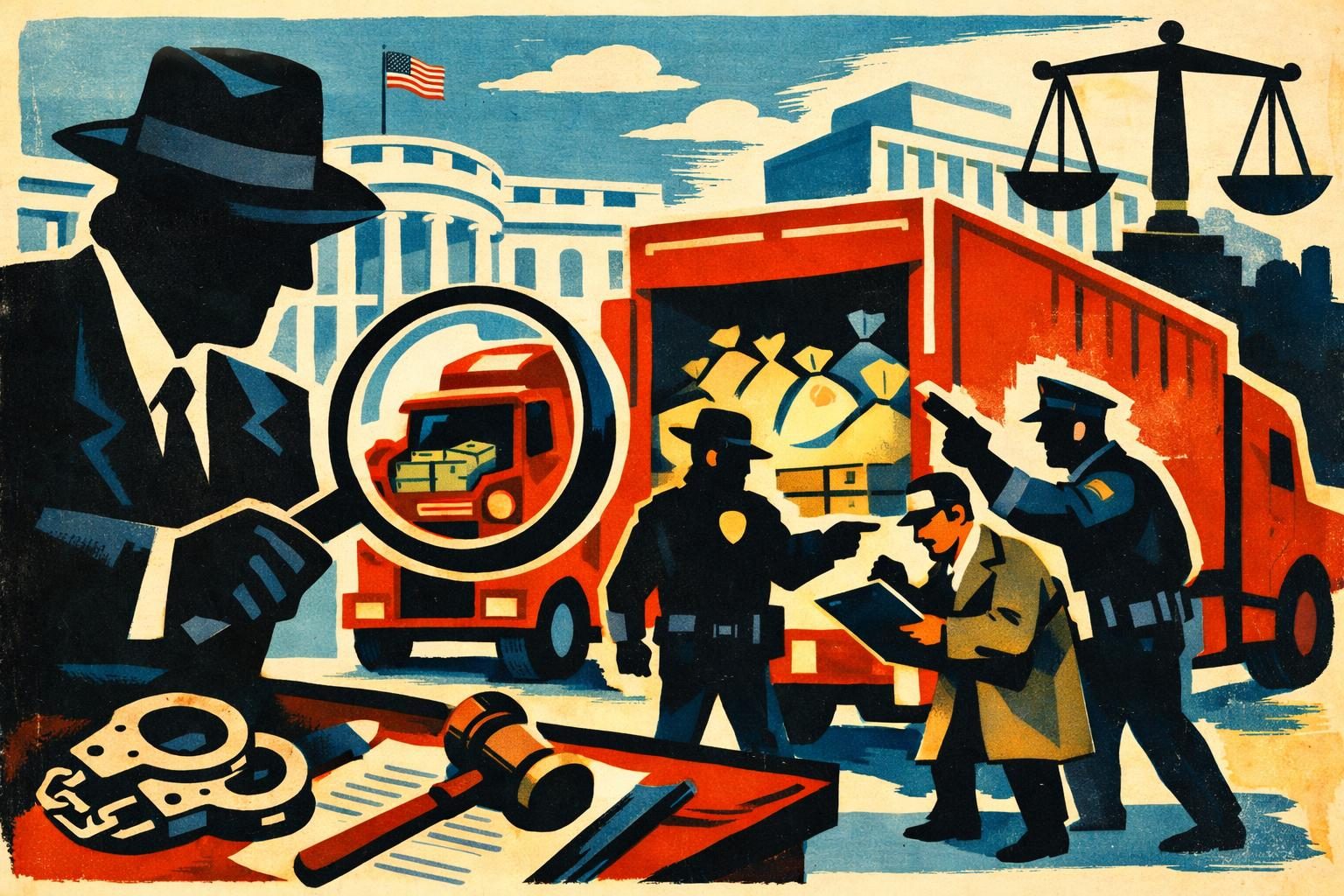
Federal officials have opened a new front in their broader fraud crackdown, this time turning their attention to trucking. On Monday, the Justice Department, the Department of Transportation, the Department of Homeland Security, and the White House fraud task force rolled out a coordinated enforcement campaign aimed at fraud in the industry. The presentation was meant to signal order, competence, and urgency. It also carried a less polished message: the federal government believes there is enough abuse in trucking to justify a more muscular response. That matters because trucking is not a niche target. It is a huge, fragmented sector that touches freight movement, labor markets, immigration enforcement, roadside safety, and the daily functioning of supply chains. When Washington decides to focus on trucking, it is not just talking about bad paperwork or crooked brokers. It is talking about an industry where federal, state, and private actors already overlap, where subcontracting can be opaque, and where a single weak link can ripple through warehouses, ports, distribution centers, and retail shelves.
That complexity is part of what makes the initiative politically useful. Trucking sits at the intersection of some of the administration’s favorite talking points, including fraud enforcement, border pressure, and workplace compliance. A task force that can claim to protect honest carriers while rooting out fraud allows officials to look tough without having to choose just one target audience. It also gives the White House a way to frame enforcement as both economic housekeeping and public safety. Fraud in trucking can mean fake credentials, false records, deceptive contracting, misclassification schemes, or the use of shell arrangements that hide who is actually responsible for a load, a driver, or a vehicle. The problem is not that those abuses are imaginary. The problem is that a campaign built to catch them can easily broaden into a much wider compliance dragnet. In a sector already known for tight margins and heavy regulation, even a legitimate anti-fraud effort can feel like a warning that every truck stop, broker desk, and contractor chain is now under a federal microscope. That is especially true when the government bundles multiple agencies into one announcement, because coordinated enforcement often means more document demands, more interviews, more audits, and more uncertainty about what exactly counts as a violation.
Officials appear to be betting that the public will welcome the image of federal departments working in concert against bad actors in an industry that most Americans only think about when something goes wrong. There is real political value in that framing. Fraud is one of those words that can absorb a lot of different grievances, from stolen identities to fake companies to abuse in labor and contracting arrangements, without requiring the administration to explain every operational detail. But there is also a darker side to the campaign’s design. The same tools used to root out fraudulent actors can also expand document checks, tighten contractor scrutiny, and encourage more workplace investigations that go well beyond the original targets. That could be useful if the goal is to force compliance from companies that have long operated in the gray areas of the system. It could also produce the sort of collateral burden that makes honest operators spend more time on lawyers and less time moving freight. In practice, the line between aggressive enforcement and overreach can be difficult to police, especially in an industry where responsibility is often dispersed across shippers, brokers, carriers, drivers, and labor contractors. If the administration is careful, it may be able to show quick wins and build a case that fraud really is being squeezed. If it is sloppy, the campaign could be dismissed as another slogan-heavy task force that looks impressive in a statement but offers little clarity on how the crackdown will work on the ground.
The next test is whether the federal machinery moves from announcement to action. Prosecutors, investigators, and inspectors general will need to produce cases, not just coordinate language, if the effort is going to be taken seriously. Without visible enforcement, the initiative will read as a branding exercise attached to a sector that was easy to target and harder to fully understand. With enforcement, the consequences could be immediate and far-reaching for trucking companies, freight brokers, labor contractors, and related middlemen who may suddenly face a more aggressive federal posture. Some firms may welcome a cleanup if it takes out competitors relying on fraud or shell arrangements to undercut prices. Others will worry that the government is building a wider compliance regime under the banner of fraud prevention, one that could make ordinary business practices more risky and more expensive to defend. The administration seems to believe that showing strength in this area will earn credit with voters who want visible action against abuse. Whether that happens will depend on how precisely the campaign is aimed, how quickly cases are filed, and whether officials can distinguish between the bad actors they say they are hunting and the legitimate businesses that will have to live with the fallout. For now, the message from Washington is blunt enough: the government wants proof, not promises, and it is prepared to make an entire sector account for itself.
Comments
Threaded replies, voting, and reports are live. New users still go through screening on their first approved comments.
Log in to comment
No comments yet. Be the first reasonably on-topic person here.