
House returns with a shutdown-trap stopgap bill on deck
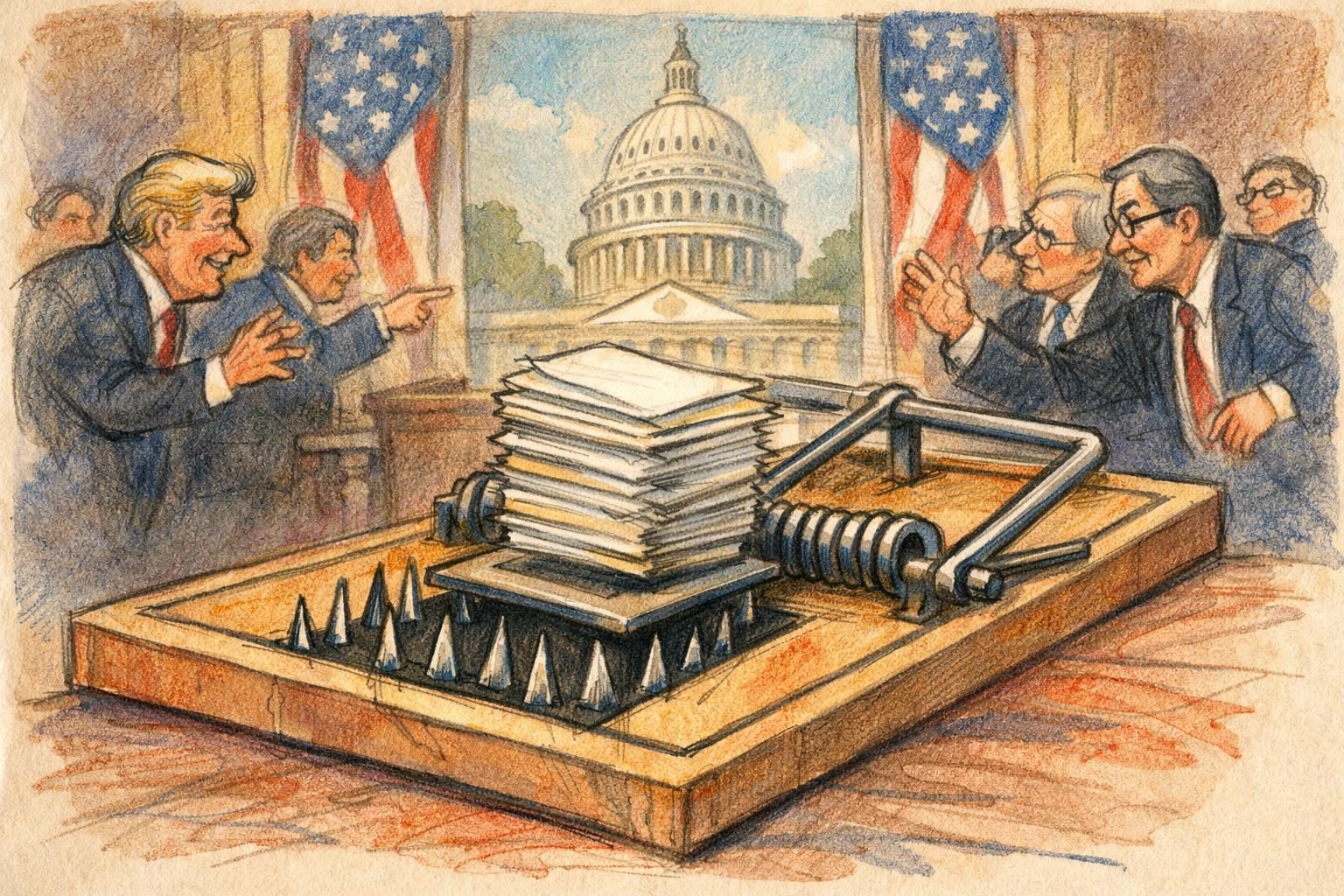
House lawmakers came back to Washington on Aug. 31 with a stopgap spending bill waiting at the top of the to-do list, and that means the first days of the fall stretch are likely to be dominated by a familiar game of chicken over whether the government keeps operating on time. The measure is intended to extend federal funding through early December, buying Congress a few more weeks to sort out the larger spending fight that it has repeatedly shown little appetite for resolving on schedule. On paper, a short-term funding patch is the sort of procedural move that should allow everyone to breathe, keep agencies open, and postpone the bigger arguments until later. In practice, those patches often become the very stage on which the bigger arguments play out. That is the situation now: a seemingly modest bill that may end up carrying the weight of every unresolved grudge in Washington.
The immediate problem is not whether Congress understands the arithmetic. Lawmakers know the deadline, know the consequences of missing it, and know perfectly well that failure would set off another round of disruption for federal workers, contractors, and the public that depends on government services. The problem is whether the House and Senate can agree on a temporary extension without turning it into a proxy war over President Trump’s agenda, federal spending priorities, and the boundaries of acceptable leverage. Even a so-called clean continuing resolution can become a magnet for amendments, threats, and ideological score-settling once the political class starts treating it less like a bookkeeping exercise and more like a test of allegiance. That dynamic is especially combustible when both parties believe that showing toughness is more valuable than showing competence. The result is often a predictable mess: leadership talks about responsibility while members on all sides threaten to blow up the very measure meant to prevent chaos.
The House’s return therefore puts Speaker and rank-and-file lawmakers alike in a narrow corridor where the choices are limited but the incentives for confrontation are abundant. If the stopgap advances without drama, it will still invite criticism from factions that want either deeper cuts, different priorities, or a more explicit political confrontation over the administration’s direction. If it stalls, the blame game will begin immediately, with each side trying to cast itself as the adult in the room and the other side as the one forcing federal employees and agencies into uncertainty for sport. That is the basic structure of shutdown brinkmanship: everyone says they want stability, but many of the same players prefer the leverage that comes from threatening instability. A funding bill that should be routine then becomes a vehicle for speeches about fiscal discipline, executive overreach, or the need to stand firm against a political opponent. The policy details matter, but in these moments the bill is often less important than the performance built around it.
There is also a deeper problem that makes this particular standoff feel less like an isolated fight than another symptom of congressional dysfunction. The federal government does not shut down because no one can count; it shuts down because Congress keeps running out of the basic habit of compromise at the exact moment compromise is most required. That is what gives a short-term patch its strange power. It is supposed to be an off-ramp from crisis, but instead it becomes a pressure point where competing demands collide and every faction tries to extract advantage before the deadline hits. For federal workers, the difference between a clean extension and a blown deadline is not abstract. It is paychecks, planning, and the basic expectation that elected officials can perform one of their most elementary tasks. For the broader public, it is a reminder that the machinery of government can be dragged to the brink over disputes that often have more to do with political positioning than with the actual mechanics of keeping the lights on. Whether Congress manages to approve the temporary funding bill through early December will say less about fiscal strategy than about how much governing capacity remains when both parties decide brinkmanship is more rewarding than boring responsibility.
Comments
Threaded replies, voting, and reports are live. New users still go through screening on their first approved comments.
Log in to comment
No comments yet. Be the first reasonably on-topic person here.