
Supreme Court lets Trump keep his ballroom construction moving
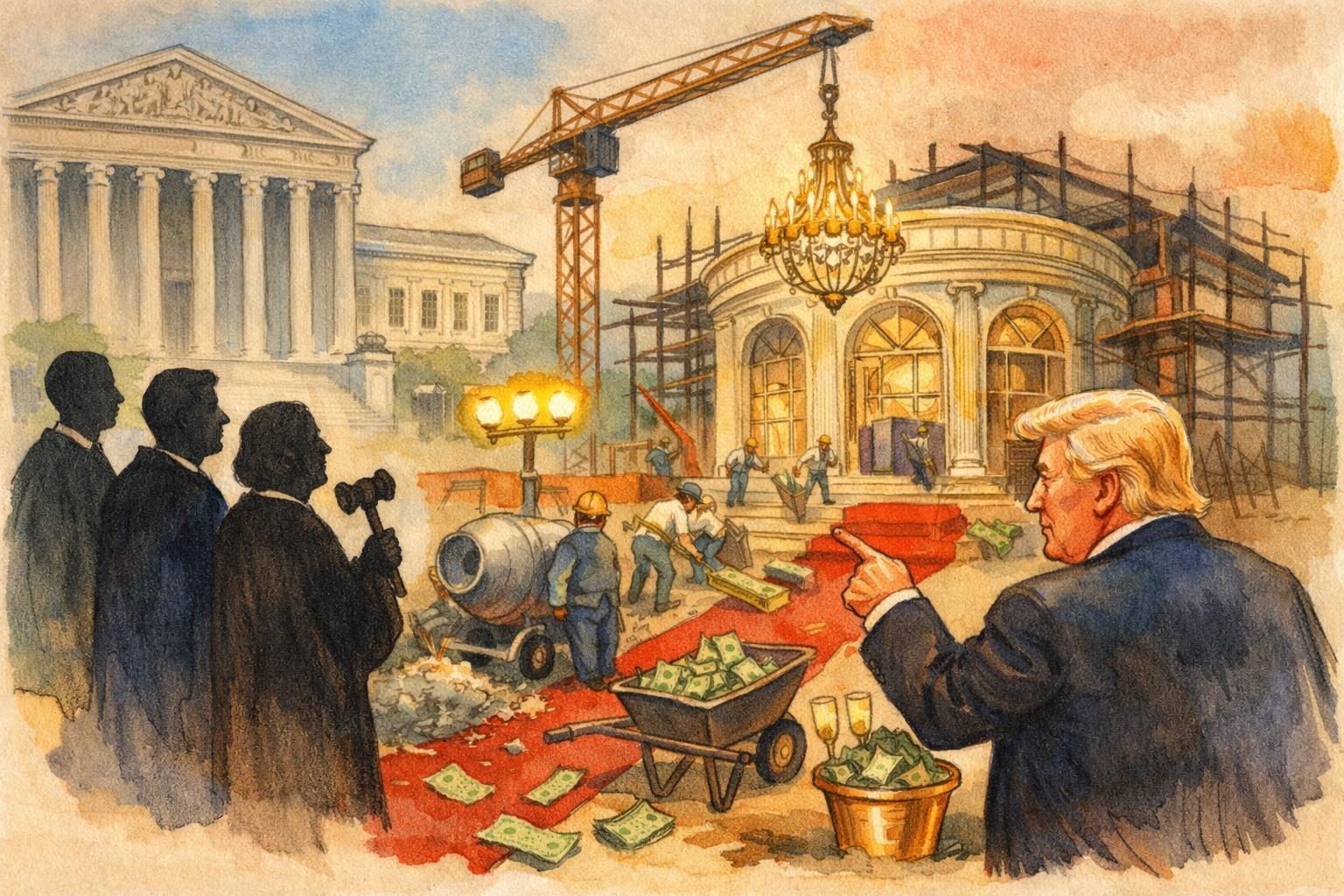
A divided Supreme Court on Aug. 31 handed the White House a temporary but important win, allowing construction on the planned East Wing ballroom to keep moving while lawsuits over the project continue in lower courts. The order does not decide whether the project is legal. It does, however, remove the immediate obstacle that had threatened to stop above-ground work while judges sorted out the case. For President Donald Trump, who has made the project a high-profile symbol of his return to power, that is enough to keep the cranes, crews and concrete moving for now. For the challengers, it is a familiar kind of defeat: the kind that does not end the fight, but changes the terrain in a way that can be hard to reverse later.
The ballroom itself has become much bigger than a renovation fight or an argument over executive taste. The project is estimated at roughly $400 million and would significantly alter a part of the White House complex that, until now, has been understood as public property subject to ordinary legal and political restraints. Lower courts had already said work needed to stop because the administration had not secured congressional approval, a point that might sound technical until one remembers that technical rules are often what keep presidents from treating the government like a personal construction site. The administration has argued that the ballroom is a routine improvement and has tried to present the project as a practical upgrade rather than an expansion of presidential power. Critics see something else entirely: an effort to push through a major and expensive change to the executive mansion without the kind of authorization that should accompany a project of this scale. The Supreme Court’s latest move does not resolve that dispute, but it does let the White House keep building while the courts continue their review.
That matters because momentum itself can become a legal and political strategy. Once a project is physically underway, the arguments about stopping it tend to get harder, especially when the dispute is about a structure that is already changing the landscape. Opponents now face the problem of trying to win in court while construction continues in the real world, which often creates pressure to compromise or to accept a result they would have blocked earlier. Supporters of the administration can point to the order as a sign that the White House acted within its rights, or at least that it has been given room to proceed until judges say otherwise. That is a useful position in a case like this, where the administration does not need a final ruling right away so much as it needs time. In practical terms, the decision shifts the balance toward completion first and legal judgment later, which is often how contested projects become permanent facts.
The political symbolism is hard to miss. Trump has long treated construction, scale and spectacle as expressions of strength, and the ballroom proposal fits neatly into that worldview. To his allies, it can be framed as a straightforward modernization effort and a visible sign of presidential ambition. To his opponents, it looks like another example of the White House testing how far it can go before Congress or the courts force a stop. The fight also lands in the middle of a broader argument about whether the administration treats legal limits as binding rules or as inconveniences to be worked around. That is why the case has drawn so much attention beyond the specific building plans. It is less about the architectural details than about who gets to decide what happens to the seat of executive power, and under what authority.
The Supreme Court did not settle that question, and it may not do so for some time. What it did do was clear the path for construction to continue in the short term, giving the administration room to press ahead while the litigation grinds on. That outcome may prove temporary, but temporary victories can still matter a great deal when the subject is a multimillion-dollar project and the legal clock is slow. If the courts later side with the challengers, the White House will already have gained time, progress and a partially built structure that cannot simply be unwound. If the administration ultimately prevails, this stage of the fight will look like an early checkpoint on the way to a completed project. Either way, the order shows how even a vanity project can turn into a constitutional dispute once it collides with the limits on presidential power. For now, the ballroom gets to keep rising, and the rest of the argument will keep playing out around it.
Comments
Threaded replies, voting, and reports are live. New users still go through screening on their first approved comments.
Log in to comment
No comments yet. Be the first reasonably on-topic person here.