
U.S. strikes on Iranian sites jolt markets and raise the price of another bad bet
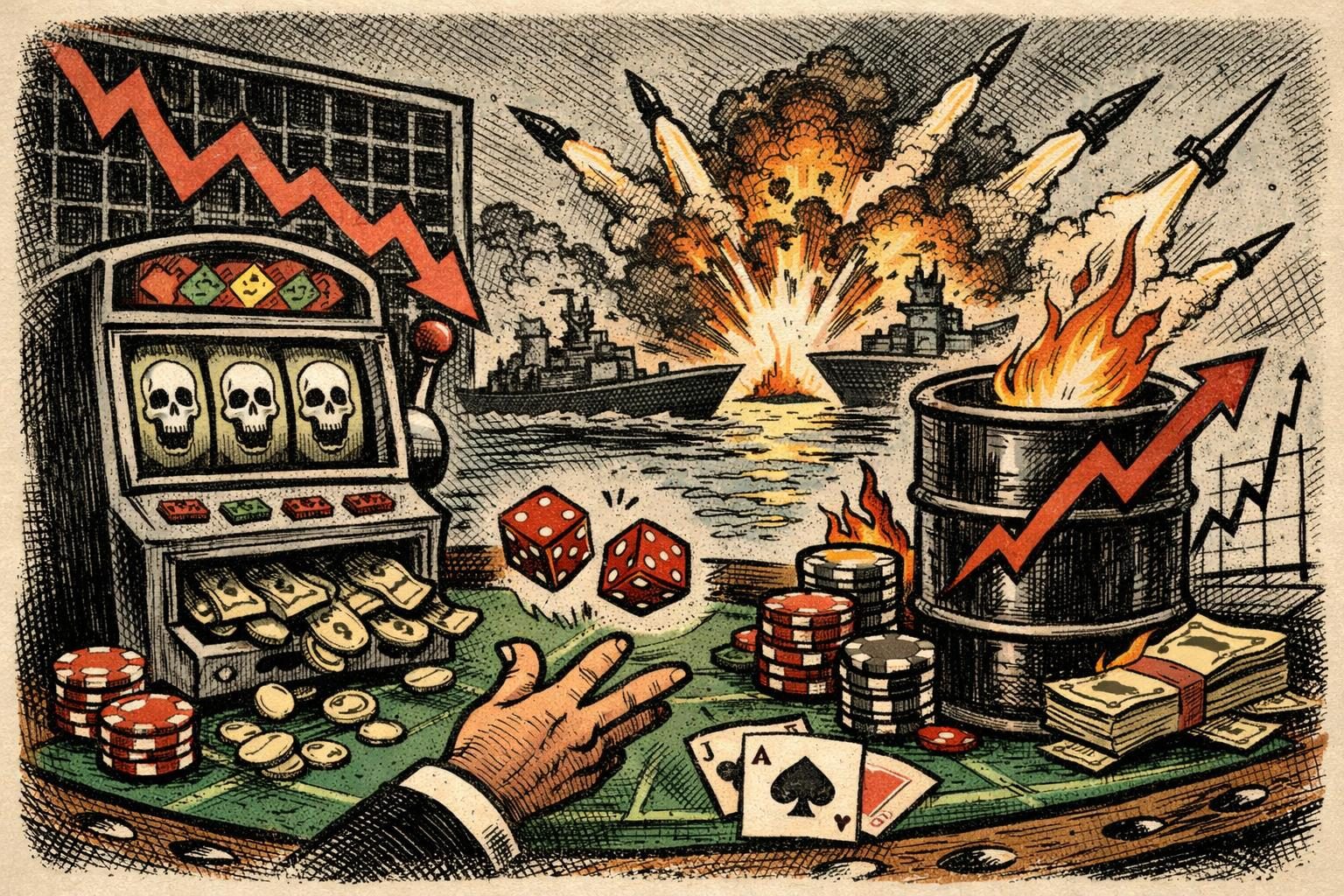
American strikes on Iranian rocket launchers in and around the Strait of Hormuz did what such strikes almost always do: they instantly dragged a military story into the middle of the global economy. Futures slipped as traders tried to price in the possibility that the fight could widen, while oil climbed on the obvious fear that another round of unrest near one of the world’s most important energy corridors could interrupt flows or at least make everyone pay more for the privilege of worrying. That reaction was not subtle, and it was not hard to understand. The Strait of Hormuz is not just another patch of water with a dramatic name; it is a chokepoint through which a significant share of global crude and fuel shipments pass, which means any fire there tends to reach living rooms, gas stations, and boardrooms far from the firing. Even before anyone can fully assess the tactical results of the strike, the market has already rendered its own verdict: this is risk, and risk has a price.
The immediate economic consequence is the part that ordinary people usually feel first, even if the politics take longer to settle. Higher oil prices ripple into gasoline, diesel, shipping, and air fares, and those costs do not stay politely confined to one sector. Airlines, carriers, refiners, manufacturers, and the households that already treat every fill-up like a budgetary negotiation all take some version of the hit. That is why this kind of military action can look abstract in a briefing room and brutally concrete by the time consumers are planning weekend travel or small businesses are adjusting delivery costs. The summer driving season is also exactly the wrong time to invite another surge in fuel prices, because demand is already elevated and margins are already thin. Even a limited escalation can force markets to assume a worse one, which is how a strike that is framed as controlled can still end up behaving like a tax on everyone else.
Politically, the timing is awkward in the way these situations always become awkward after the fact. Washington can talk about deterrence, resolve, and measured force all it wants, but once the immediate market response is a drop in futures and a jump in crude, the language of control starts to sound more aspirational than real. The administration has spent months presenting itself as serious about disorder abroad, yet the first visible domestic effect of the strike was not calm or confidence but volatility and a fresh wave of anxiety. That does not automatically mean the action was strategically wrong, and it does not prove that the White House has no plan. It does mean the public will want to know what the objective was, what the exit ramp looks like, and whether anyone seriously believes the Strait of Hormuz is a place where a small show of force stays small for long. Critics are already likely to argue that the government was quicker to demonstrate toughness than to explain the next step, which is often how military improvisation ends up looking less like strategy and more like a gamble with somebody else’s money.
That is the deeper problem here: markets are responding not just to the strike itself, but to the uncertainty surrounding what comes next. Investors do not need a full-blown war to start repricing assets; they only need credible hints that supply lines could be disrupted or that retaliation could target shipping, energy infrastructure, or regional allies. Iran’s response, the scope of the American strike, and whether this becomes a one-off event or the start of a cycle will all shape how long the economic damage lasts. If the situation stays contained, the pain may be limited to a temporary spike in fuel prices and a bruised appetite for risk. If it escalates, the cost will spread quickly, from commuters and freight haulers to policymakers who will have to explain why they picked a fight in a place where nearly every global consumer has a stake. The uncomfortable truth is that military force in a chokepoint like Hormuz is never just a foreign-policy story. It is a domestic one too, because the bill arrives long before the victory speech, and sometimes before anyone can even agree on what victory was supposed to look like.
Comments
Threaded replies, voting, and reports are live. New users still go through screening on their first approved comments.
Log in to comment
No comments yet. Be the first reasonably on-topic person here.