
White House rolls out a trucking fraud blitz, because apparently the roads needed more government theatrics
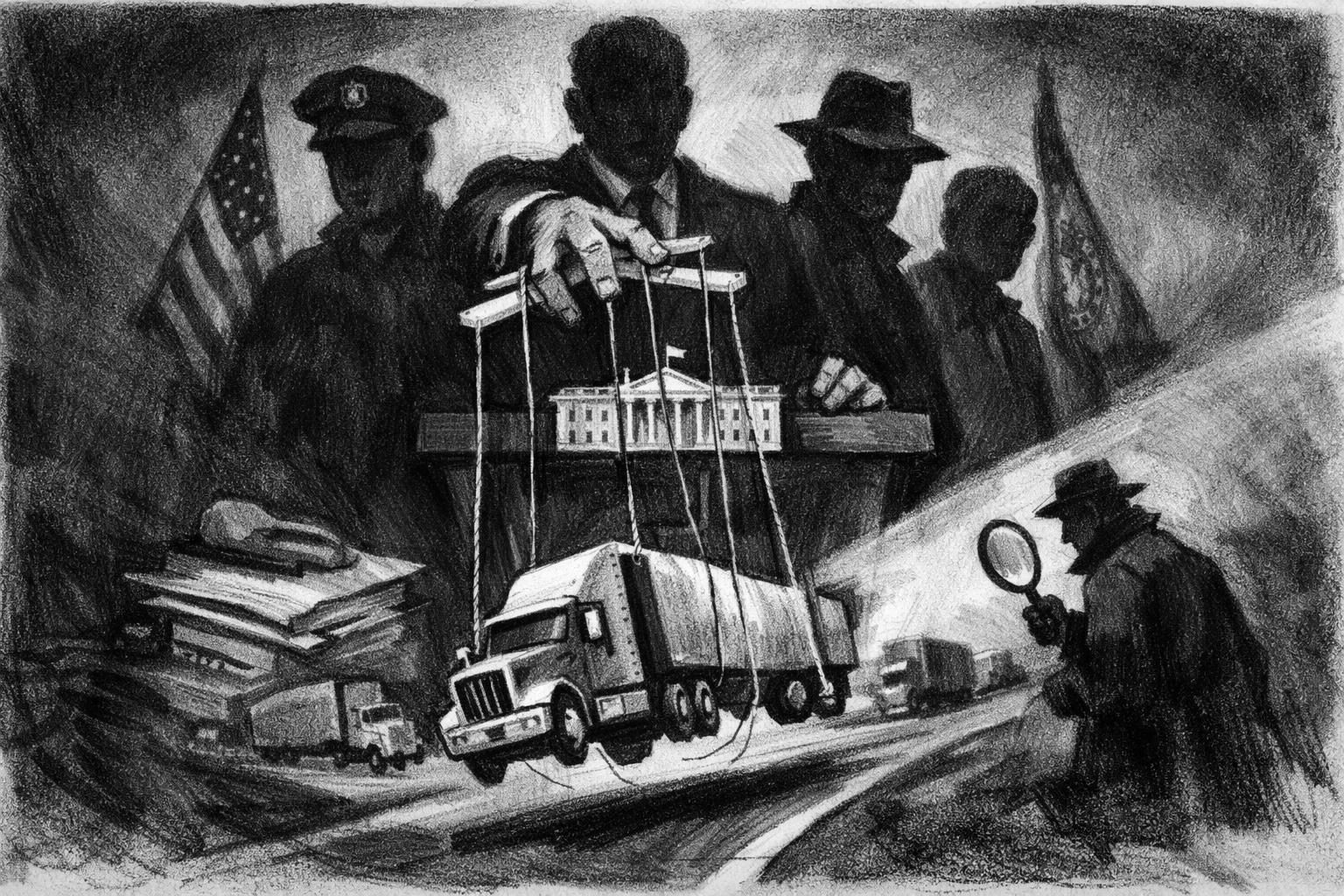
The White House used August 31, 2026, to stage a fresh federal crackdown on fraud in the trucking industry, rolling out the effort as a coordinated, interagency push rather than a routine enforcement update. Transportation Secretary Sean Duffy, Homeland Security Secretary Markwayne Mullin, White House Fraud Task Force Vice Chair Andrew Ferguson, and federal prosecutors all appeared together to frame the campaign as a joint operation aimed at truckers, carriers, and the systems that license and monitor them. The administration said the point was to align regulatory authority with law enforcement tools so the government could move faster against fraudulent operators. In practice, the announcement was also a political message: the White House wanted to show it could turn a messy, technical sector into a clean, headline-friendly example of toughness. That is a familiar move in this administration, which tends to package enforcement as a brand as much as a policy. The result is a crackdown that sounds broad, ambitious, and carefully staged, even before the public has a clear sense of how much fraud investigators think they are actually chasing.
The details matter because trucking is one of those industries where federal and state authority overlap in ways that can make enforcement both powerful and chaotic. The administration is tying together transportation oversight, homeland security concerns, Justice Department muscle, and the White House’s own fraud task force, which gives the government more ways to press a case but also more opportunities to step on its own toes. For legitimate carriers, owner-operators, and drivers, that can mean more scrutiny from more offices, with different records, standards, and demands. If the agencies coordinate well, they can target obvious bad actors who are gaming licensing rules, paperwork systems, or identity checks. If they do not, the industry could end up dealing with overlapping investigations, inconsistent guidance, and the sort of regulatory fog that punishes compliant businesses almost as much as the people the government says it is after. The administration is presenting the effort as a public safety measure focused on cleaner roads and better compliance, but the political background is impossible to miss. Trucking has become a convenient battlefield for larger fights over immigration, labor, and whether the federal government is aggressively policing fraud or simply broadening the definition until it covers whatever is most politically useful at the moment.
That tension is why the announcement is likely to draw attention well beyond the transportation sector. The administration has been leaning hard on the idea that trucking enforcement is not just about accidents or licensing mistakes, but about a wider fraud problem that touches identity verification, commercial driver licensing integrity, and paperwork that can be abused by operators looking for shortcuts. What has not been made fully clear is how much of the campaign is about a discrete fraud scheme versus how much is about the broader enforcement habits the White House prefers to attach to the trucking industry. That distinction matters, because a narrow anti-fraud sweep is easier to defend than a sprawling initiative that starts looking like an immigration or labor enforcement dragnet with a trucking label slapped on top. The government can claim a win if it catches genuinely fraudulent operators and cleans up some licensing abuse. It can also claim a win if it uses the campaign to show visible action and generate arrests, penalties, or administrative sanctions. But those are not the same thing as solving a real problem at scale. If the rollout produces a wave of confusion for state agencies or legitimate companies trying to figure out which federal office controls what, then the “whole-of-government” rhetoric will start to look less like serious coordination and more like a press-event gimmick with a badge and a slogan.
The consequences of this effort will probably be felt first in the states and in the trucking industry itself, where companies are already navigating a thicket of federal safety rules, licensing requirements, labor shortages, and compliance costs. States issue and oversee commercial driver licenses, employers have to verify records and credentials, and federal agencies can step in from several different angles depending on what they think they have found. That makes the crackdown potentially useful if it is narrowly focused and tightly coordinated, but it also makes it vulnerable to political overreach. If the administration starts using the fraud campaign as a vehicle for broad document demands or an immigration-centric enforcement push, state officials and industry groups will likely push back hard. If the sweep is limited to clear-cut cases of fraud, the White House will get to call the operation proof that its enforcement machinery works, but that would also undercut the grand, almost theatrical language used to sell the initiative. Either way, the rollout has the feel of something that will be judged quickly and harshly. Arrests and fines will be treated as evidence of toughness, while confusion, litigation, or a thin enforcement record will make the whole thing look like another overproduced federal campaign in search of a storyline. For now, the administration has announced the machinery, but it still has to prove that the machinery can do more than make noise.
Comments
Threaded replies, voting, and reports are live. New users still go through screening on their first approved comments.
Log in to comment
No comments yet. Be the first reasonably on-topic person here.