
Election-fraud prosecutions keep piling up, and the messaging is doing the real work
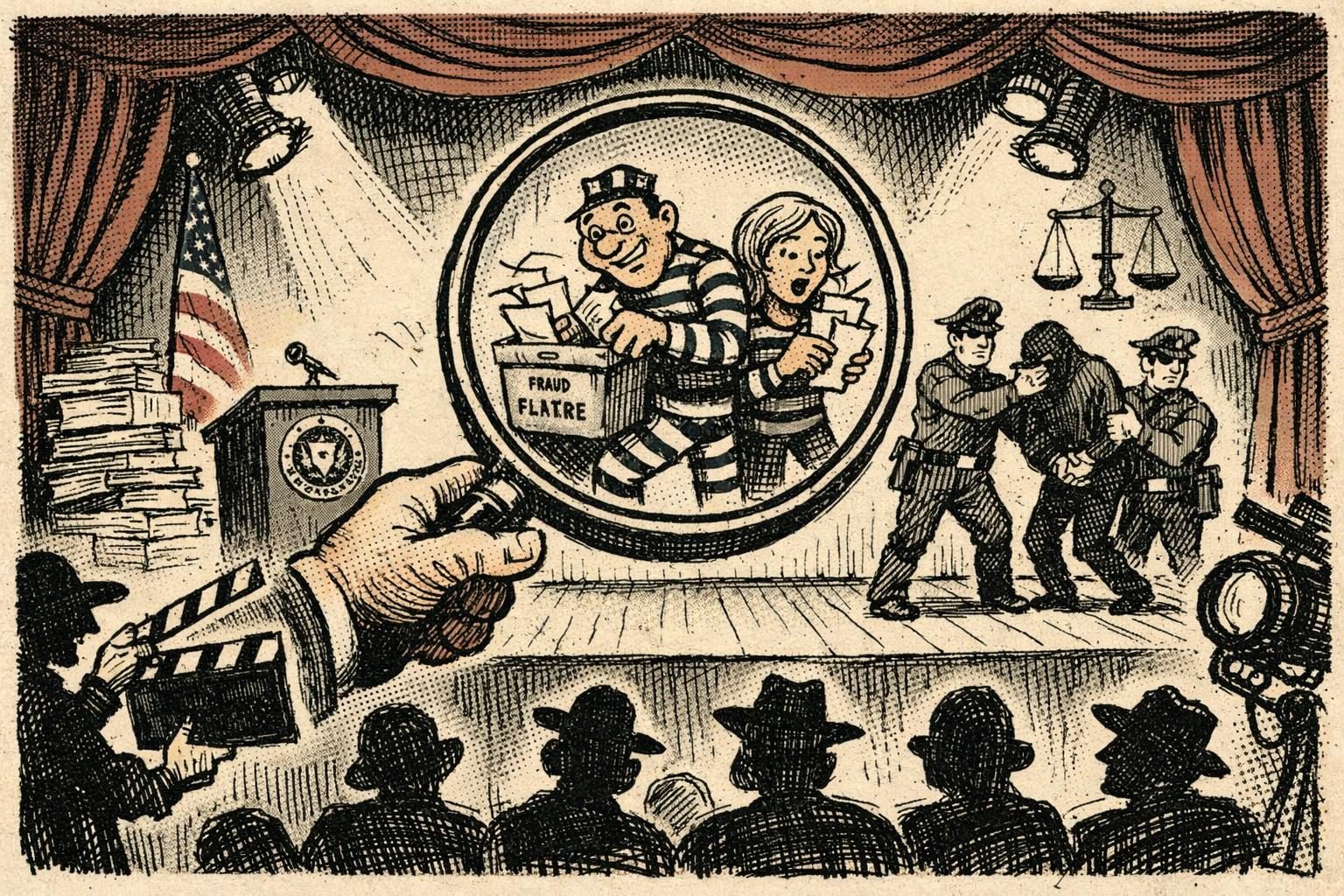
The latest wave of voting-related prosecutions has given the administration another chance to talk as if election fraud were everywhere, all the time. Federal officials have announced new cases involving alleged illegal voting, false claims of citizenship, and fraudulent voter registration, building a running list of charges that can be presented as evidence of vigilance. Some of the conduct alleged in those cases is serious and, if proved, deserves punishment. But the broader political value of the announcements is obvious: each new filing becomes another data point in a larger campaign to persuade the public that the voting system is under constant siege.
That distinction matters more than the press releases suggest. A criminal case is not the same thing as a national pattern, and a handful of prosecutions does not, by itself, establish a widespread problem. The Justice Department’s recent announcements describe specific defendants and specific alleged conduct, including cases tied to noncitizen voting and fraudulent registration. Those accusations may be narrow in number, but they are easy to arrange into a sweeping narrative when repeated loudly enough. The message is not subtle. The government is not just saying it found potential violations of law; it is inviting the public to see those violations as confirmation of a far larger election-integrity crisis.
That is where the theater comes in. The administration clearly wants these cases to do more than stand on their own merits. They are being used to reinforce a political argument that aggressive enforcement is necessary because fraud is supposedly a persistent and systemic danger. In practice, the repeated rollout of isolated cases can create the impression of a much broader threat than the underlying facts may support. Serious as some allegations may be, they still require context, and context is exactly what gets lost when enforcement actions are packaged as proof of an all-encompassing problem. The public is left with a drumbeat of accusations, but not necessarily with a clear sense of scale, frequency, or actual impact on elections.
The pattern is especially useful because it allows officials to claim both restraint and urgency at the same time. On one hand, they can point to individual prosecutions and say the system is working, that laws are being enforced, and that unlawful conduct is being pursued case by case. On the other hand, they can use those same cases to argue that elections remain vulnerable enough to justify even more scrutiny, more criminal referrals, and more public alarm. That is a politically efficient loop. It does not require proving a nationwide fraud epidemic, only keeping enough isolated cases in circulation to sustain the impression that one may be lurking just beneath the surface. For an administration invested in projecting toughness on election integrity, that is often enough.
None of this means the cases should be shrugged off. If someone illegally votes, falsifies citizenship status, or submits fraudulent registration information, those actions can undermine confidence in the process and may warrant serious consequences. But treating every prosecution as a referendum on the health of American elections is a different move entirely. It shifts the discussion away from evidence and toward narrative. The public is encouraged to infer systemic breakdown from selective enforcement headlines, even when the facts, at least as currently described, support only a narrower conclusion. That is why the rhetoric around these cases matters almost as much as the cases themselves.
The Justice Department’s recent announcements fit neatly into that dynamic. By highlighting new voting-related charges in rapid succession, officials can produce a sense of momentum and urgency that extends far beyond the number of defendants actually charged. The messaging does real work here. It helps sustain the idea that election fraud is not an occasional legal violation but a recurring national menace demanding constant attention. Yet the record described so far still looks like a series of isolated prosecutions, not proof of a system in collapse. The administration may be eager to convert those cases into a sweeping argument, but the difference between isolated misconduct and systemic crisis remains the crucial one. The former may be real. The latter still has to be demonstrated.
Comments
Threaded replies, voting, and reports are live. New users still go through screening on their first approved comments.
Log in to comment
No comments yet. Be the first reasonably on-topic person here.