
California says Trump’s benefit crackdown is illegal—and it has a court fight to prove it
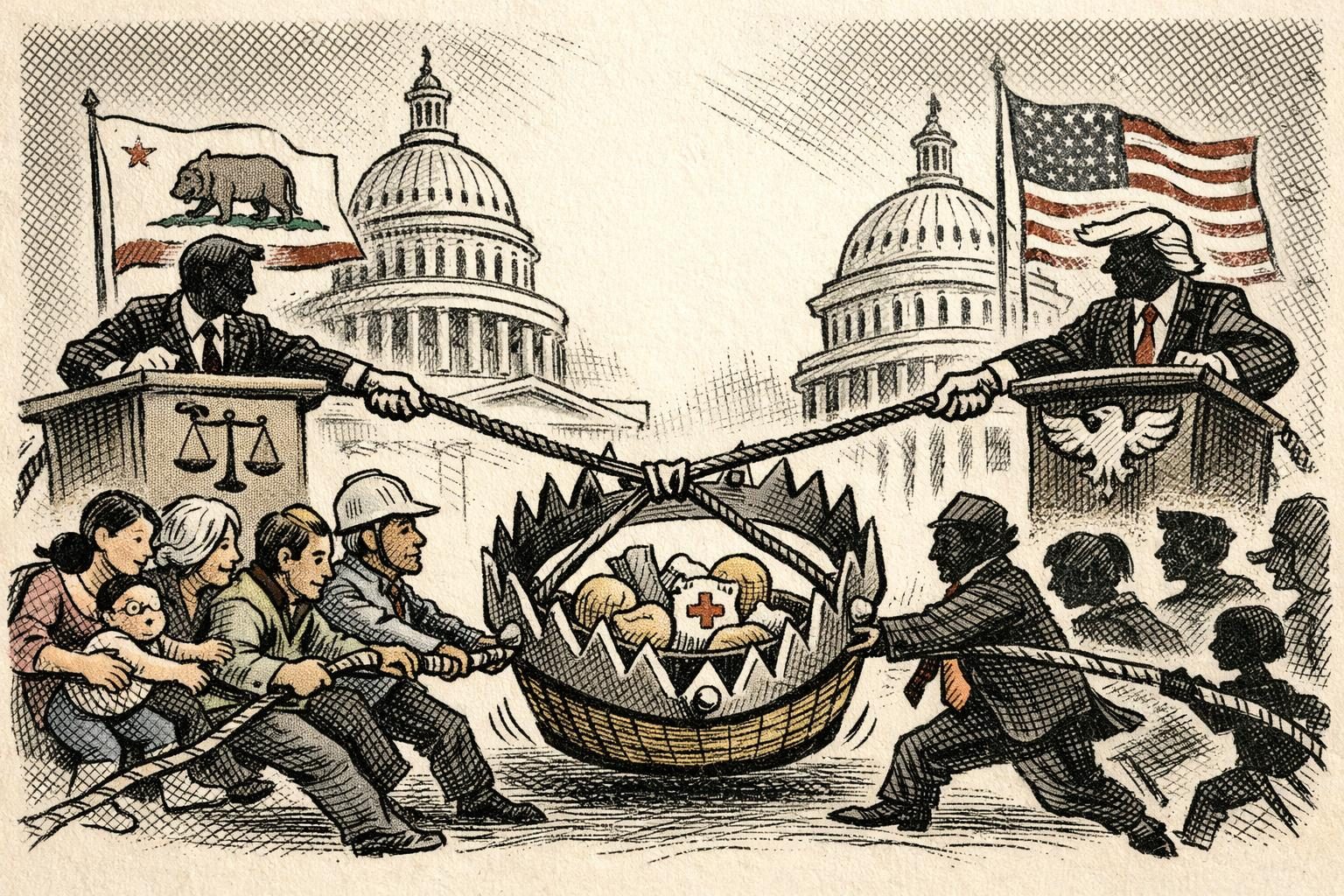
California’s top law enforcement official moved Friday to stop the Trump administration from tightening access to a range of public benefit programs for people whose immigration status the federal government says should make them ineligible. The lawsuit adds another front to a widening battle over who gets to define the rules for aid, and how far Washington can go when it wants to reshape those rules without fresh approval from Congress. California is arguing that the administration is not merely enforcing existing law, but trying to recast it in a way that would sharply narrow access to assistance that many families rely on to stay afloat. That kind of change may sound technical on paper, but in practice it can decide whether a household can buy groceries, keep up with medical costs, or avoid falling behind on housing. The state’s case is that the White House is using executive power to do something the law does not allow, and that the consequences will land on people least able to absorb them.
The dispute matters because public benefits are not abstract budget lines. They are part of the thin infrastructure that keeps a crisis from becoming a collapse, especially for low-income families, children, older adults, and people with urgent health or housing needs. When access rules change abruptly, state agencies have to rework eligibility systems, front-line workers have to explain shifting requirements, and recipients are left guessing whether help they expected will still be there next month. California’s complaint is built around the idea that the administration is attempting to go beyond the longstanding interpretation of federal law, which has generally set out who qualifies and under what conditions. If the federal government is successful, the practical result would be fewer people eligible for support or more people deterred from applying in the first place. Either way, the effect is not limited to paperwork. It is the sort of bureaucratic move that can ripple through whole communities and hit hardest where margins are already thin.
The broader fight also fits a pattern that has defined much of the administration’s approach to immigration and federal benefits. The White House has made restriction a kind of governing style, presenting each new move as a corrective against fraud, waste, or misuse, even when critics say the real target is simply making life harder for noncitizens and, in some cases, mixed-status families. Federal officials have framed the policy push as a matter of integrity and enforcement, language that sounds tidy right up until it collides with the lived reality of people who depend on public aid to cover basic needs. California and allied advocates say these efforts are punitive, destabilizing, and legally vulnerable because they appear to stretch beyond what the underlying statutes permit. The administration’s allies will almost certainly argue that the federal government has the authority to police access to taxpayer-funded programs and to keep benefits limited to those it believes are lawfully entitled to them. But the question in court is not whether the administration wants to draw a harder line. It is whether it has the legal authority to redraw that line by executive action.
The likely result is more litigation, more uncertainty, and more pressure on states to fill gaps created by federal policy shifts. That is not a minor administrative annoyance; it is the kind of upheaval that can force state governments, local agencies, and nonprofit providers to absorb the shock when Washington changes direction. California is positioning itself as a backstop for residents who could lose access or be chilled from seeking help, while also arguing that the federal government is creating confusion in programs that are supposed to be predictable. The White House, meanwhile, has continued to cast these steps as part of a broader effort to eliminate what it calls wasteful or harmful spending, a framing that seeks to turn an eligibility fight into a narrative about discipline and control. Whether that argument holds up will now depend on the courts, where judges will be asked to sort through statutory language, administrative authority, and the practical consequences of restricting aid. For now, the political stakes are plain enough: another federal-state clash over immigration, another test of presidential power, and another reminder that the people who end up paying for these fights are often the ones with the least power to shape them.
Comments
Threaded replies, voting, and reports are live. New users still go through screening on their first approved comments.
Log in to comment
No comments yet. Be the first reasonably on-topic person here.