
CBP Maintenance Window Risks More Border and Cargo Delays at the Worst Possible Time
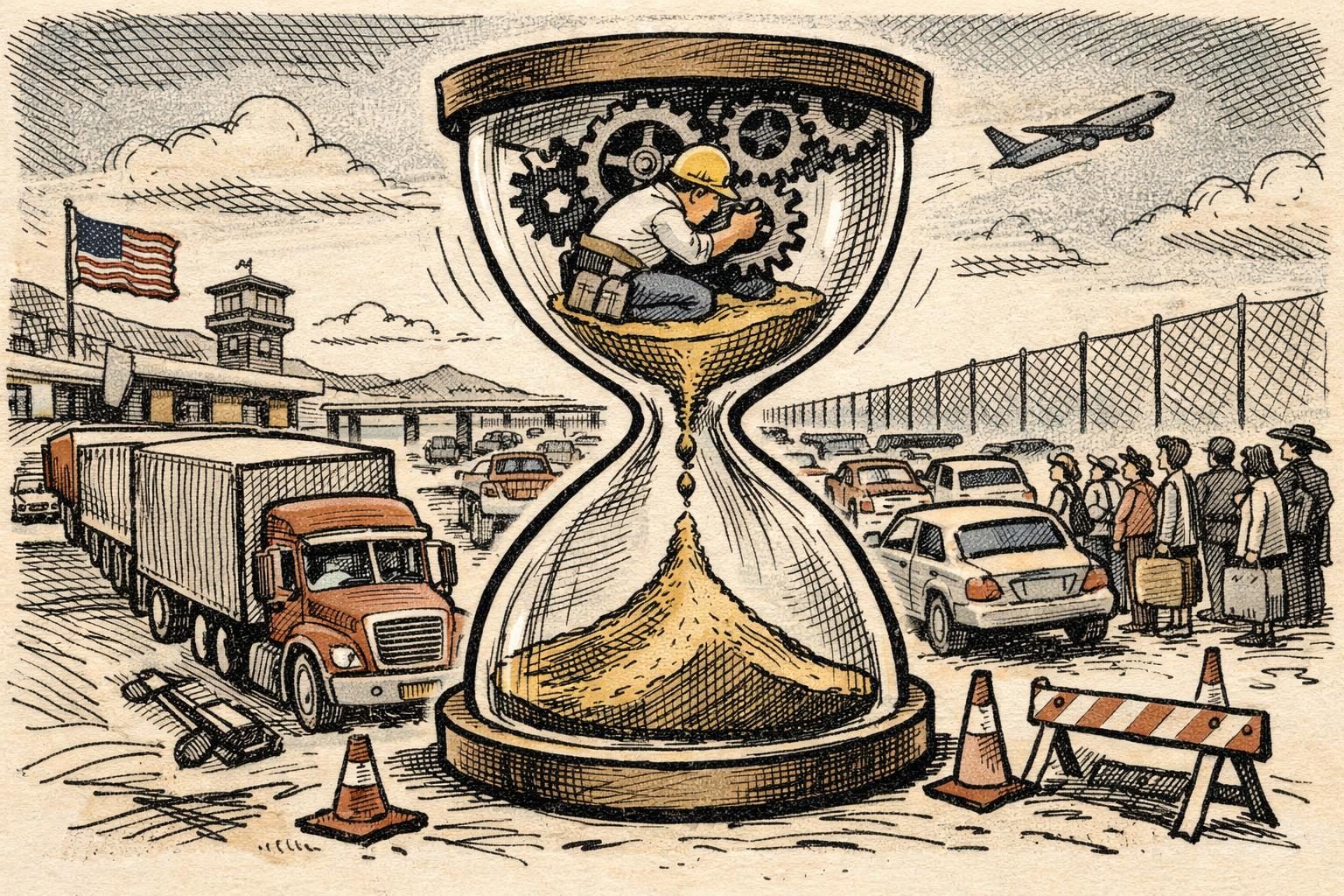
Customs and Border Protection has scheduled maintenance for its Automated Commercial Environment production system late Saturday into early Sunday, a move that may sound routine on paper but can quickly become a practical headache for anyone tied to the flow of goods across the border. ACE is one of the main digital backbones for customs processing, so even a short interruption or slowdown can ripple through import filings, cargo releases, broker workflows, and inspection decisions. The agency described the work as planned maintenance, not an emergency failure, but the calendar still matters when the system sits at the center of trade processing. A window that opens late on September 26 and runs into September 27 may be easy to overlook for most of the public, yet it lands directly on the people and companies that rely on the system to move freight on time. In that sense, the notice is less a technical footnote than a reminder of how much modern border commerce depends on a piece of federal infrastructure that few outside the industry ever see. When the machinery behind the scenes stumbles, the effects can show up almost immediately in truck queues, warehouse schedules, missed handoffs, and extra costs that do not announce themselves in advance.
That is why a maintenance bulletin deserves more attention than it usually gets. The federal government often talks about border enforcement, trade enforcement, and faster processing as if those goals are mostly a matter of policy will, staffing levels, or political messaging, but the real test is whether the underlying systems can keep up with demand. ACE is not a side platform. It is a core system in the customs and trade pipeline, and if it is unavailable or degraded even for a limited period, the burden shifts outward to brokers, carriers, importers, and border personnel who have to work around the gap. Those workarounds are rarely neat, and they often cost time and money in ways that do not show up in official notices. For businesses operating on tight margins, a few hours can mean a missed delivery, a delayed warehouse slot, or a knock-on effect that continues well after the maintenance window closes. For workers on the ground, it can mean waiting with little visibility into when the line will move again. That is the basic problem with treating federal IT maintenance as a purely internal matter: the consequences are public, even when the work itself is hidden.
The agency’s notice is not a scandal, and there is no reason to assume the maintenance itself is improper or unusually risky. Still, the timing highlights a broader vulnerability that has become familiar across the federal government, especially in systems that handle high-volume, high-stakes transactions. A modern border operation is only as efficient as the digital infrastructure supporting it, and when that infrastructure is under strain, the rhetoric of toughness and competence can collide with the reality of fragile back-end operations. The administration has leaned heavily on a message that it is serious about border control and trade enforcement, but the practical delivery of that message depends on systems that are rarely visible until they slow down. This is where government often becomes most political in a nonpolitical way: not in speeches or executive actions, but in the ordinary maintenance of the platforms that keep commerce moving. If the system works smoothly, almost nobody notices. If it does not, the consequences are immediate, measurable, and hard to shrug off. That makes routine maintenance worth treating as a governance issue, not just a technical one.
The larger lesson is that border bottlenecks do not always begin with dramatic policy fights or headline-grabbing enforcement episodes. Sometimes they begin with a scheduled window on a critical system and a chain of small disruptions that spread far beyond the original notice. Businesses can absorb some delay, but they cannot absorb uncertainty forever, and the same is true for the government agencies trying to keep goods moving while also enforcing the rules. The notice issued by Customs and Border Protection is brief and administrative, yet it points to a more durable reality: public promises about efficiency and control are only as strong as the systems behind them. If there are delays, the agency will likely describe them as temporary and necessary, which may be true in a narrow sense. The private sector, however, experiences those delays as lost time, added cost, and a reminder that the most important infrastructure is often the least glamorous. That gap between official language and operational reality is where a great deal of policy gets judged in practice. On a weekend when many people will never think about customs software at all, the people who move cargo for a living may be watching the clock, waiting for a system reset to finish before the next load can clear.
Comments
Threaded replies, voting, and reports are live. New users still go through screening on their first approved comments.
Log in to comment
No comments yet. Be the first reasonably on-topic person here.