
Justice Department rolls out a $25 million anti-immigrant grant program with a vengeance-branding twist
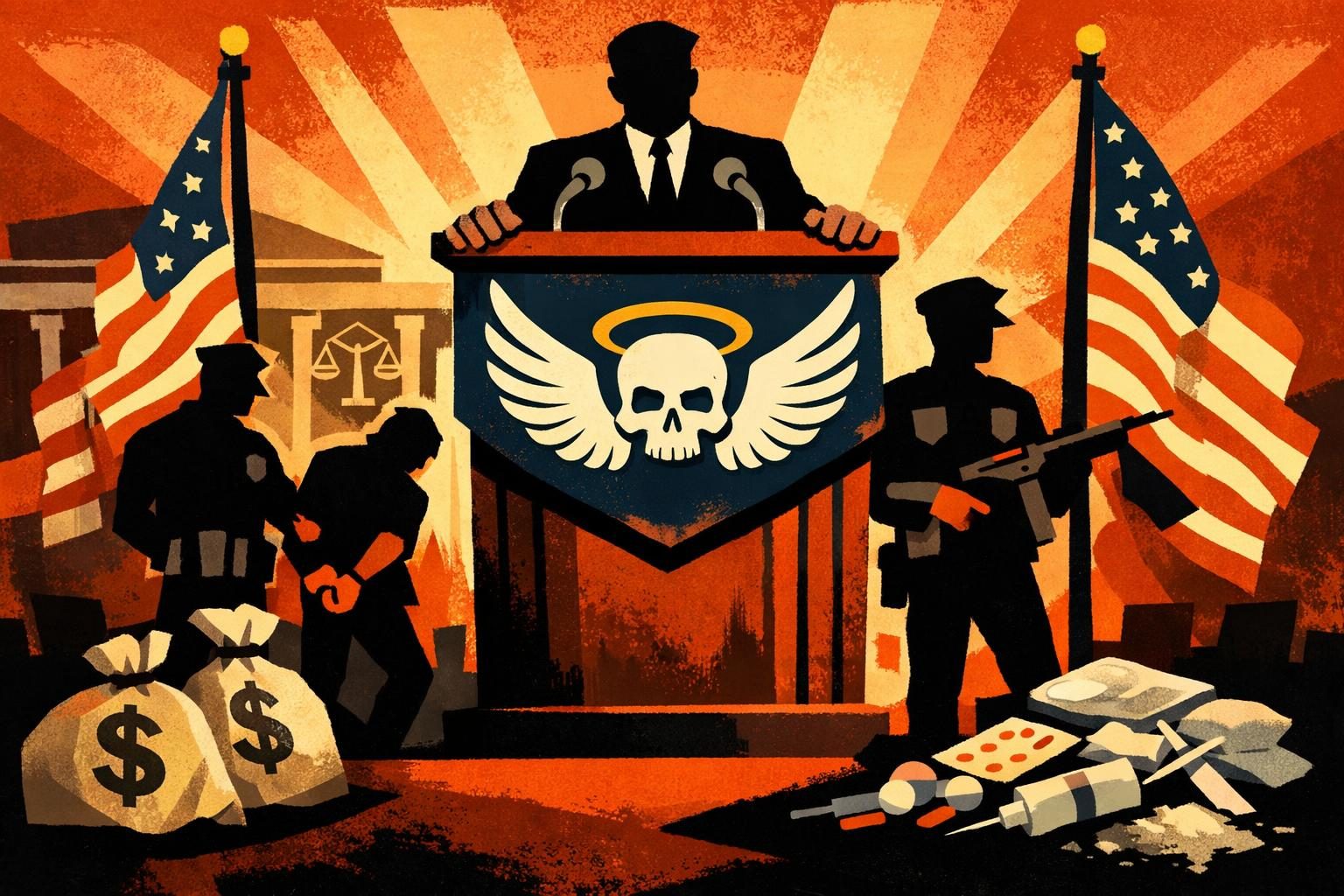
The Justice Department on September 24 unveiled a new $25 million grant opportunity aimed at local law enforcement agencies, packaging the announcement under a fresh acronym-heavy banner: the Assisting Neighborhoods and Governments with Enforcement of Laws program, or ANGEL. On paper, the initiative is framed as support for agencies responding to violent crime connected to undocumented immigrants and illicit drugs. In practice, the rollout reads like something more than a routine funding notice. The administration is not simply offering money; it is using the grant announcement itself as part of the political message. That makes the program noteworthy not only for what it funds, but for how aggressively it tries to define the problem before any local agency even applies.
The branding does a great deal of work here. By naming the program ANGEL, the Justice Department wraps immigration enforcement in the language of protection, rescue, and public virtue, even as the stated purpose points toward a hard-edged policing agenda. The title suggests benevolence and order, while the description emphasizes violence, drugs, and undocumented immigrants in a way that invites a clear moral hierarchy. That tension is not accidental. It gives the administration a way to present a punitive policy as a public-safety service, which is a familiar move in modern political messaging. The effect is to turn a federal grant into a form of narrative enforcement, nudging agencies and the public toward a particular interpretation of crime and immigration before any data, outcomes, or local conditions are discussed.
That approach is likely to draw criticism from multiple directions. Supporters of the program can argue that federal money should help local police departments confront serious crime and that grants are a legitimate tool for setting enforcement priorities. But critics will probably see the launch as another example of federal policymaking that substitutes symbolism for specificity. The announcement does not appear to establish a neutral framework for evaluating crime trends or weighing different public-safety responses; instead, it foregrounds a politically charged explanation for violence and drug trafficking. In that sense, the grant opportunity functions as messaging as much as policy. The administration may insist it is giving local agencies resources they need, but the rhetoric surrounding ANGEL suggests the larger goal is to harden a partisan storyline about immigration, danger, and law enforcement.
The timing and tone matter because this announcement lands inside a broader federal push toward aggressive immigration enforcement and highly stylized political theater. The government has repeatedly tried to cast immigration as the organizing lens for a wide range of public-safety concerns, even when the underlying reality is more complicated than the slogan implies. By attaching a moralized label to a grant program, the department is encouraging local agencies to publicly associate themselves with that framing, whether or not it fits their own community needs. Some departments may welcome the money and the political signal that comes with it. Others may decide that the label is too loaded, too transparent, or too divisive to be useful. That split matters because federal grants are usually meant to shape behavior through practical incentives, not through branding that looks designed to inflame one side of the immigration debate.
There is also a deeper question about what this kind of announcement says about the administration’s view of law enforcement itself. A grant program can be a neutral funding mechanism, but it can also become a vehicle for laundering ideology through bureaucratic language. ANGEL appears to sit somewhere in that uncomfortable middle ground. The Justice Department can point to the money and say it is helping agencies fight crime. Opponents can point to the title and say the department is using public funds to reinforce suspicion of immigrants as a class. Both readings are plausible, which is part of why the rollout is so politically charged. If the aim was to create a durable, evidence-based strategy for public safety, the branding does not inspire much confidence. If the aim was to send a message, though, the message is unmistakable: the administration wants immigration enforcement, anti-drug enforcement, and tough-on-crime politics to be seen as one and the same.
That may be enough for the moment. A $25 million grant pool is real money, and local agencies facing budget pressures may decide that the label matters less than the dollars. But the administration has chosen to attach those dollars to a name and a narrative that will almost certainly invite pushback. The result is a program that looks like a grant announcement and behaves like a campaign flyer. It asks local law enforcement to step into a federal frame that is already loaded with political meaning, and it does so in a way that leaves little doubt about the intended audience. If the department wanted to encourage a policy conversation, it could have led with criteria, outcomes, and measurable objectives. Instead, it led with a brand. That is not a small distinction. It is the point.
Comments
Threaded replies, voting, and reports are live. New users still go through screening on their first approved comments.
Log in to comment
No comments yet. Be the first reasonably on-topic person here.