
Justice Department shuts down dozens of old desegregation cases in one sweep
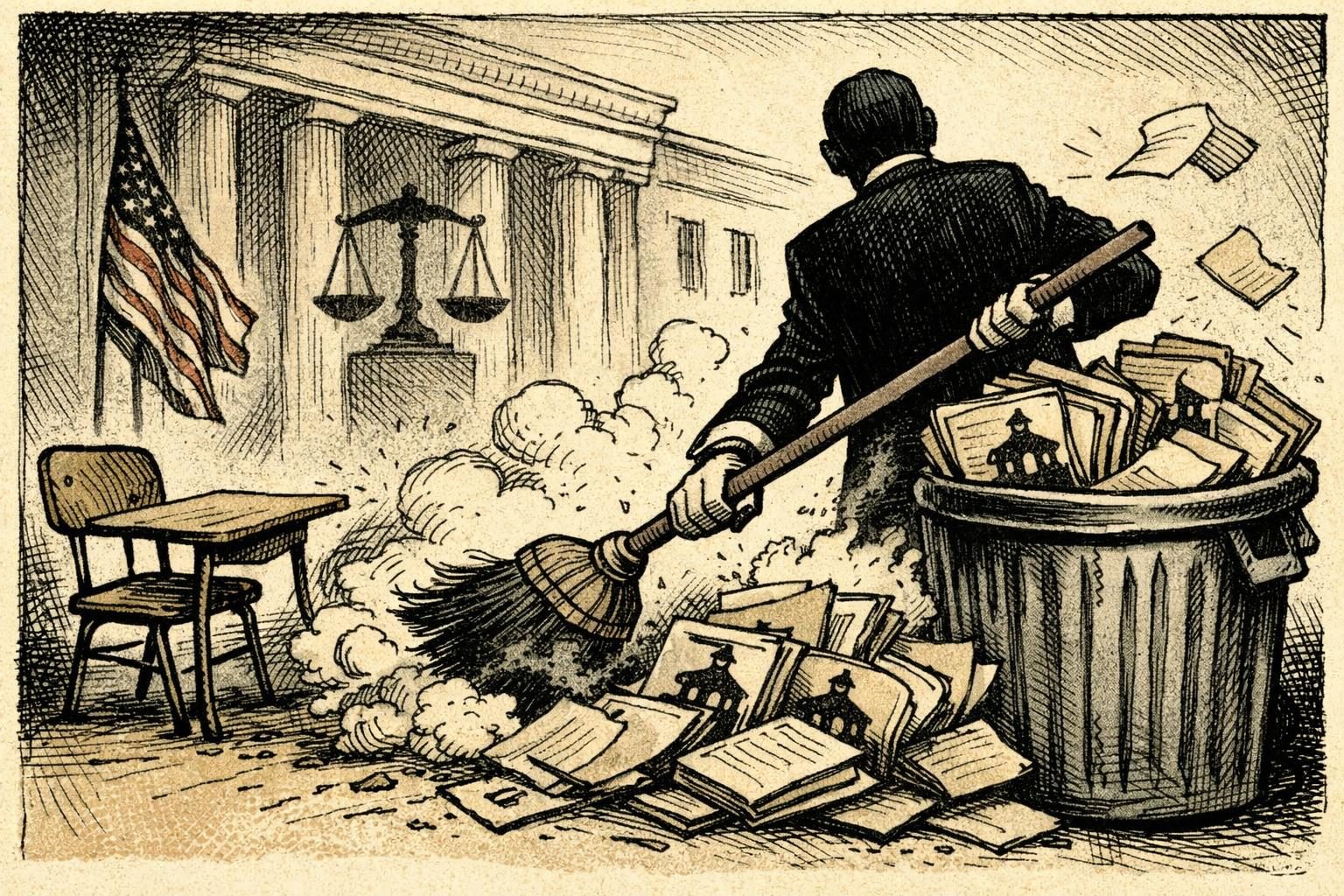
The Justice Department said on September 24 that it is moving to dismiss more than 50 long-running school desegregation cases, a sweeping step that would wipe away a substantial share of the federal government’s oldest open school-integration supervision. The cases, spread across Connecticut, Florida and a number of other states, date back decades and represent some of the legal remnants of the country’s effort to turn Brown v. Board of Education into an enforceable reality. In announcing the dismissals, the department cast the action as a straightforward cleanup of obsolete litigation, suggesting the files no longer reflect active disputes that need federal oversight. But even if some of these matters are technically ready to close, the scale of the move makes it hard to see it as a mere clerical adjustment. When a government agency closes out this much civil-rights history at once, the message matters almost as much as the docket management.
That is especially true because school desegregation cases were never just paperwork. They existed because local systems had failed, often persistently, to provide equal access to education without federal pressure and judicial supervision. A dismissal can mean a district has satisfied the terms of a decree, improved its practices, or otherwise shown that court intervention is no longer necessary. It can also mean the federal government believes the original conditions have changed enough that continued oversight is not justified. Yet the legal standard for ending a case is not the same thing as proving that segregation’s effects have fully disappeared from a district, a region, or a child’s daily school experience. That distinction is the heart of the concern now being voiced by civil-rights advocates and many longtime observers of school equity, who are likely to view the department’s action as a sign that the administration is treating old enforcement obligations as dead weight rather than living commitments.
The administration’s framing will matter in the weeks ahead, because the Justice Department is presenting this as a matter of efficiency and closure, not ideology. But the timing and breadth of the dismissals inevitably place the move within a broader conversation about the federal government’s approach to civil-rights enforcement in education. The department has not exactly built up a reservoir of trust among critics who worry that enforcement is being narrowed, softened or deprioritized in areas that demand sustained attention. So while the government may argue that these cases have outlived their usefulness, the larger public question is whether the nation can afford to relax vigilance simply because the files are old. Old cases often linger precisely because the underlying problems were stubborn, and because communities have had to keep returning to court to ensure that progress was real and durable. From that perspective, wiping out decades of supervision in one pass can look less like responsible triage and more like an institutional shrug.
There is also a political logic to the decision that is difficult to ignore. By ending these cases, the administration can claim it is bringing finality to a historic chapter, while also avoiding the appearance of indefinite federal control over school districts. That is an appealing narrative for officials who want to argue that the civil-rights battles of the past have largely been won. But the persistence of these cases on court dockets was itself evidence that the fight was never neatly finished, and that some communities continued to require federal involvement long after the headlines moved on. If local officials, former plaintiffs or other interested parties object, the dismissals could become a test of how much scrutiny the department is willing to endure over its civil-rights priorities. If they do not object, the cases may quietly disappear, leaving behind a shorter docket and a much longer debate about whether the government is protecting equal opportunity or simply declaring victory over unresolved history. Either way, the sweep is likely to become a flashpoint over what civil-rights enforcement is supposed to be for in the first place: active oversight, or a record of past obligations that can be filed away when they become inconvenient.
Comments
Threaded replies, voting, and reports are live. New users still go through screening on their first approved comments.
Log in to comment
No comments yet. Be the first reasonably on-topic person here.