
Justice filed fresh election-fraud charges against foreign nationals
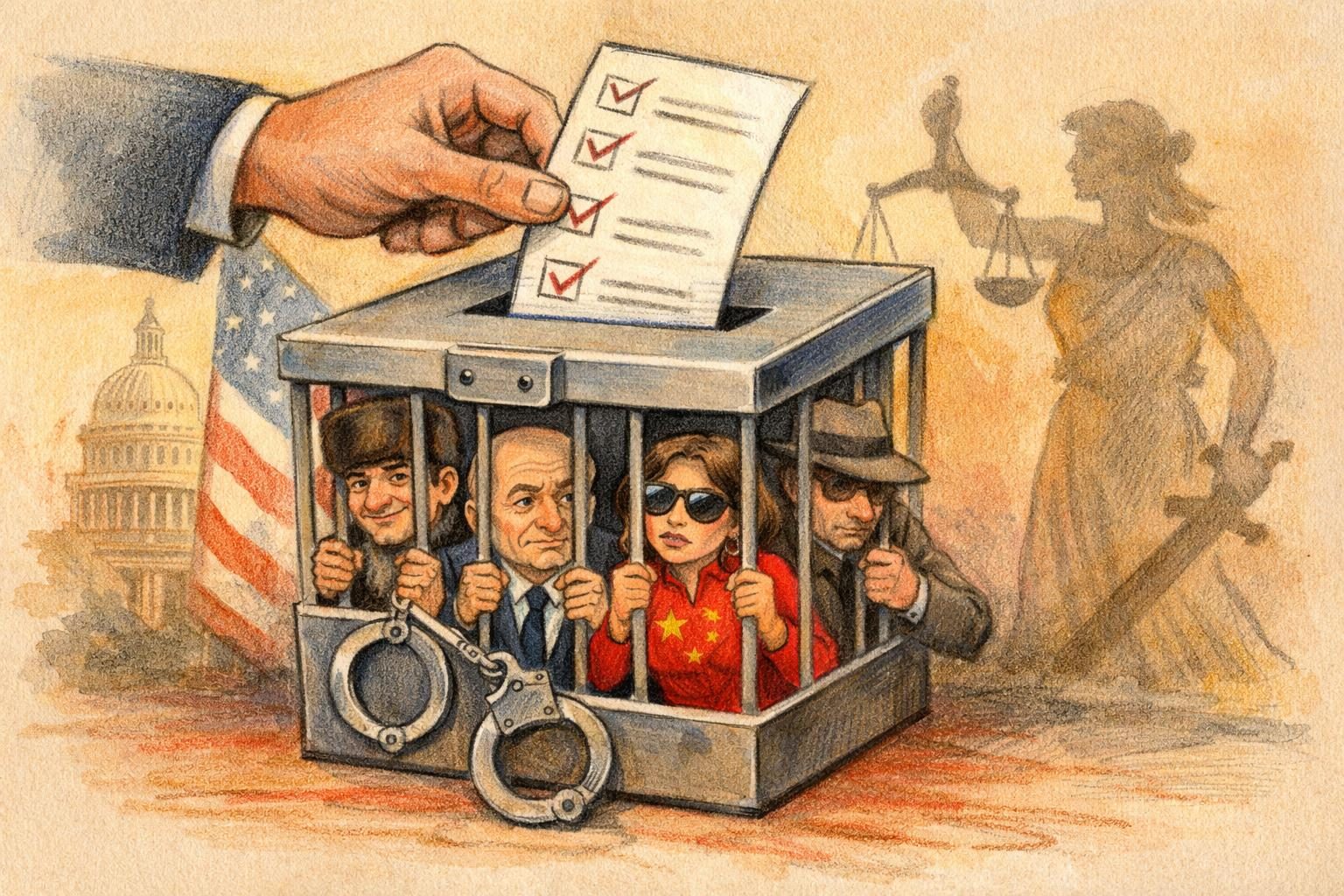
The Justice Department said on September 26 that four foreign nationals were charged in an election-fraud case, turning a terse enforcement announcement into a politically loaded test of how far federal prosecutors are willing to go on voting-related offenses. The filing itself is the central fact here. It is not a broad policy statement, a campaign talking point, or a vague allegation floated for public consumption; it is a criminal case with real consequences attached. That alone makes it more serious than the usual election-rigging chatter that tends to swirl around any close or contested cycle. Once prosecutors put charges on paper, the conversation changes from suspicion and outrage to evidence, procedure, and the question of whether the government can prove what it says happened.
That distinction matters because election-fraud claims often get inflated into a kind of political theater, where accusations outrun the underlying conduct and the rhetoric becomes the story. A real federal prosecution is different. If the allegations are supported, the case could reinforce the administration’s preferred line that election systems need stronger enforcement and that foreign nationals crossing into the voting sphere are a threat worth prosecuting aggressively. It would also fit neatly into a broader hardline narrative that ties immigration enforcement to election integrity, a combination that tends to resonate with voters already worried about borders and ballot security. If the allegations turn out to be weaker than the language around them suggests, however, the case risks becoming another example of a high-visibility criminal action being used to signal toughness before the record is fully clear. Either outcome has political meaning, because election law cases are rarely only about the defendants once they become part of the larger public argument.
The immediate practical effect is that the matter now sits with federal investigators and prosecutors rather than commentators and political surrogates. That means the important questions are narrow and factual: what exactly was alleged, what conduct the government says crossed the line, and what proof it has to connect the defendants to election-related wrongdoing. The public announcement did not provide a long dramatization, and that restraint is part of what makes the case notable. There is a difference between a press release that is designed to raise alarms and a charging document that has to survive judicial scrutiny. If the case is solid, the government may be able to point to it as evidence that it is enforcing election laws rather than merely talking about them. If it is not, the defendants may benefit from the same thing that makes the announcement newsworthy in the first place: the fact that criminal accusations are not convictions, and publicity is not proof. In either scenario, the case will draw attention to the mechanics of election administration and to how quickly fraud claims can become political weapons.
The confidence level on this story is relatively high because the Justice Department itself posted the case and then updated it on September 24, which makes the underlying event concrete, current, and independently verifiable from the source material. There is still room for the facts to develop, and that is important. The announcement does not by itself settle the truth of the allegations, establish motive, or forecast the eventual outcome in court. But it does establish that a live federal criminal case exists, and that is enough to give the story immediate relevance. Cases like this can age in more than one direction: they can strengthen the administration’s enforcement narrative if the facts hold up, or they can become an embarrassment if the evidence is thin and the public pitch runs ahead of the record. For now, the point is not to overread the case or dismiss it. It is to recognize that once the government files election-fraud charges against foreign nationals, the political stakes rise immediately, and so does the burden on prosecutors to prove that the case deserves the attention it has already received.
Comments
Threaded replies, voting, and reports are live. New users still go through screening on their first approved comments.
Log in to comment
No comments yet. Be the first reasonably on-topic person here.