
A former USCIS official is indicted for a visa-rigging scheme that allegedly ran for years
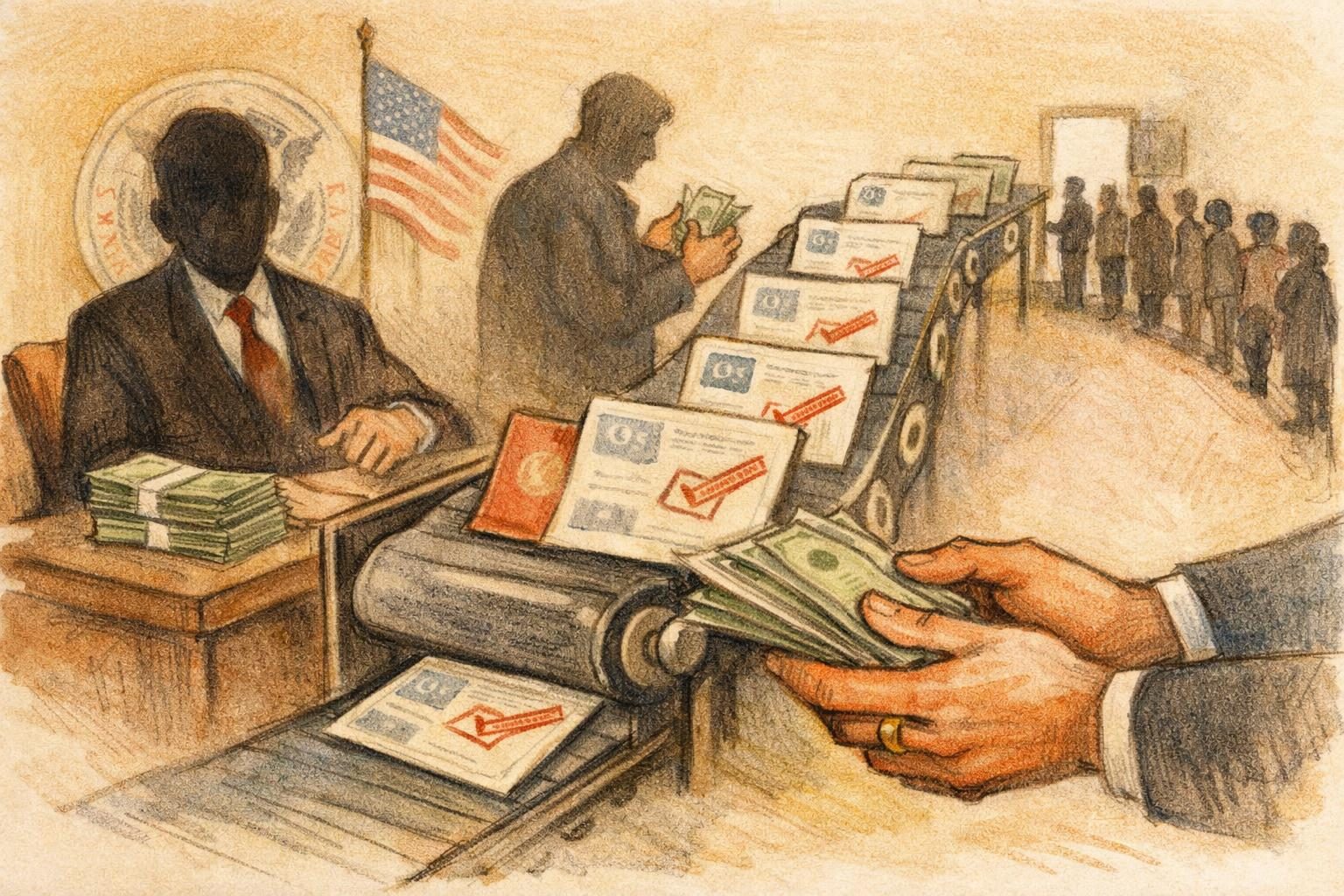
Federal prosecutors in North Texas say a former U.S. Citizenship and Immigration Services employee and an associate have been indicted in what authorities describe as a yearslong scheme to manipulate immigration applications for cash. The allegations reach into the everyday machinery of legal immigration, touching forms used for family-based petitions, permanent residency, removal of conditions on residency, and naturalization. According to the government, the conduct lasted from December 2019 through March 2026, which suggests this was not an isolated lapse or one bad transaction but a sustained abuse of access. If the accusations hold up, the case would represent one of the more striking corruption allegations to emerge from inside the federal agency charged with policing the immigration system. It is the kind of case that lands far beyond the courthouse, because it raises the uncomfortable possibility that the gatekeeper itself may have been selling shortcuts through the gate.
The core allegation is straightforward in the way corruption cases often are and disturbing in the way they usually are not: a government employee is accused of using inside authority to approve or speed applications in exchange for money. That kind of conduct, if proven, would cut directly against the basic expectation that immigration decisions are made according to law, evidence, and process rather than payoffs and personal gain. USCIS handles the applications that determine whether people can remain in the country, become lawful permanent residents, or take the final step to citizenship, so any allegation of rigged processing cuts at the credibility of the entire system. The government has not said the accused person worked alone in every step, and the indictment stage does not answer all the factual questions. But the picture described by prosecutors is serious enough to suggest a scheme that relied on both insider knowledge and access that ordinary applicants do not have.
Politically, the case arrives at a moment when immigration enforcement remains one of the central talking points in Washington, especially for officials who have spent months arguing that fraud is a defining threat to the system. The allegation here complicates the usual political shorthand. It is easy for politicians to frame immigration abuse as something done by people outside the system, by applicants at the border, or by those trying to exploit loopholes from afar. This case points in a different direction and suggests that corruption can be embedded inside the bureaucracy itself, where the people with the stamps, signatures, and processing power may be the ones gaming the process. That does not erase the reality of fraud committed by applicants, lawyers, or fixers, but it does undercut any simple narrative that the problem lives only on the outside. For immigration hard-liners, it is a powerful example of why tougher oversight is needed. For critics of the administration, it is a reminder that a louder fraud crackdown does not automatically mean the agency is immune from the same abuses it condemns.
The institutional fallout may prove just as significant as the criminal case. USCIS is already under pressure to move applications faster while also increasing scrutiny, reducing error rates, and convincing the public that its decisions are reliable. An indictment like this is likely to trigger more internal reviews, more auditing of adjudication practices, and more questions about how long the alleged conduct continued without being caught. It may also feed skepticism among applicants who already see the process as opaque and uneven, and it could push lawmakers to demand a fuller accounting of supervision, access controls, and employee monitoring. At the same time, the case serves as a reminder that corruption in the immigration system is not limited to dramatic border events or big political slogans. Sometimes the real damage happens quietly, one application at a time, through a desk, a file, and a signature that was supposed to mean something. The defendants are presumed innocent unless and until proven guilty, and the case is still at the charging stage. Even so, prosecutors have described a scheme serious enough to reopen an old and ugly question: if the system can be bought from the inside, how many other weaknesses have gone unnoticed?
Comments
Threaded replies, voting, and reports are live. New users still go through screening on their first approved comments.
Log in to comment
No comments yet. Be the first reasonably on-topic person here.