
Justice Department sues Missouri over gun waiting periods, escalating its red-state voting and weapons law fights
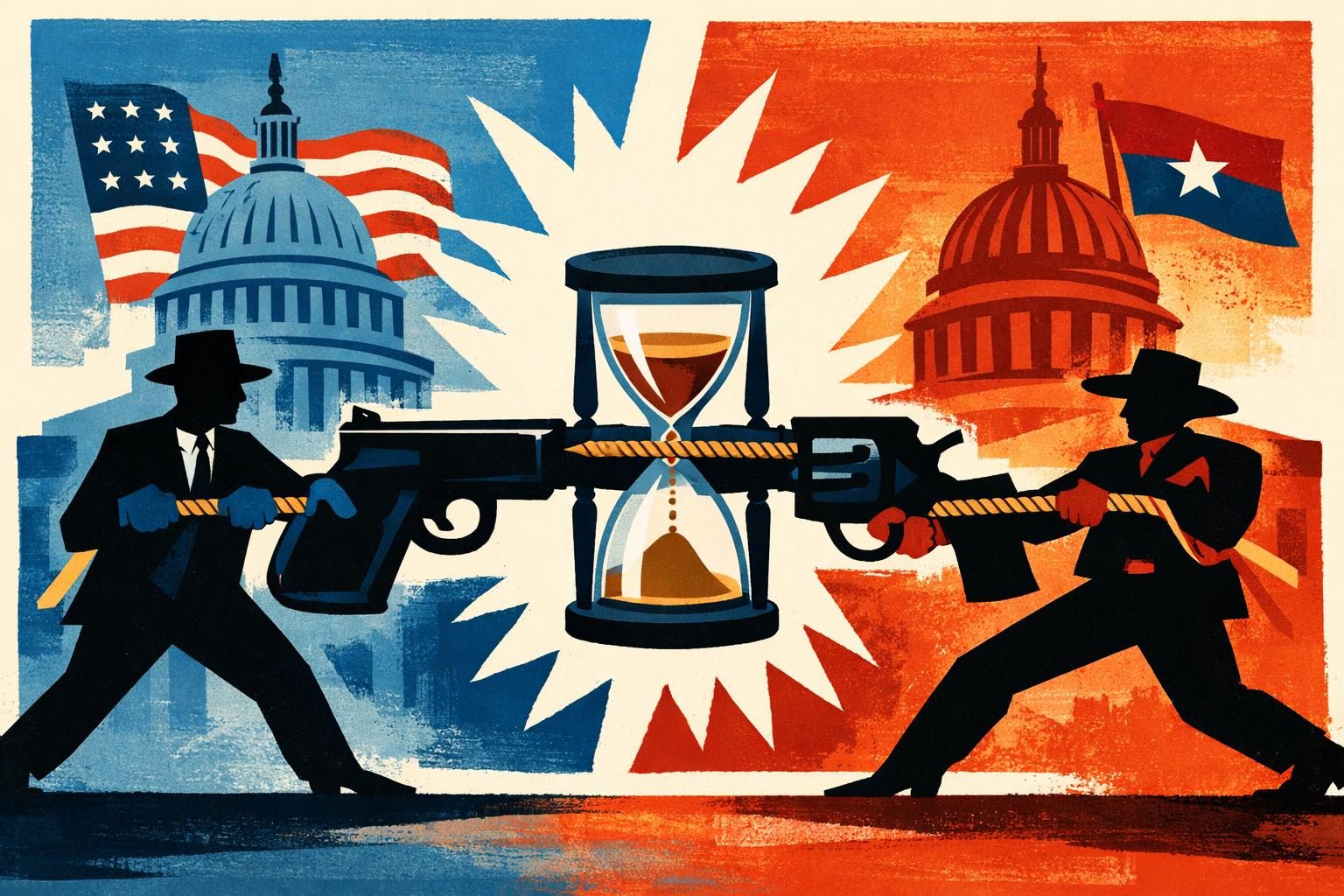
The Justice Department has filed suit challenging firearm purchase waiting-period laws in Minnesota, along with related ordinances in St. Paul and Minneapolis, setting up a fresh federal-state showdown over how far governments can go to slow down gun sales. The filing argues that the restrictions violate federal constitutional protections and should be struck down, putting a routine public-safety measure at the center of a broader legal and political fight. Waiting-period laws are meant to create a buffer between the decision to buy a gun and the moment a person can actually take possession of it, a delay supporters say can reduce impulsive acts of violence, self-harm, and escalation during moments of crisis. By going to court, the department has turned that modest regulatory idea into a test case for how aggressively Washington is willing to challenge state and city gun rules. The suit also signals that the administration is prepared to use litigation not just to interpret the law, but to reshape the boundaries of what local governments are allowed to do in the name of public safety.
That makes the case bigger than the specific waiting periods on the books in Minnesota and its two largest cities. It is part of a pattern in which the Justice Department has been moving quickly to challenge policies in states and cities that lean blue, especially where local lawmakers have adopted rules that conservatives consider burdensome or ideologically driven. The department’s critics are likely to view the lawsuit as another example of a federal government that talks warmly about local control when it is convenient and then reaches for preemption, constitutional arguments, or broad enforcement theories when a city passes a law it dislikes. Supporters of gun-violence prevention, by contrast, will see the suit as an effort to strip away one of the smaller but still meaningful barriers to immediate access to firearms. The argument is not that waiting periods alone solve gun violence, but that they are one tool among many and a deliberate attempt to prevent split-second decisions from becoming irreversible tragedies. As with many weapon-law fights, the underlying debate is less about a single statute than about whether government has any meaningful role in slowing access to a dangerous product.
The political stakes are obvious, even if the legal outcome is not. For Republicans and gun-rights activists, the lawsuit may be cast as proof that the administration is serious about confronting what they regard as overreach by progressive cities and states. For Democrats and public-health advocates, it can be framed as another instance of Washington pouring energy into dismantling a small safety measure instead of addressing the broader scale of gun violence that has already produced far too many casualties. The administration’s move also carries an institutional message: the Justice Department is not limiting itself to the kind of neutral case selection that usually accompanies constitutional litigation, but is instead taking a more openly combative posture toward selected state and local policies. That does not mean the case is guaranteed to succeed, or even that the department’s theory will hold up under close judicial scrutiny. It does mean the lawsuit itself can function as a political signal, sending a message to allied voters and lawmakers that the federal government is willing to spend time and resources contesting the gun laws of cities and states it views as hostile to its priorities.
What happens next will matter well beyond Minnesota. The defendants will have to decide whether to defend the law as a reasonable public-safety measure, seek a compromise, or prepare for a prolonged court fight that could reverberate through other jurisdictions with similar rules. If the federal government prevails, the decision could invite new challenges to waiting periods and other local gun regulations elsewhere, especially in places that rely on modest purchase delays as part of a broader violence-prevention strategy. If the government loses, the political loss may be softened by the fact that the case itself has already delivered a message about the administration’s priorities and its willingness to engage in high-profile legal combat. Either way, the filing adds another live front to the national argument over guns, public safety, and the limits of local authority. And for a Justice Department already seen by critics as increasingly ideological, it reinforces the sense that some of the country’s most heated policy disputes are now being fought not just in legislatures and city halls, but in federal courtrooms where every lawsuit becomes a proxy battle over power, partisanship, and who gets to define public safety.
Comments
Threaded replies, voting, and reports are live. New users still go through screening on their first approved comments.
Log in to comment
No comments yet. Be the first reasonably on-topic person here.