
Trump’s mail-ballot fight keeps getting dragged back to court
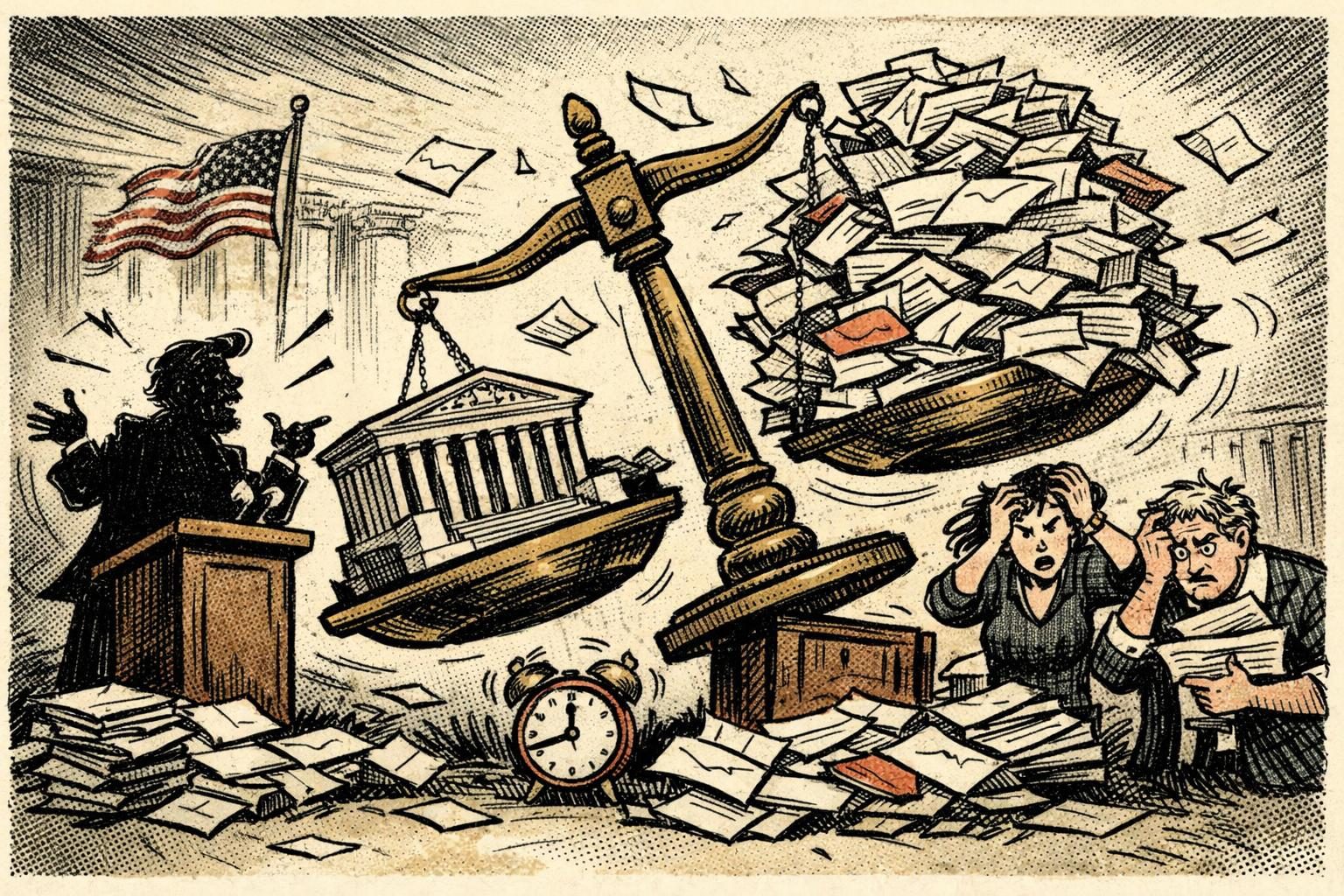
President Trump’s push to restrict mail voting is still stuck in the kind of legal limbo that election officials dread and politicians pretend is normal. On Sept. 26, the dispute remained unresolved, with the underlying challenge still active and the Postal Service, states and election administrators left to operate under a patchwork of court orders and appeals. The administration has framed the effort as a fraud-prevention measure, but the practical effect has been to insert a volatile federal fight into a process that depends on routine, predictability and long lead times. That is a bad fit under any circumstances. It is an especially bad fit when ballots are already being printed, assembled and mailed in states that cannot simply pause their election calendars until the courts sort out the constitutional theory.
The reason this keeps causing trouble is that election administration does not run on the pace of speeches or social media posts. It runs on deadlines, vendor contracts, ballot certification dates, mailing schedules and state rules that are often set months in advance. Once those gears start turning, even a relatively small legal change can ripple outward fast, forcing officials to decide whether to proceed as planned, build in backups or prepare for a ruling that may arrive after key deadlines have already passed. That is where the current fight becomes more than a courtroom abstraction. A presidential order aimed at the mechanics of voting can collide with state election law, postal logistics and federal judicial review all at once, and the result is not clarity. It is uncertainty, and uncertainty is expensive. It also tends to land hardest on election workers who are already trying to keep a massive, decentralized system from tripping over itself.
For opponents of the policy, the central objection has remained the same: the administration appears to be trying to solve a political problem by imposing a top-down fix on a system it does not directly control. That argument has only gained force as judges have blocked or narrowed parts of the effort and as the case has continued to wind through the courts without producing a clean, durable resolution. Supporters of the administration insist that tighter mail-ballot rules are needed to protect election integrity, but that claim has so far not translated into a final legal victory that would settle the issue before states are deep into ballot preparation. In practice, that means officials in many places have to act as if multiple outcomes are possible. They may need to keep one set of procedures ready if the restrictions are upheld and another if they are not. That is not a recipe for confidence. It is a recipe for contingency planning layered on top of contingency planning, which is how election systems end up looking less like institutions and more like emergency response drills.
The deeper problem is that the administration’s approach has turned mail voting into a rolling test of federal power at exactly the wrong time in the election cycle. Even if the White House sees the policy as a straightforward fraud-fighting effort, the legal reality is messier. The court fight has already forced states and postal officials to account for shifting instructions while ballots are moving through the pipeline, and every fresh filing adds another layer of uncertainty. That uncertainty has a real cost: more staff time, more legal expense, more room for partisan accusations and more chances for voters to wonder whether a ballot they receive, complete and return will still count under the latest rule. If the goal was to create a stable and orderly system, this is an extraordinarily clumsy way to go about it. Instead of a clean reform, the country gets a high-stakes argument over election procedure in the middle of the period when election procedure matters most. And because the Supreme Court has left the dispute in place for now rather than delivering a final, neat answer, the chaos is not ending. It is merely continuing on schedule.
Comments
Threaded replies, voting, and reports are live. New users still go through screening on their first approved comments.
Log in to comment
No comments yet. Be the first reasonably on-topic person here.