
Maryland data-center crackdown gets a new round of praise and pushback
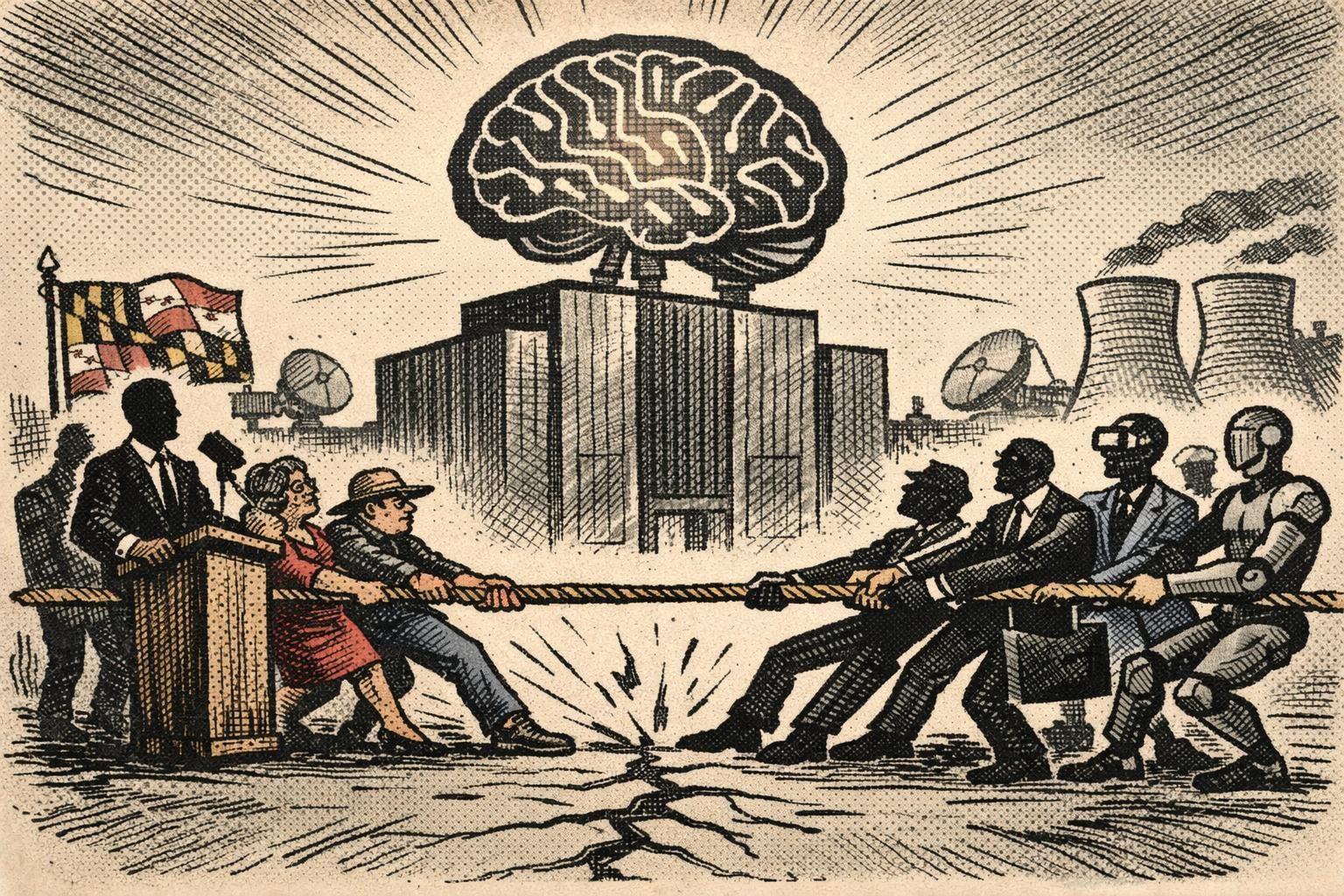
Maryland’s fight over data-center development picked up another round of public attention on September 26, as Governor Wes Moore’s executive order on responsible data-center development continued to draw praise from supporters and sharp warnings from critics. The administration has framed the move as a way to bring clearer rules, stronger accountability, and more transparency to a fast-growing industry that is increasingly shaping land use, energy demand, and local politics. That is not just a symbolic gesture. By setting expectations before projects advance through permitting, the state is shifting the leverage point in a sector that has often moved quickly and relied on broad promises about economic growth. For companies that want to build large-scale AI infrastructure, the new posture means more scrutiny up front. For communities that worry about being left with the costs, it suggests a governor willing to make them part of the decision-making process earlier than usual.
The core of the dispute is larger than one executive order. Data centers have become a flashpoint because they sit at the intersection of several political fights at once: electricity costs, water and land use, local zoning, tax policy, and the broader question of who gets to decide what kind of development a state should welcome. Supporters of Moore’s approach argue that Maryland is finally treating this as a public-interest issue instead of a private-sector entitlement. In their view, the state should not be handing over the keys to an industry that can consume huge amounts of power and space while asking local residents to accept the burden without enough information or bargaining power. They see the executive order and related AI framework as a way to force the conversation into the open before development becomes too entrenched to shape. That argument has obvious appeal among people who think the pace of AI infrastructure is outrunning democratic oversight.
Critics, however, are pressing a very different case. They warn that tighter standards and more layers of process could create uncertainty for developers and slow down projects that the state might otherwise want to attract. Some opponents are likely to argue that Maryland is signaling unpredictability at exactly the moment when states are competing for investment tied to AI and cloud infrastructure. Others are focused less on competition and more on the practical side: if the rules are vague, cumbersome, or inconsistently applied, they can become a de facto brake on development even without an explicit ban. That complaint is familiar in debates over land use and permitting, and it carries real political weight because it allows critics to frame the governor’s move as anti-growth rather than merely pro-accountability. The administration, for its part, appears to be betting that voters are more wary of unchecked expansion than of additional oversight. That is a reasonable bet in a climate where communities increasingly associate data centers with noise, power strain, and tax incentives that may or may not deliver the promised benefits.
What makes this fight politically sticky is that both sides have a plausible story to tell. Supporters can say Maryland is acting early, before AI infrastructure locks in a model that privileges corporate speed over community voice. They can argue that if data centers are going to consume substantial public resources, then the public has a right to know how the projects will affect infrastructure, ratepayers, and local development patterns. Critics can respond that the state is inviting delays, discouraging investment, and adding uncertainty to a sector that is still evolving. Both concerns can exist at the same time, which is why the issue is so difficult to settle cleanly. Moore’s challenge is to make the case that more accountability is not the same thing as hostility to development. His opportunity is that the politics of data centers are changing quickly, and many voters are no longer inclined to assume that every large project is automatically a public good.
For progressive allies, the appeal of the order is easy to understand. It offers a rare example of a governor trying to assert more control for neighborhoods, workers, and ratepayers before a powerful industry sets the terms on its own. That makes the move politically useful even beyond the immediate policy details, because it lets Moore present himself as someone willing to challenge the default assumptions of tech-driven growth. At the same time, the criticism from industry and development advocates is not trivial. The more the state asks for, the more it risks being accused of moving the goalposts. The more it insists on transparency, the more it invites complaints that Maryland is becoming harder to do business in. Those tensions are built into the issue itself, which is why the data-center debate is likely to remain a recurring source of friction rather than a one-time fight. The current backlash and praise are signs that the policy is landing exactly where Moore may have intended: at the center of a broader struggle over who gets to control the next wave of AI infrastructure.
Comments
Threaded replies, voting, and reports are live. New users still go through screening on their first approved comments.
Log in to comment
No comments yet. Be the first reasonably on-topic person here.