
Appeals court backs Trump-aligned Missouri map, escalating a redistricting fight headed to the Supreme Court
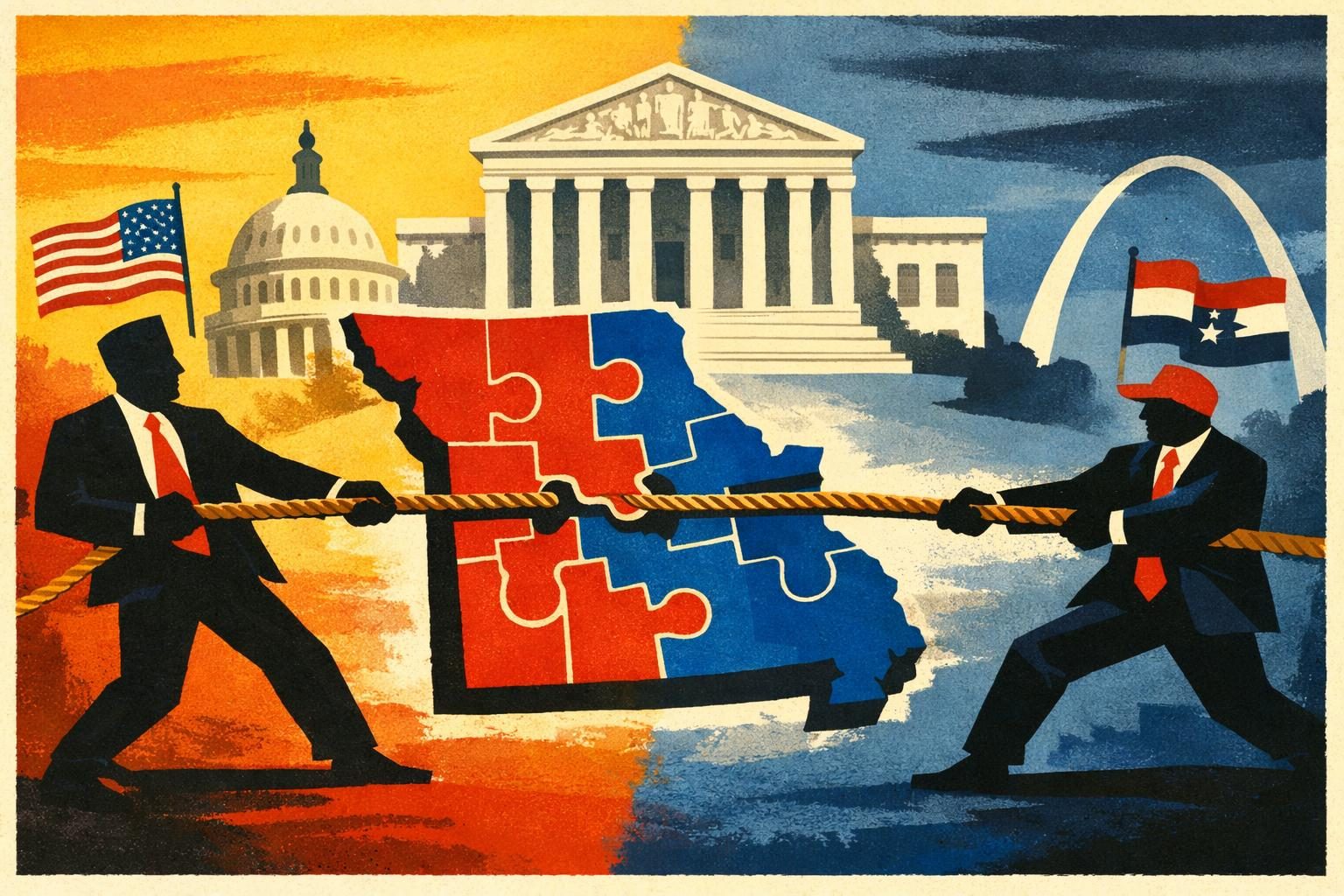
A federal appeals court has handed a significant win to Missouri Republicans and allies of Donald Trump by backing the state’s new congressional map, a decision that keeps alive one of the country’s more closely watched redistricting fights and pushes it closer to the Supreme Court. The ruling does not close the case so much as sharpen it, directing a lower court to enter a permanent injunction against using any map other than the one now favored by the appellate panel. That means the state’s political lines, and the power they assign, remain at the center of a dispute that has already moved through multiple rounds of judicial review. In a state where congressional districts can shape the balance of power far beyond Missouri’s borders, the stakes are bigger than one cartographic skirmish. They go to who gets to translate votes into seats, and how much latitude courts will allow before that process is deemed too political to stand.
The ruling lands in the middle of a national redistricting fight that has become one of the defining institutional battles of the current political era. Across the country, both parties have treated mapmaking as a high-stakes lever of power, with each side accusing the other of trying to lock in advantage before voters even make their choices. Missouri’s map is part of that broader scramble, and the appellate court’s backing of it may be read by other states as a sign that aggressive line drawing still has room to survive judicial scrutiny. That matters because redistricting cases are rarely just local disputes. Once a court approves a contested map, the decision can ripple outward, encouraging lawmakers and litigants elsewhere to keep pressing the boundaries of what they think the law will tolerate. In that sense, the Missouri ruling is not only about Missouri. It is about how much constitutional friction the courts are willing to absorb before they step in.
What makes this case especially combustible is the way it sits at the intersection of partisan strategy and election timing. Redistricting fights can last for years, but they are never just academic exercises in legal theory. They determine which voters are grouped together, which communities are split apart, and which party has the better odds of turning a statewide share of the vote into durable representation in Washington. The appeals court’s move does not merely keep the litigation alive; it strengthens the hand of those who favor the Trump-backed map while forcing opponents to keep spending time and money in court. That kind of protracted uncertainty can be especially punishing because it leaves campaigns, local officials, and would-be challengers guessing about the political terrain they will actually face. For a state election system, that is not a minor inconvenience. It is a structural problem that affects planning, fundraising, candidate recruitment, and voter outreach long before the first ballot is cast.
The next and likely most decisive chapter is expected to unfold at the Supreme Court, where the justices may be asked to determine whether the Missouri map can stand and what limits, if any, exist on stopping politically engineered districts before they do their work at the ballot box. The case offers the high court another chance to weigh in on a question that has become increasingly central to modern election law: how far states can go in drawing advantageous districts, and how quickly federal judges should intervene when those maps are challenged. A final ruling could settle the matter for Missouri’s next election cycle, or it could deepen the uncertainty by giving new legal cover to one side while inviting even more litigation from the other. Either way, the decision will matter well beyond a single state. It will help define whether redistricting remains a tool that courts can meaningfully police, or whether the lines will keep being drawn first and defended later. For now, the map favored by Trump’s allies has momentum, the opposition faces another round of expensive and uncertain legal combat, and the broader fight over who controls the shape of American political power moves one step closer to the nation’s highest court.
Comments
Threaded replies, voting, and reports are live. New users still go through screening on their first approved comments.
Log in to comment
No comments yet. Be the first reasonably on-topic person here.