
Supreme Court clears the way for DHS to keep pushing immigration data-sharing
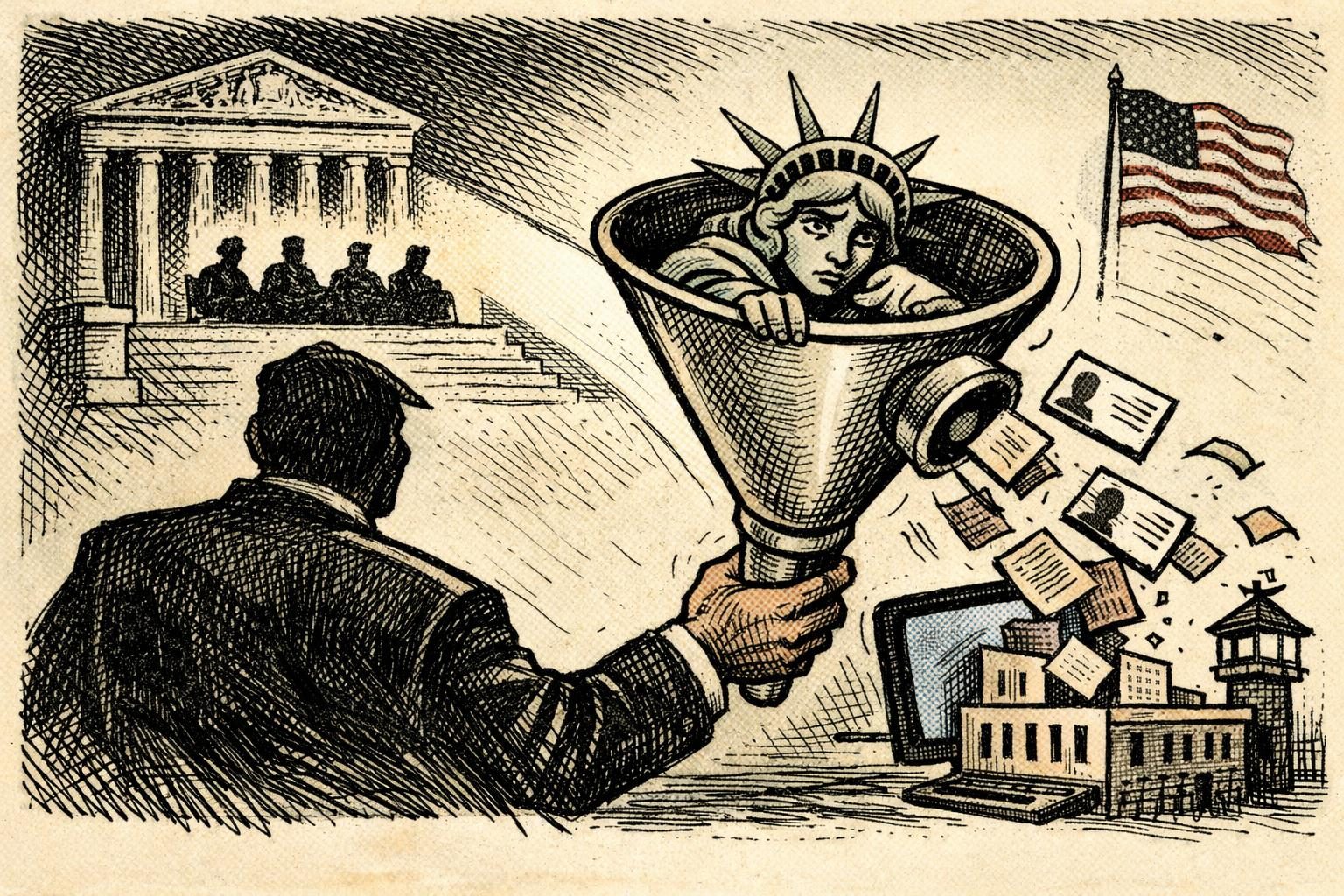
The Supreme Court on Friday gave the Trump administration a meaningful procedural break in its fight over immigration-related data sharing, indicating that the justices are likely to undo a lower-court ruling that had blocked the federal government from proceeding with the challenged information practices. The order is not a final decision on the merits, and it does not resolve the underlying legal dispute. Even so, it is the kind of signal that agencies, states, and lower courts read closely because it can foreshadow where the Court is headed once the case reaches full review. For now, the result is to keep the administration’s position intact while the litigation continues, and to suggest that at least a majority of the Court is uncomfortable with the kind of restraint a lower court imposed on federal access to immigration-status information. The practical message is blunt: the justices are not eager to let state-level limits stand in the way of federal information-sharing rules, at least not on the current record.
That makes the order a tactical win for the administration even though it leaves the broader legal questions open. Immigration status data, once collected or maintained in government systems, often sits at the intersection of privacy law, state administrative policy, and federal enforcement priorities. States that have tried to narrow access to that information have argued that they are protecting residents from unnecessary disclosure or secondary use of personal data, especially when local agencies are asked to cooperate with federal immigration efforts. The administration, by contrast, has pushed a broader view of federal authority and has treated access to data as an essential component of immigration enforcement. Friday’s order does not say the government will ultimately prevail, but it strongly hints that the Court views the lower court’s block as too aggressive. That alone may influence how agencies behave in the meantime, because a high-court signal often matters almost as much as a final ruling when policy fights are moving quickly.
The significance goes beyond the narrow dispute over one data-sharing program or one set of records. If the justices do reverse the lower court, the decision could weaken a wider patchwork of state restrictions aimed at limiting how personal information is reused by federal authorities. States have increasingly tried to draw lines around sensitive data, including records that may reveal immigration status or other private details, and those efforts have often been framed as a response to fears that ordinary administrative information will be converted into enforcement tools. A ruling favoring the administration would not necessarily erase every state effort to control data handling, but it could make those efforts harder to defend when they collide with federal immigration interests. It would also reinforce the idea that Washington gets the final say when the issue is framed as federal information-sharing rather than purely local privacy policy. In that sense, the order is more than a one-off procedural move; it is a warning shot at a much broader set of state-level boundaries.
California, which has often positioned itself at the center of fights over immigration-related privacy and enforcement, immediately signaled that the order will not disrupt its own election administration, at least according to its public guidance on the case. The state said the Supreme Court ruling involving DHS and the voter database will have no impact on California’s 2026 general election, underscoring that officials there see the matter as distinct from the mechanics of voting itself. That distinction matters because controversies over data use can quickly become tangled with claims about election integrity, citizenship verification, and state control over sensitive records. California’s response reflects an effort to contain the practical fallout while the legal process plays out and to reassure voters that the state’s election system is not being upended by the Court’s action. Still, the broader constitutional and administrative stakes remain intact. The order suggests a Court that may be willing to give federal agencies wider room to operate, even when states object that the same information should not be repurposed so freely. Until the justices issue a final merits ruling, the case remains unresolved, but Friday’s posture order has already shifted the balance of leverage toward the federal government and away from states trying to build privacy barriers around immigration data.
Comments
Threaded replies, voting, and reports are live. New users still go through screening on their first approved comments.
Log in to comment
No comments yet. Be the first reasonably on-topic person here.