
News outlets sue over White House access ban
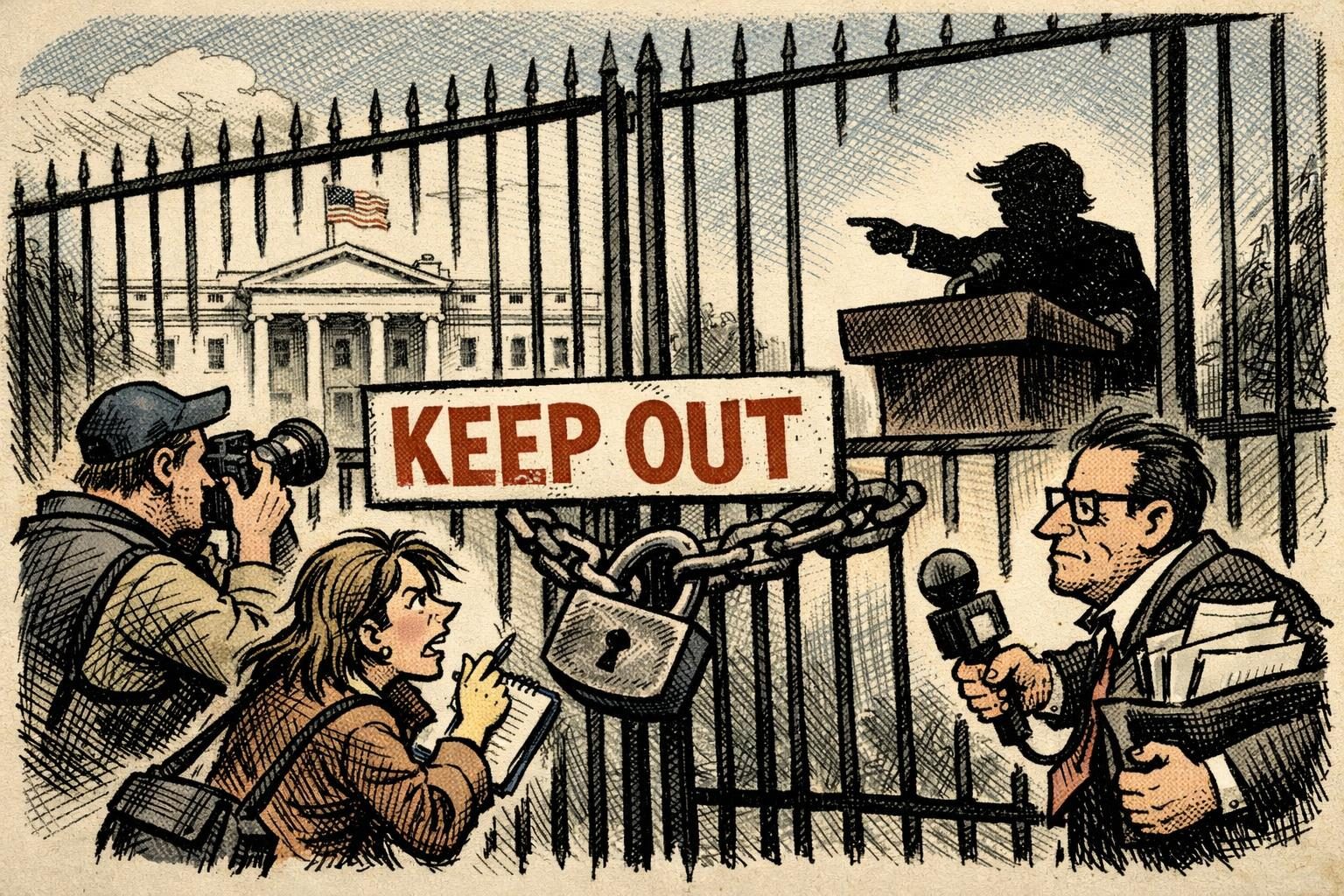
The fight over White House press access escalated sharply this week as CNN, MS NOW, and Politico joined a lawsuit against the Trump administration after being blocked from White House grounds. The outlets say the exclusion was not a neutral security or logistics decision, but a targeted response to coverage the president does not like. That is the core legal claim now moving through the courts: that the administration turned access to a government-controlled space into a punishment for protected speech. The White House, for its part, has framed the matter as a discretionary privilege rather than a constitutional entitlement, a distinction that may sound tidy in a briefing-room argument but becomes much harder to defend once a judge starts asking about viewpoint discrimination.
At the center of the case is a simple but consequential question about how much control the government has over journalists who cover it. The White House can regulate access to its grounds, of course, but the plaintiffs argue that regulation cannot be used as a weapon against specific reporting or editorial stances. That distinction matters because press access is not an abstract perk for reporters trying to collect quotes and photographs. It is one of the mechanisms by which the public observes its own government in real time, including who gets questioned, who gets ignored, and how officials behave when they know they are being watched. If access can be withheld because coverage is unwelcome, then the message to every news organization is not just that criticism has consequences, but that criticism can cost you your ability to do the job at all.
The administration’s posture has only made the legal and political stakes look higher. By describing the ban as a matter of privilege, the White House appears to be drawing a bright line between what it can grant and what it can take away. But that line is exactly what the plaintiffs are challenging, and constitutional law is not especially friendly to government action that appears to punish speech because of its viewpoint. Media lawyers and press-freedom advocates have been blunt in describing the move as a direct attack on viewpoint-neutral access, and the facts alleged in the suit seem to give them a cleaner argument than they might otherwise have had. The more the administration explains the cutoff in terms of dissatisfaction with coverage, the more the case begins to look less like a routine access dispute and more like a government retaliation claim dressed up in administrative language.
What makes the case politically important is that it is not happening in a vacuum. Every day the exclusion remains in place adds another layer to the public record and to the plaintiffs’ argument that the ban is both ongoing and intentional. That gives the lawsuit a built-in sense of urgency, because the harm is not merely theoretical or symbolic; it affects which reporters can enter the grounds and which cannot. It also creates a larger test for the White House itself, since a loss in court would likely reinforce the principle that access to government spaces cannot be conditioned on friendliness, loyalty, or obedience. For now, the case reads as a self-inflicted constitutional mess: the administration set the dispute in motion, described its own rationale in a way that raises First Amendment alarms, and then handed its critics a factual record that may be hard to clean up later. Whether the courts ultimately agree will turn on the details, but the broader lesson is already clear enough. When a government starts treating scrutiny as misconduct, it tends to discover that the law notices the difference.
Comments
Threaded replies, voting, and reports are live. New users still go through screening on their first approved comments.
Log in to comment
No comments yet. Be the first reasonably on-topic person here.