
Court says the CFPB can’t be starved out of existence
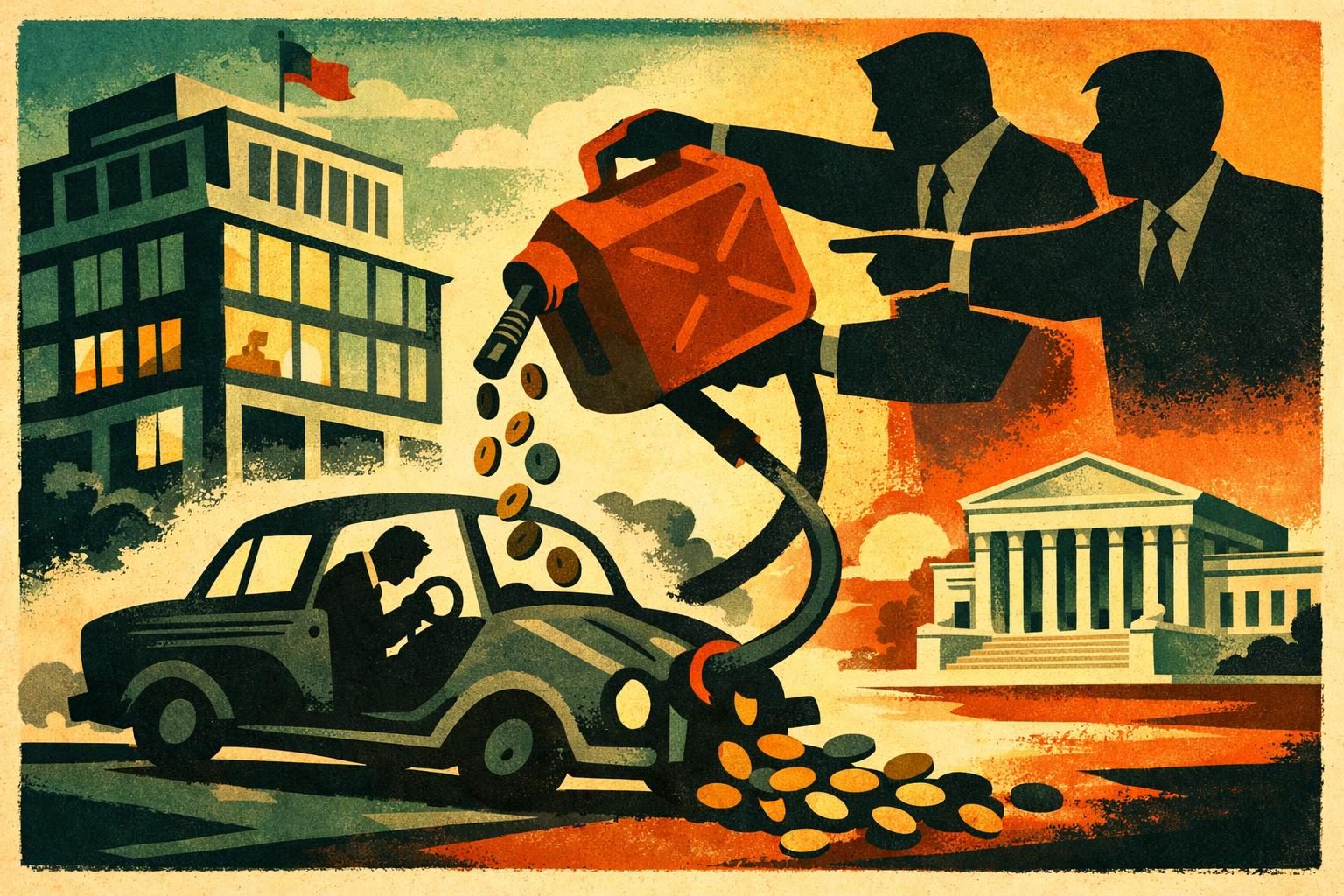
A federal court ruling late on September 27 kept alive a fight over the Consumer Financial Protection Bureau’s funding and put a hard stop, at least for now, on an administration effort to leave the agency gasping for air. The dispute is not a narrow procedural quarrel. It goes to whether a president can effectively disable a congressionally created watchdog by choking off the money Congress specifically set aside for it. California Attorney General Rob Bonta and allied states have cast the case in exactly those terms, describing the funding maneuver as an illegal attempt to neuter a regulator without the honesty of formally abolishing it. The court’s order did not settle every question in the broader clash, but it clearly refused to bless a strategy built around starvation rather than repeal. That distinction matters, because the difference between eliminating an agency through legislation and hobbling it through budget pressure is the difference between an open political fight and a quiet administrative end run.
The CFPB has long been one of the most contested agencies in Washington because it sits at the intersection of consumer protection, financial industry power, and executive-branch politics. Created after the 2008 financial crisis, the bureau was designed to police unfair fees, abusive lending, deceptive practices, and other misconduct that often lands hardest on people who have the fewest options. Supporters say that is precisely why it needs a stable funding stream and insulation from day-to-day political retaliation. Critics have argued for years that the bureau is too aggressive, too insulated, or too prone to overreach. But the current dispute is not really about whether the CFPB is popular with lenders or whether every enforcement action is wise. The immediate question is whether the executive branch can simply refuse to provide resources Congress already authorized, thereby making the agency ineffective without ever forcing lawmakers to vote it out of existence. If that tactic were allowed to stand, it would amount to a new kind of soft repeal by attrition, one that could be used against any agency whose mission becomes politically inconvenient.
That is why the practical stakes extend far beyond the bureau’s internal budget spreadsheets. When the CFPB has fewer resources, it has less ability to investigate abusive lending, pursue cases, monitor compliance, and pressure companies that rely on confusing contracts or hidden charges. The people most likely to feel that reduction are not agency officials or political appointees, but borrowers, credit-card customers, car buyers, student-loan holders, and consumers who are already vulnerable to aggressive financial products. A starved regulator can still exist on paper while losing the ability to make much of a difference in the real world. That is the mechanism opponents of the funding cutoff have been warning about for months, and the court’s ruling suggests it took that warning seriously. It also reinforces a basic separation-of-powers principle: once Congress appropriates money under a statutory framework, the White House does not get to treat those funds as optional because it dislikes the agency they support. The legal fight is still unfolding, but the court’s refusal to let the funding dispute vanish into procedural fog signals that the bureau’s budget cannot simply be trimmed to irrelevance by executive preference.
The ruling also exposes a broader political strategy that has been increasingly common in fights over the administrative state. Rather than seek the public and legislative burden of abolishing a disliked agency, opponents can try to weaken it from the inside by cutting money, narrowing staffing, or freezing its ability to operate. That kind of tactic may be attractive because it is quieter and can be dressed up as management discipline or fiscal restraint. But the court’s response suggests there are limits to how far that approach can go when Congress has already made a clear funding choice. Progressive advocates are likely to see the order as confirmation that this was never just a normal budget disagreement, and the states involved will almost certainly continue framing it as a deliberate attempt to cripple consumer protections through administrative sabotage. Business-friendly critics of the bureau will keep arguing that the CFPB should be smaller or less aggressive, and they may still press their broader case in court or in Congress. Even so, the immediate battlefield has shifted. The administration no longer appears able to win simply by depriving the bureau of oxygen and waiting for the institution to collapse on its own. If the goal was to turn the CFPB into a decorative acronym, this order makes that task much harder. If the goal was to reduce scrutiny of lenders and financial firms, the court has at least delayed that outcome and signaled that congressional appropriations are not a suggestion the executive branch can ignore whenever enforcement gets inconvenient.
Comments
Threaded replies, voting, and reports are live. New users still go through screening on their first approved comments.
Log in to comment
No comments yet. Be the first reasonably on-topic person here.