
Immigration court in Batavia gets shut down, and the deportation machine keeps rearranging itself
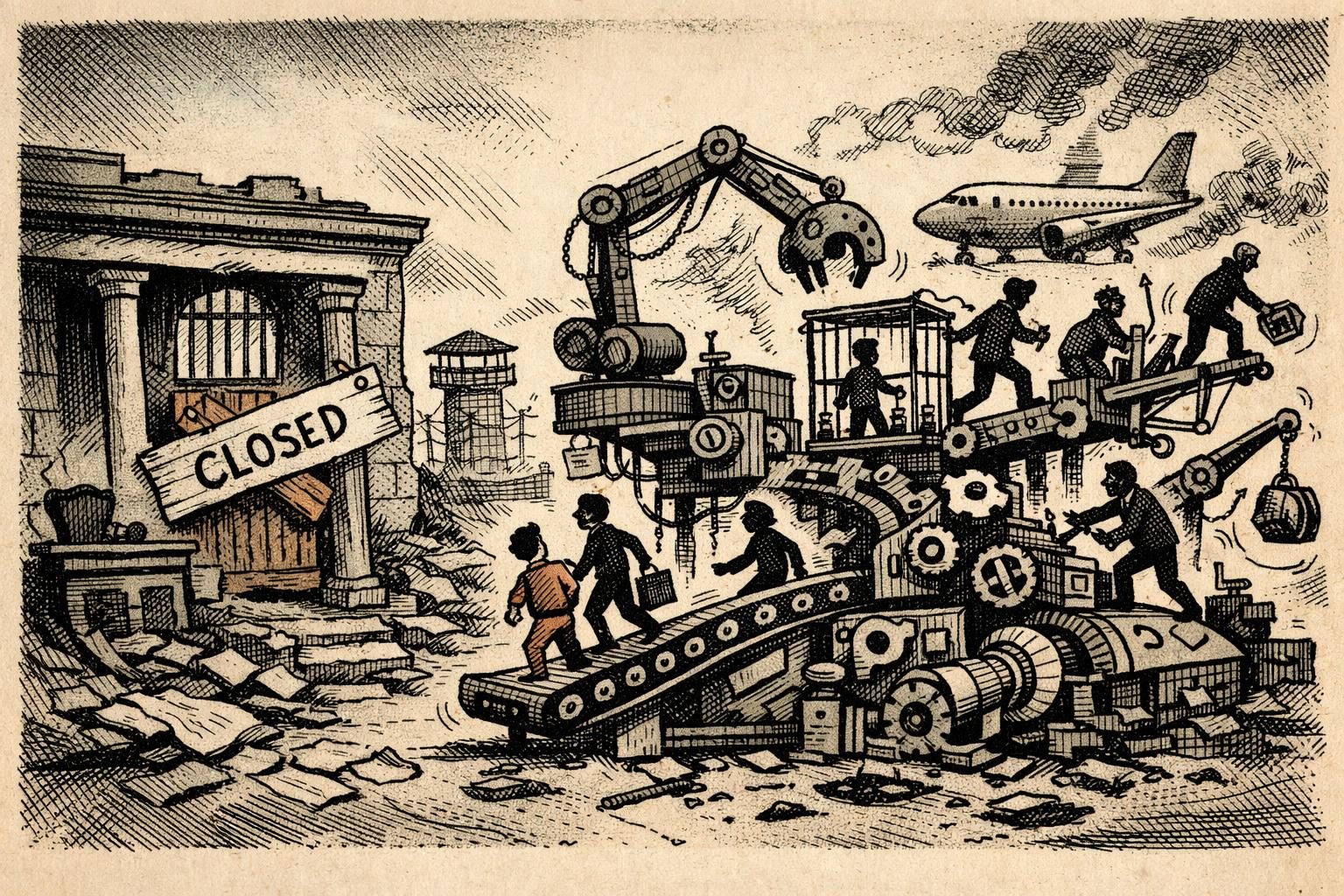
The Justice Department’s immigration court system said Thursday that it will close the Batavia Immigration Court, a move that sounds routine only if you have never had to navigate a government system designed to make ordinary tasks feel like a hostage negotiation. On paper, the decision reads like an internal reshuffling of a docket. In real life, it is another sign that the immigration enforcement apparatus is being continuously reworked to match the Trump administration’s priorities, staffing choices, and courtroom tactics. The timing matters because this is not happening in a vacuum, and it is not happening in a system with extra slack to absorb disruption. Immigration courts already operate under heavy pressure, with backlogs, detention logistics, and attorney access all tangled together in a structure that can barely keep itself upright on a good day.
A closure like Batavia’s is not just about moving files from one place to another. It changes where people have to appear, how far lawyers and families must travel, and how much delay can be built into the process before anyone notices that delay has become the process itself. For detained people, especially, the practical effect can be immediate: more transport complications, more time spent waiting for a new hearing location, and more uncertainty about whether a case will move forward on schedule. For attorneys, the shift can mean scrambling to keep track of updated calendars and recalculated travel plans, often while representing clients who do not have much margin for error. For the court system, a closure can create a chain reaction of rescheduling and reassignment that ripples outward far beyond the walls of one building. That is why a seemingly administrative announcement can carry the kind of consequences that are felt most sharply by the people least able to absorb them.
The broader picture is that immigration enforcement under the Trump administration has increasingly looked less like a fixed set of institutions and more like a machine that keeps rearranging its own parts while claiming that the new configuration is somehow more efficient. That may mean shifting cases, consolidating operations, or closing venues when the government decides those steps better fit its enforcement goals. The result is an immigration system that is constantly in motion, but not necessarily in a way that makes it more coherent or fair. Instead, the changes often seem to be driven by the demands of speed, control, and political messaging, with the everyday mechanics of due process left to catch up later if they can. The Batavia closure fits that pattern: one more institutional adjustment with immediate consequences and a larger symbolic value as evidence that the system is being rebuilt on the fly.
That larger symbolism should not obscure the ordinary damage these shifts can cause. Immigration court is where the government’s enforcement machinery meets the people caught inside it, and when the location of that machinery changes, the effects are rarely abstract. Hearings can be delayed, access can become more difficult, and the burden of keeping up with new instructions falls on people who are often already operating under stress, uncertainty, and the risk of detention or removal. None of that means every closure is illegal, unprecedented, or even surprising. It does mean that each one reinforces a pattern in which the system’s structure becomes another tool of pressure, not just a neutral administrative detail. The Batavia court’s shutdown is therefore more than a line item in a bureaucratic notice. It is a reminder that immigration policy is not only made through speeches and border theatrics, but through the unglamorous machinery of courts, calendars, and moving targets that decide who gets heard, who gets delayed, and who is left trying to keep up with a government that keeps changing the rules of the room while people are already standing in it.
Comments
Threaded replies, voting, and reports are live. New users still go through screening on their first approved comments.
Log in to comment
No comments yet. Be the first reasonably on-topic person here.