
FEC quorum crisis keeps choking another major campaign-finance case
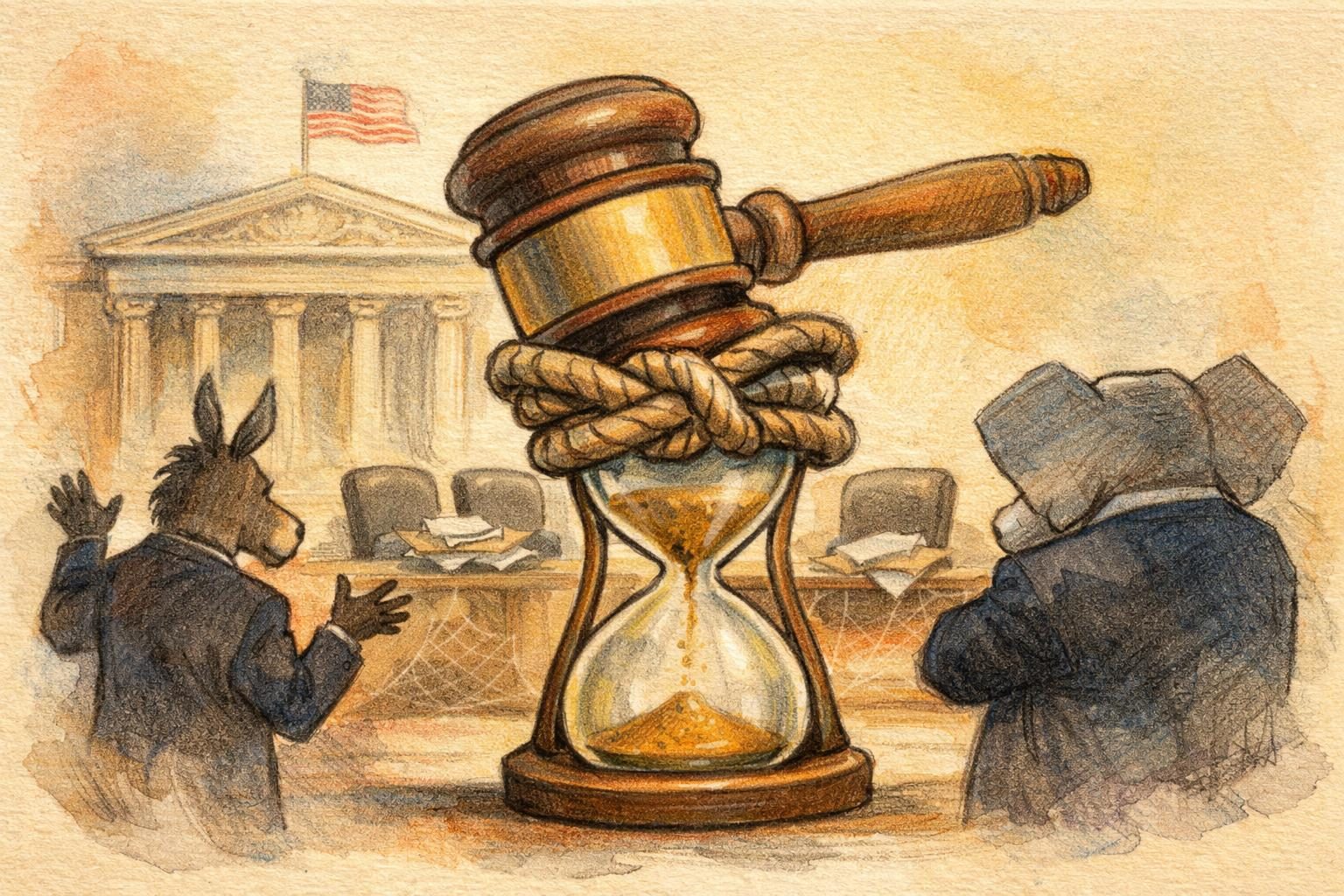
The Federal Election Commission’s own case page shows that SMP v. FEC is still bogged down in a procedural trap that the agency itself has not been able to escape: it lacks a quorum. That matters because the FEC is not supposed to be a ceremonial archive of campaign-finance complaints. It is supposed to decide them, vote on them, and carry out the enforcement work that gives the nation’s election-spending laws any practical force. In this case, a district court dismissed the National Republican Senatorial Committee’s motion to dismiss on September 15, but the larger picture remains unchanged. One ruling moved the docket forward by a step, yet the agency’s structural inability to function as a full commission keeps the case inside a stalled enforcement system. The result is a familiar but still unsettling form of governmental paralysis: the paperwork exists, the litigation exists, and the legal obligations exist, but the institution charged with policing the rules cannot reliably complete the job.
That is not a small administrative inconvenience. Campaign-finance enforcement depends on an agency that can reach decisions, not one that can merely host disputes in a permanent holding pattern. When the FEC cannot muster the votes needed to act, cases involving coordination, spending, disclosure, and accountability can linger without the normal pressure of a functioning regulator. The practical effect is to widen the gap between what the law says and what the government can actually do to enforce it. Political actors notice that gap quickly. If a system cannot consistently punish or deter conduct at the boundaries of the rules, then those boundaries start to look more like suggestions than constraints. In a political environment already flooded with opaque money streams and legal gray areas, the inability to finish an enforcement case is not a minor clerical glitch. It is a structural weakness with real consequences for how campaigns operate and how much secrecy they can sustain.
The latest posture in SMP v. FEC underscores how ordinary this failure has become, which is part of what makes it so dangerous. A court can dispose of one motion, but that does not repair the bigger institutional problem at the center of the case: the commission still cannot function like a normal enforcement body. The FEC’s own litigation materials signal that the agency remains stuck in a posture where it can document the dispute, file in court, and keep the matter alive on a docket, yet still struggle to finish the work that Congress expected it to do. That is why this should be read as a present-tense institutional failure, not a dusty legal footnote from a bygone campaign cycle. The watchdog can still bark in the form of filings and case entries, but barking is not the same as biting. When the body charged with policing election money cannot act with a full commission behind it, the system invites delay, uncertainty, and strategic gamesmanship from those who know the rules are easier to test when no one can enforce them cleanly.
There is also a broader democratic cost that is easy to miss when the problem is framed as a procedural nuisance. Campaign-finance law is one of the main tools intended to keep political money visible, traceable, and subject to consequences when it crosses the line. If the agency responsible for enforcement cannot secure the quorum needed to act, then those safeguards lose force exactly where they are supposed to matter most. The public may still see filings, complaints, and orders, but that does not guarantee a responsive regulator standing behind them. This is how institutional breakdown becomes normalized: the system keeps producing records that suggest activity, while the harder part of governance—the part that resolves disputes and imposes consequences—goes unfinished. In that sense, the current state of SMP v. FEC is not just about one motion or one district court order. It is about a recurring federal failure to keep a core democratic enforcement mechanism working well enough to matter. And as long as the quorum problem persists, the case remains a reminder that campaign-finance rules without a functioning enforcer are only as strong as the institutions trying, and failing, to carry them out.
Comments
Threaded replies, voting, and reports are live. New users still go through screening on their first approved comments.
Log in to comment
No comments yet. Be the first reasonably on-topic person here.