
Republicans are suddenly spending like their “safe” House seats aren’t safe
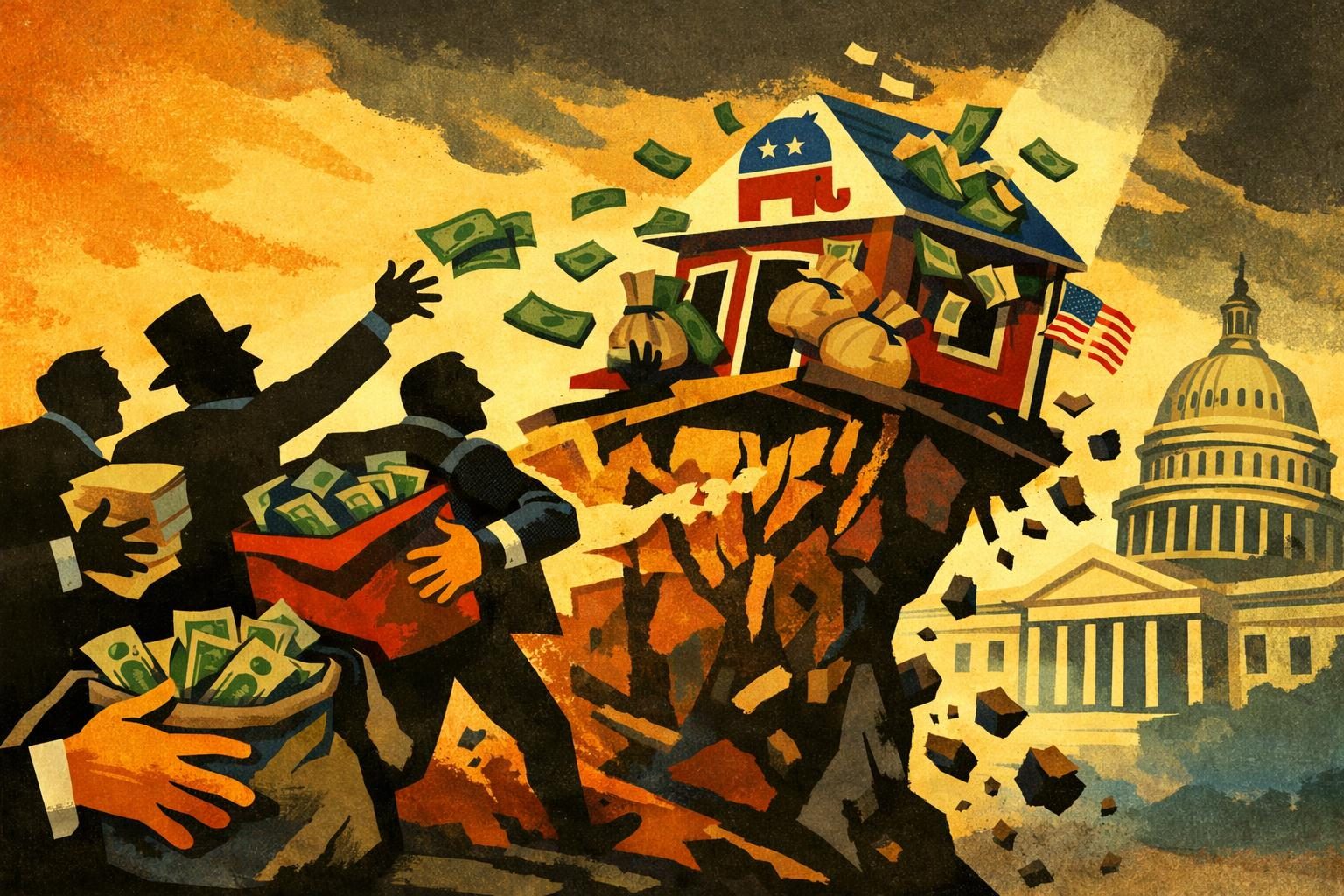
Republican groups and major donors are beginning to act as though a batch of House seats that once looked comfortably out of reach for Democrats may not be so comfortable after all. Over the past several weeks, and with the pace still picking up on September 27, GOP-aligned money has started flowing into at least 39 races that were previously treated as sleepy or noncompetitive. That alone does not mean the party is suddenly in full-blown retreat, and it certainly does not prove a wave is already forming. But it does amount to a meaningful shift in posture, the kind that usually happens only when internal numbers stop matching the public confidence. The simplest reading is that Republican strategists are seeing more risk in the map than they are prepared to say out loud.
The scale of the spending movement matters because it suggests the party is not just reacting to a handful of messy districts. When a political operation begins spreading resources into seats it once assumed were safe, it is often because the warning signs are showing up across multiple regions and not just in one local feud or one bad candidate. In this case, the reported internal polling appears to be showing some traditionally comfortable Republican seats becoming more vulnerable than expected, enough to prompt a defensive scramble. That does not automatically translate into flips, and it does not mean every target is suddenly in jeopardy. But it does indicate that the GOP is taking the possibility of broader trouble seriously enough to put money where its optimism used to be.
The backdrop to all of this is a political environment that seems to be getting less forgiving for the party in power. Republicans are facing growing pressure tied to the administration’s policy agenda, particularly around cost-of-living concerns that continue to shape voter mood even when the national conversation is dominated by bigger partisan fights. There is also a more general dissatisfaction with the governing posture, the sort of vague but durable irritation that can be hard to measure and harder to reverse once it starts spreading. In practical terms, that means House members in supposedly secure districts are now being asked to defend territory they probably expected to spend most of the cycle ignoring. It is a noisy reminder that “safe” is often just a temporary label, not a permanent condition. For incumbents trying to project calm, the arrival of outside cash in races that had barely been on the radar is the political equivalent of hearing sirens from down the block.
The real question is whether this is a one-off burst of precaution or the opening phase of a sustained defensive campaign. If donors are opening the spigot this early, it suggests strategists believe the danger is structural rather than the result of a single bad news cycle. That would be a more serious problem for Republicans, because structural warnings rarely stay confined to the original set of threatened seats; they usually force broader spending reallocations, more cautious messaging, and a lot less freedom to experiment. Democrats do not need to flip every vulnerable Republican district to make this matter. They only need the GOP to keep diverting time, money, and attention toward places that used to be considered off the board. Once that happens, the majority starts to look less like a cushion and more like a liability, because every extra dollar spent defending the supposedly safe zone is a dollar not spent elsewhere. For now, the money trail is not proof of collapse. It is something more useful for observers and more annoying for Republicans: a sign that the party itself no longer seems fully convinced by the story it tells the public about its own map.
Comments
Threaded replies, voting, and reports are live. New users still go through screening on their first approved comments.
Log in to comment
No comments yet. Be the first reasonably on-topic person here.