
White House keeps buying itself a campaign ad, now with your money
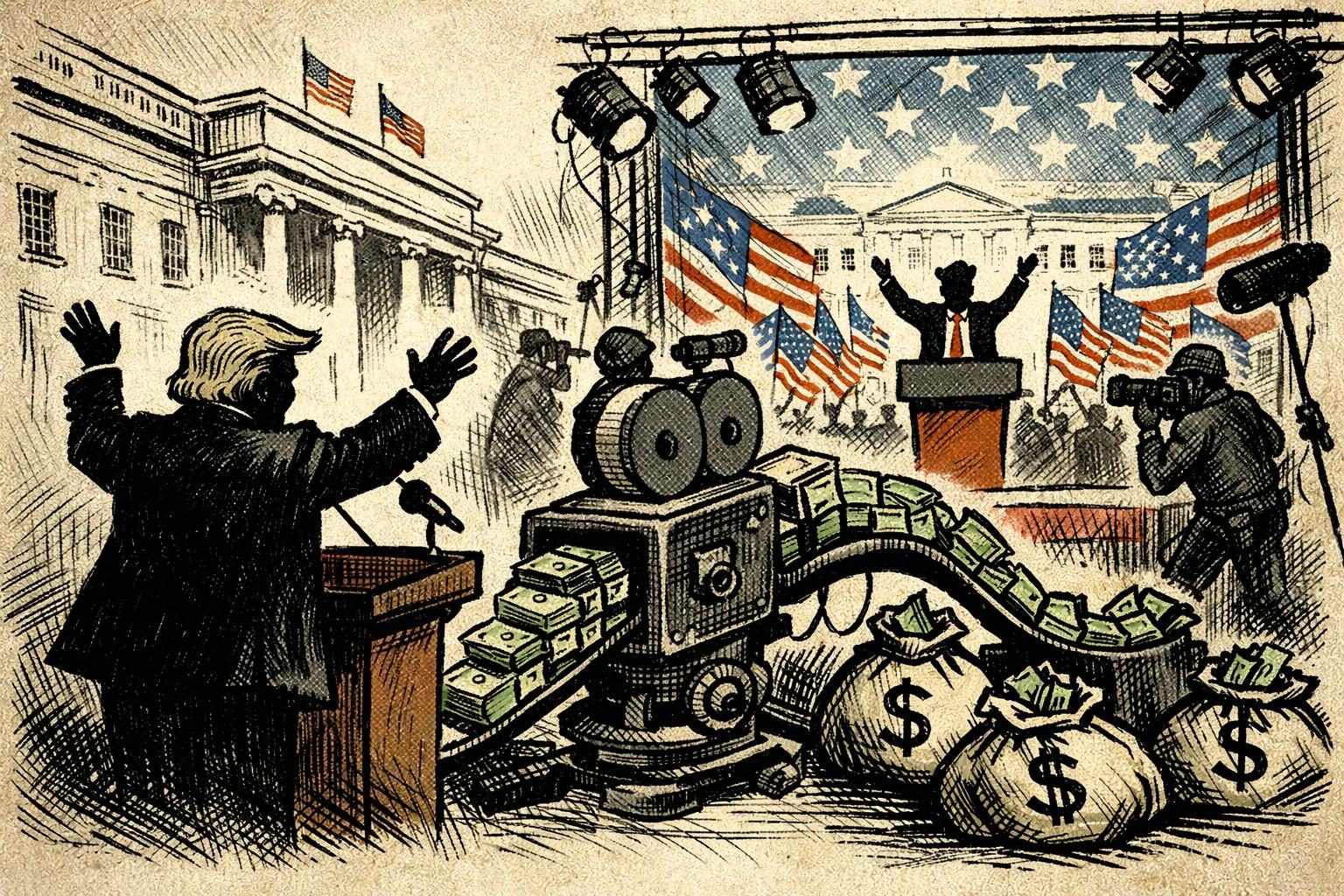
The White House on Sunday added another installment to a taxpayer-funded ad campaign that flatters Donald Trump with the sort of slick, campaign-style imagery and rhetoric that usually belongs on a candidate’s account, not in official government messaging. The newest spot is the third in the series, and like the earlier versions it is framed as a public service announcement even as it leans heavily on branding that appears designed to reinforce the president’s image. That alone has been enough to trigger a fresh round of criticism from lawmakers, ethics watchers, and anyone who still thinks there is supposed to be a meaningful line between informing the public and promoting the people who run the government. The administration says the ads are proper public information, but the timing, style, and tone of the campaign have made that defense sound thinner with each new release. The result is a controversy that is as much about institutional boundaries as it is about one particular ad buy.
What has set off the loudest objections is not merely that the White House is communicating through paid media. Governments do that all the time, and some of it is routine, useful, and boring in exactly the way public communication should be. The problem here is that the campaign appears to blur the line between neutral information and political self-promotion, using public money to burnish Trump’s standing in a way that looks suspiciously familiar to anyone who has watched a presidential race up close. Critics say the ad series repackages campaign aesthetics as official duty, which raises the obvious question of why the government needs to look and sound like a reelection operation in order to make its point. Even some Republicans have grumbled that taxpayer dollars should not be used to boost a president’s brand, a complaint that is notable precisely because it comes from a camp not usually eager to pick a fight over message discipline. The White House’s insistence that Trump is not on the ballot does not really settle anything, because the issue is not whether he is technically campaigning in the strictest sense. It is whether the government should be producing material that functions like a promotional reel for the man in charge.
The criticism is landing in Congress, where lawmakers are treating the campaign less like a quirky communications choice and more like a possible ethical and legal problem. That response matters because the use of taxpayer dollars for messaging is not supposed to be a blank check for whoever occupies the Oval Office. There are longstanding expectations, and in some cases actual rules, about how federal resources can and cannot be used to shape public perception. When a White House seems to be testing those boundaries, it invites scrutiny not only of the specific ad but of the broader culture that allows such a move to feel normal. The administration’s defenders are arguing, in effect, that the spots are meant to inform the public and therefore belong in the official toolbox. But that explanation is running into a basic credibility problem: if an ordinary viewer sees the ads and thinks they resemble campaign material, the government may have already crossed the line that matters most. The fact that the series is expanding rather than being quietly shelved suggests the political team around Trump either believes the backlash will fade or is willing to absorb it in exchange for the messaging value. Neither option is especially reassuring if the standard is supposed to be restraint.
There is also a larger institutional cost to this kind of thing, and it goes beyond the immediate embarrassment of a taxpayer-funded vanity project. Once a White House normalizes the use of public money for self-flattering political branding, it lowers the bar for whatever comes next. A little less separation between official business and personal promotion here, a slightly more aggressive visual there, and suddenly the government is doing more image management than public service. That is how norms erode: not with one dramatic breach that everyone instantly recognizes, but through a series of small, shameless adjustments that get defended as harmless until they are no longer distinguishable from the abuse itself. The administration is already dealing with plenty of other fights over policy, credibility, and political direction, including inflation, war, and the looming midterm calendar, which makes the decision to add vanity marketing to the list even more conspicuous. It suggests a White House that is not merely comfortable with using official channels to shape the president’s image, but confident enough to keep pushing even after the first round of criticism. That may be a sign of political calculation, or it may be a sign that the guardrails are getting treated like optional accessories. Either way, taxpayers are the ones footing the bill for a campaign ad they did not ask for, did not vote on, and probably did not need to see in the first place.
Comments
Threaded replies, voting, and reports are live. New users still go through screening on their first approved comments.
Log in to comment
No comments yet. Be the first reasonably on-topic person here.