
Trump escalates the Canada trade tantrum into fresh import bans
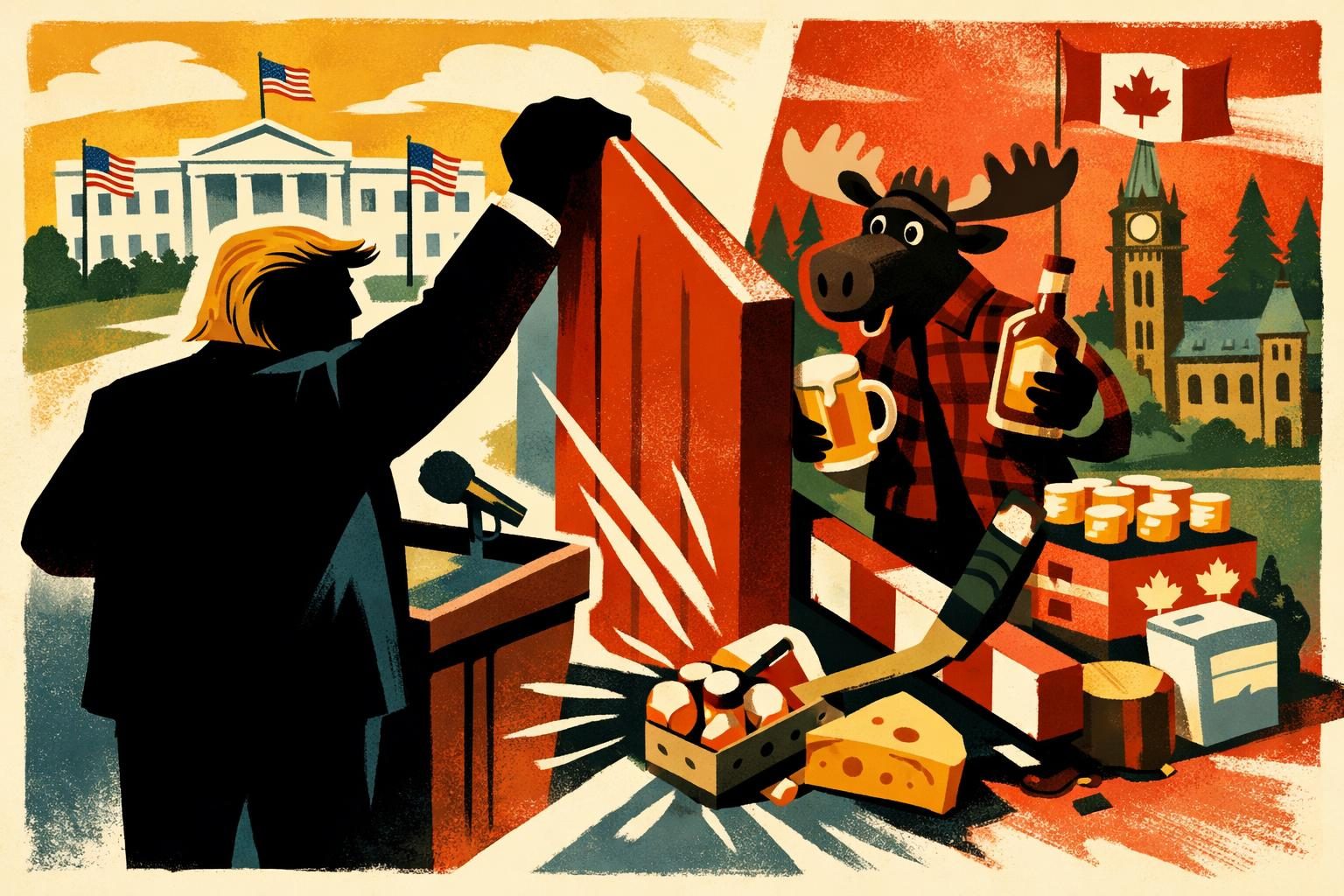
The White House on September 28 issued two new proclamations that sharply widen the trade fight with Canada, ordering the exclusion of certain Canadian products and a separate set of Canadian alcoholic beverages from importation into the United States beginning September 29 at 12:01 a.m. Eastern. The move is not a vague warning or a negotiating pose, but an immediate policy change with a specific start time and practical consequences for shippers, retailers, importers, and border-state businesses. According to the administration, the action is a response to what it calls continued Canadian discrimination against U.S. commerce, with the dispute tied to longstanding friction over motor vehicles and alcoholic beverages. In plain terms, the government has decided that a trade grievance is now serious enough to become an active import restriction. That puts the confrontation on a faster, sharper track than the usual slow burn of tariff threats and diplomatic grumbling.
The timing matters as much as the substance. Because the proclamations take effect almost immediately, companies that depend on cross-border supply chains now have to absorb the shock with very little room to adjust inventory, pricing, or transportation plans. That is especially true for products that move quickly or depend on tightly coordinated distribution schedules, where even a short disruption can ripple through warehouses, shelves, and contracts. The administration’s language frames the action as a defensive measure meant to protect U.S. commerce from unfair treatment, but the practical effect is still a direct escalation against a major trading partner. A trade dispute that might once have played out through negotiation, litigation, or a slower tariff schedule is instead being converted into an overnight market intervention. Businesses do not need a lecture on tariff theory to understand what that means; they need to know whether their shipments will clear, whether their costs will jump, and whether customers will blame them when prices move.
The broader signal is that tariff policy has become less of a last-resort tool and more of a standing habit of governance. Critics of the administration are likely to argue that this is exactly the danger: once tariffs and import bans are treated as the default answer to nearly every dispute, the rules start changing in a way that makes planning nearly impossible. Importers and manufacturers want predictable timelines, not a cascade of proclamations that can rewrite commercial assumptions overnight. Supporters, by contrast, will say the president is simply using leverage to defend U.S. industries and force Canada to confront what Washington describes as discriminatory treatment. Both of those arguments can be made with a straight face, but neither changes the basic fact that the White House has now turned a trade disagreement into immediate action. That is not a minor adjustment at the margins. It is a deliberate escalation, and one that suggests the administration is comfortable using economic disruption as a bargaining instrument.
The consequences will likely be felt well beyond the narrow legal language of the proclamations. Importers will need to reroute or replace affected goods, retailers may face higher costs or thinner supply, and Canadian officials now have a fresh incentive to consider their own response. If the goal is to project toughness, this does that clearly enough. If the goal is to reduce uncertainty, calm markets, or make the cross-border relationship easier to manage, the effect runs in the opposite direction. The White House is essentially betting that pressure will produce compliance, or at least a better negotiating position, before the damage spreads too far. Whether that bet pays off is another question entirely, and one that will depend on how Canada responds and how quickly affected businesses can absorb the hit. For now, what is certain is that the trade conflict has moved from rhetoric to enforcement, and the administration has chosen to stage that enforcement on a timeline measured in hours, not weeks.
Comments
Threaded replies, voting, and reports are live. New users still go through screening on their first approved comments.
Log in to comment
No comments yet. Be the first reasonably on-topic person here.