
D.C. Circuit schedules Trump oral argument for September 29
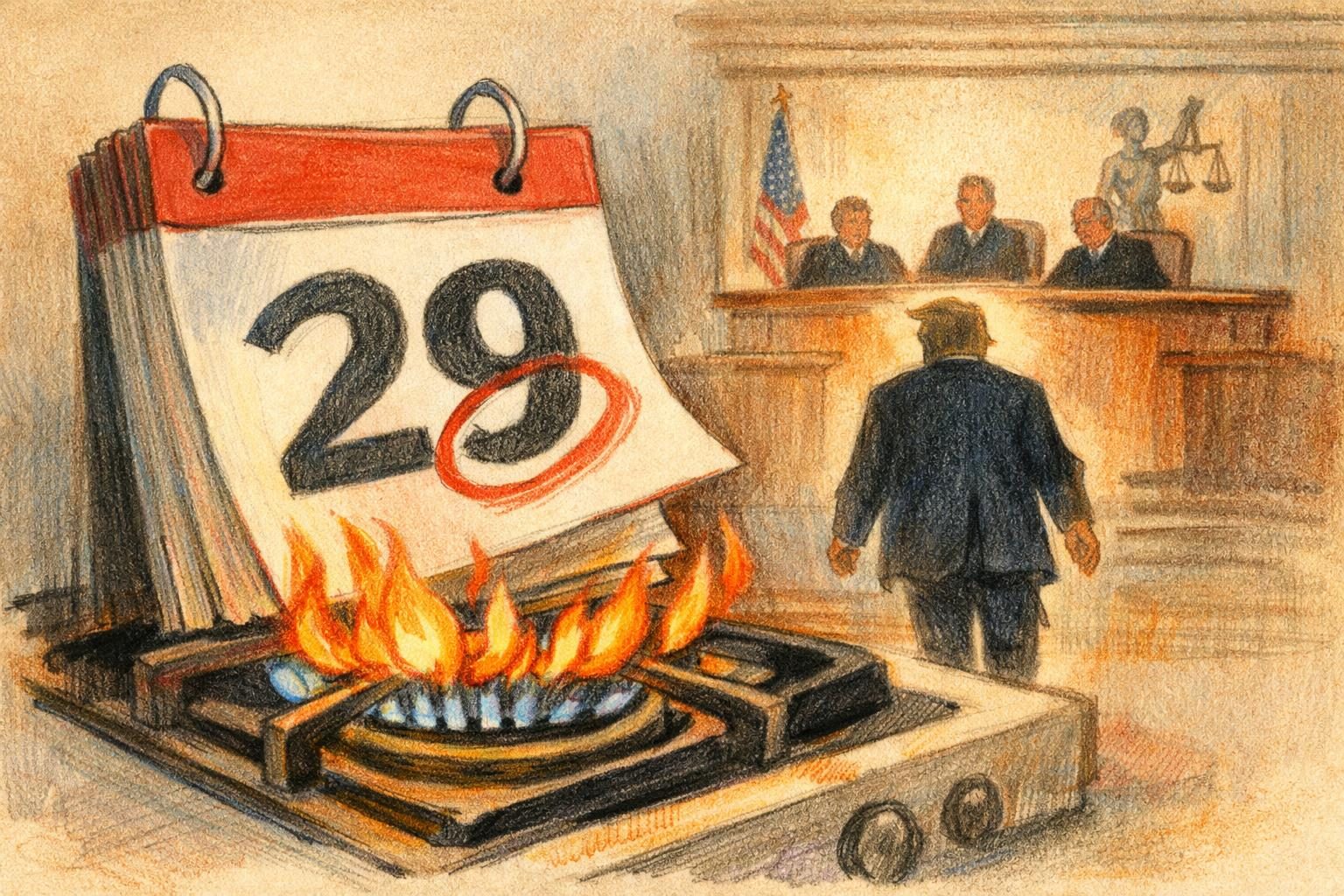
The D.C. Circuit has put former President Donald Trump’s name back on its public calendar, scheduling oral argument for September 29, 2026, in a case captioned In re: Donald J. Trump. That single line on a court advisory does not resolve anything on the merits, and it should not be mistaken for a ruling, a rebuke, or a reprieve. But in the way appellate dockets often become political weather vanes, it is still a meaningful marker. It means the case is active, it is moving, and it is now close enough to argument that the court is ready to hear the lawyers make their pitches in open court. For a figure whose legal troubles have repeatedly overlapped with his public life, that is enough to keep the matter in the headlines and in the bloodstream of the broader political conversation.
The immediate significance is procedural, but procedure is often where the real story lives in a case like this. An oral argument date tells the public that the court is done with whatever preliminary steps were necessary to get the matter onto the calendar and is now preparing to engage the issues directly. It does not say which side has the better argument, and it does not forecast how the judges will rule. Still, the fact that the D.C. Circuit is hearing the case means the litigation remains alive rather than buried in a stack of old filings. That alone matters in a legal environment where Trump’s name has become synonymous with recurring appellate fights, emergency motions, and disputes that seem never to leave the judicial system for long. In practical terms, the court’s schedule becomes part of the political story because any proceeding involving Trump tends to echo far beyond the courtroom. The calendar entry may be mundane in a technical sense, but it is also a public signal that the dispute is still very much in motion.
That motion carries a particular kind of weight when the litigant is a former president who remains a central force in American politics. Trump’s legal exposure has never been just a matter between one defendant and one tribunal; it has consistently reverberated through campaign messaging, partisan loyalty, and voter perception. Every new date in a federal appellate court reminds supporters, critics, and undecided observers alike that the legal consequences of his time in power and his conduct around it continue to be processed in real time. The judiciary does not frame these events politically, of course, and the judges are not there to measure the effect on the electorate. Yet the public cannot help but view the schedule through a political lens because the defendant’s identity makes the case larger than the narrow legal questions being argued. A former president appearing before a federal appeals court is inherently newsworthy, even before the substantive claims are unpacked. That is especially true when the litigation is part of a wider pattern that keeps returning Trump to the center of the national conversation. The court is not trying to stage a spectacle, but the spectacle follows the case anyway.
There is also a broader institutional story here about how the courts handle high-stakes political litigation. Federal appellate courts generally prefer to speak through opinions, not calendars, but the calendar itself can function as a form of transparency. By posting the oral argument date publicly, the D.C. Circuit is showing that the case is proceeding through ordinary judicial channels, even as the surrounding politics remain anything but ordinary. That can be reassuring to those who want evidence that the system is still working on its own timetable and not on the timetable of campaign season or public outrage. At the same time, the existence of the hearing keeps the matter alive in a way that guarantees another round of scrutiny, commentary, and speculation once the argument takes place. The court’s next steps will depend on what is argued, what the panel decides, and what issues are preserved or reshaped by the process. For now, the only hard fact is that the case is on the books, and that is enough to ensure Trump’s legal shadow stretches another few weeks at least. In a political era where litigation and governance are frequently entangled, even a simple scheduling notice can carry outsized importance. It is not the end of anything, but it is a reminder that the legal reckoning around Trump continues to unfold in public, one docket entry at a time.
Comments
Threaded replies, voting, and reports are live. New users still go through screening on their first approved comments.
Log in to comment
No comments yet. Be the first reasonably on-topic person here.