
DOJ rolls out election-crimes sweep involving 12 people
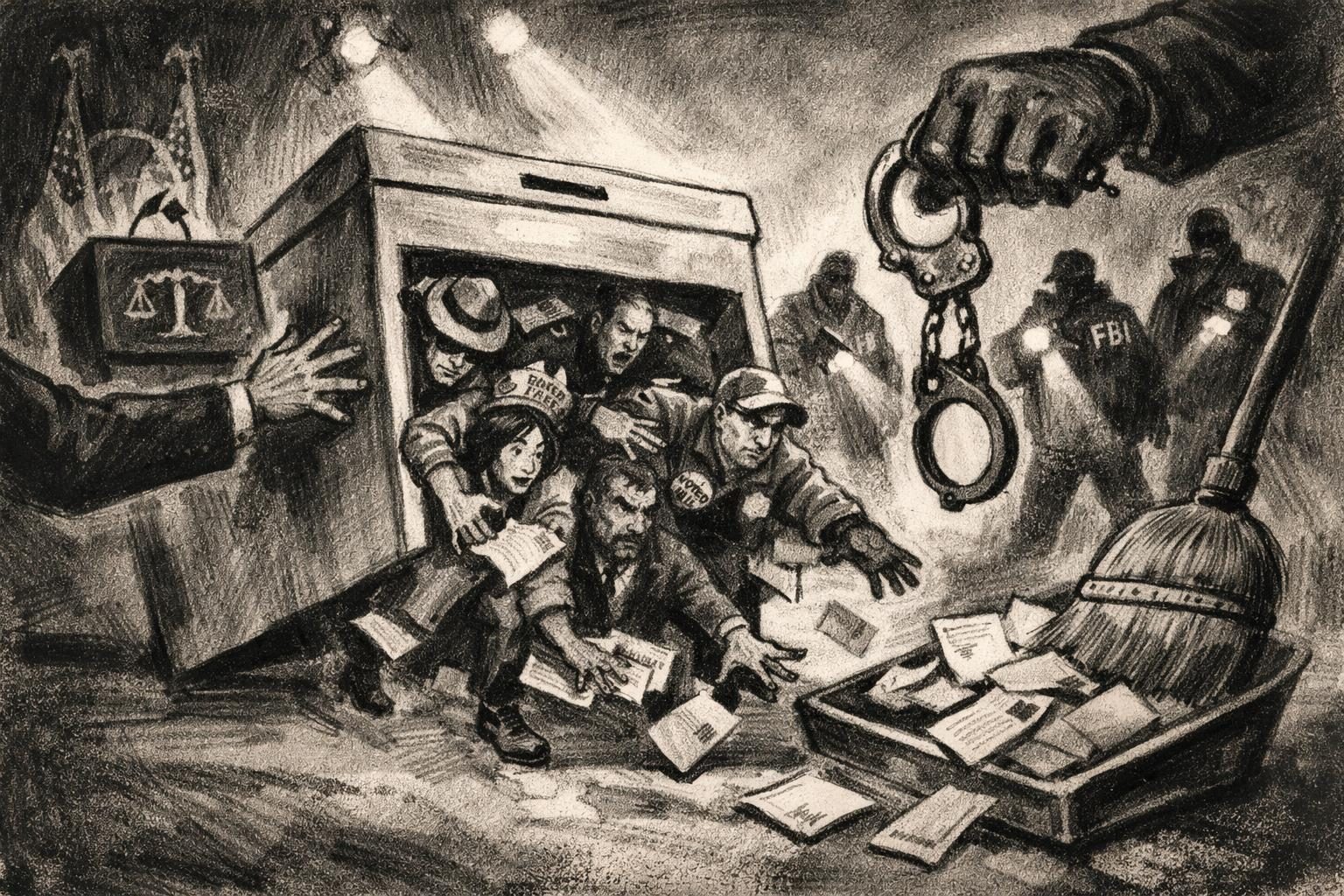
The Justice Department on September 28 announced a clustered set of election-related charges and guilty pleas involving 12 people, turning a collection of separate criminal cases into a single, high-decibel enforcement message. The matters span several states and include allegations of illegal voting, fraudulent voter registration, false claims of U.S. citizenship, and the disposal of roughly 300 mail-in ballots by a postal worker. The department presented the cases together, even though they are at different stages and do not amount to one unified prosecution. That packaging matters almost as much as the allegations themselves, because it gives the release the feel of a coordinated national sweep rather than a list of unrelated proceedings. The underlying conduct, if proven, would be serious enough on its own. But the political force of the announcement comes from the decision to bind the cases into a single narrative about election integrity, federal enforcement, and the administration’s preferred law-and-order posture.
The sweep is a good example of how the administration uses criminal cases to shape public expectations about elections. A case involving someone accused of voting when they were not eligible is not the same thing as a scheme to stuff ballot boxes, and neither is the same as a postal worker allegedly discarding mail ballots. Those distinctions are important, both legally and politically, because they speak to different vulnerabilities in the system and require different kinds of fixes. Yet in a big departmental rollout, those details tend to get flattened into one broad claim that voting systems are under persistent and widespread attack. That framing is useful for officials who want to persuade the public that election misconduct is not just possible but endemic. It also allows the department to appear aggressive without having to show that the cases themselves support the larger impression being created. The result is a release that functions as much like a political signal as an enforcement update.
That does not mean the allegations should be waved away. If the accusations are accurate, then the cases reflect real violations of rules designed to protect voter eligibility, ballot security, and the integrity of election administration. A person who falsely claims citizenship to register or cast a ballot, or someone who unlawfully votes in a jurisdiction where they are not entitled to do so, can create both legal and public trust problems. A postal worker allegedly discarding hundreds of mail ballots, meanwhile, would raise a different but equally serious concern about chain-of-custody failures and interference with the basic mechanics of voting by mail. Still, the department’s own announcement leaves these matters where they belong at this stage: in the realm of accusations, pleas, and pending proceedings rather than final judgments. The difference matters because it tempers the rhetoric, even if the rhetoric is clearly doing the heavy lifting. The cases now move into courtrooms, where evidence, witness credibility, and procedural safeguards will determine how much of the department’s headline survives scrutiny.
What makes this release especially notable is not that the Justice Department took election crimes seriously, but that it chose to present these cases as a single, sweeping event with obvious political utility. That choice reinforces a broader message that the federal government is increasingly willing to treat election policing as a central mission rather than a narrow and occasional function. It also fits neatly into the broader conservative fixation on voting integrity, where isolated cases are often treated as proof of a much larger and more threatening pattern. In that sense, the announcement is less a neutral accounting than a curated public performance: serious allegations, bundled together, released at once, and framed to maximize impact. The department may well believe this kind of visibility deters misconduct, and there is a reasonable argument that public enforcement can have that effect. But it is equally clear that the political symbolism is doing a lot of work here. The headline is designed to stick. The message is designed to resonate. And the actual cases will now have to carry the burden of proving whether the sweep was an accurate snapshot of election crime or just another administration-friendly way of turning scattered prosecutions into a national moral panic.
Comments
Threaded replies, voting, and reports are live. New users still go through screening on their first approved comments.
Log in to comment
No comments yet. Be the first reasonably on-topic person here.