
Trump and DOT finalize a fuel-economy rollback dressed up as consumer freedom
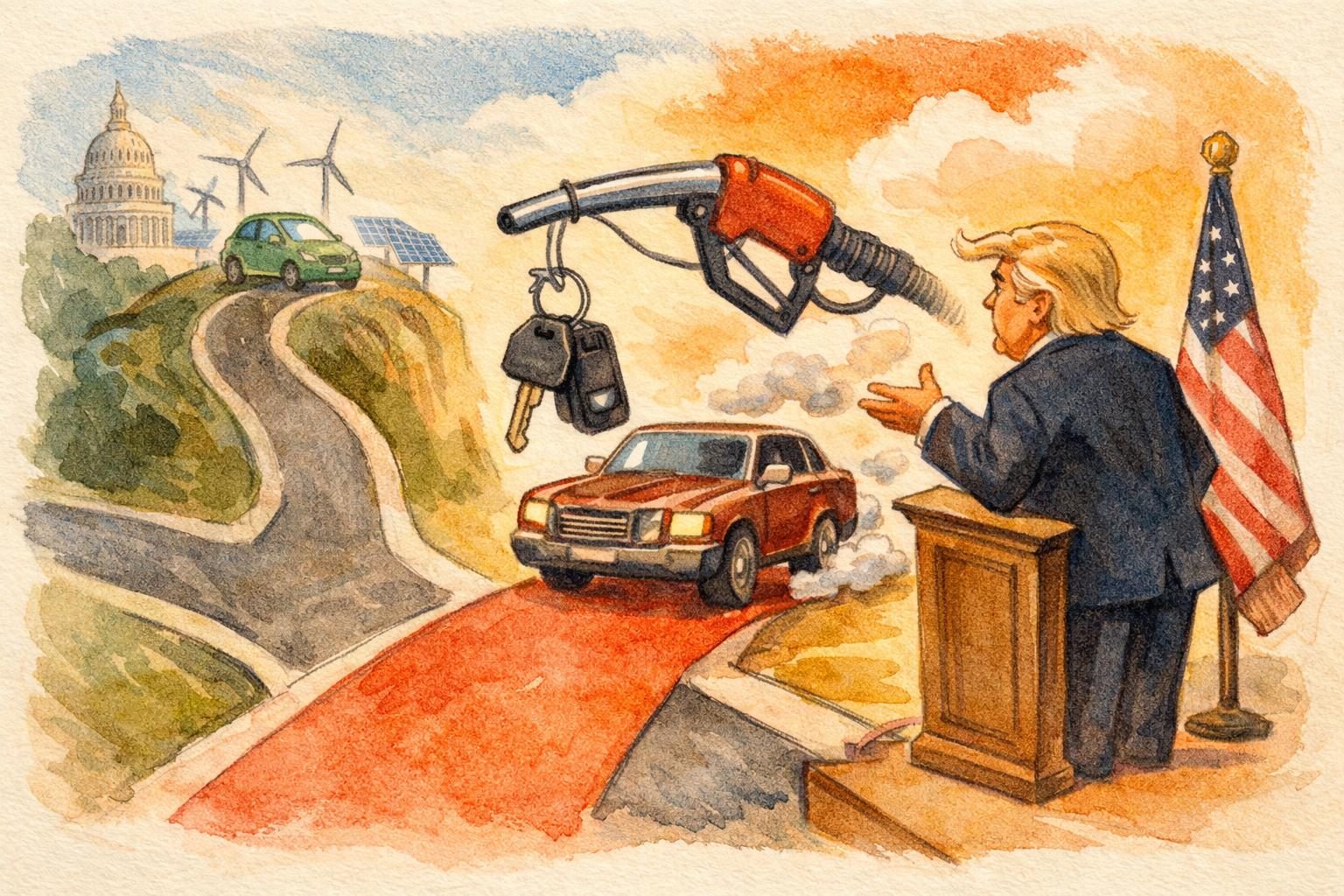
The Transportation Department said on September 28 that President Trump and Transportation Secretary Sean Duffy had finalized a new fuel-economy policy package branded as the “Freedom Means Affordable Cars” initiative, a name that does a lot of ideological heavy lifting for a plan built around loosening standards. The administration is casting the move as a correction to what it calls an illegal EV mandate, and as a win for consumers who supposedly want more choice and lower sticker prices. In practice, though, the action is a significant federal policy shift that retools how the government pushes automakers toward more efficient vehicles. It is not just rhetorical paint over the same old rollback, because the department is treating this as a finalized rulemaking and not a temporary talking point. That makes it a real-world change with consequences for what kinds of cars are incentivized, what manufacturers build, and what drivers end up paying over time. The branding may sound like an invitation to freedom, but the substance is a retreat from a policy framework that has long been used to squeeze more miles out of each gallon of fuel. This is the kind of regulatory move that tends to look abstract until it shows up in showroom inventory, household gas bills, and the country’s emissions trajectory.
Fuel economy standards are one of the most durable levers the federal government has for shaping the auto market, precisely because they influence product planning years before a consumer ever steps into a dealership. When standards are strong, they encourage manufacturers to invest in lighter, more efficient, and increasingly electrified vehicles, even if the transition is uneven and contested. When standards are weakened, that pressure eases, and companies have more room to keep selling larger, heavier, and less efficient models without facing the same regulatory push to improve. The administration is presenting this as a matter of consumer freedom, but the reality is that standards often function as a backstop against the market’s tendency to favor short-term profits over long-term efficiency. That matters because the fuel costs of a vehicle are not a one-time purchase; they continue for as long as the car is on the road, and those costs fall especially hard on working drivers who cannot easily trade in for something newer. It also matters because the environmental costs of more gasoline burned do not stay neatly in one lane; they accumulate through pollution, public health burdens, and more difficult climate targets. If the government removes pressure from automakers to keep improving, then consumers may see more of the cheap-to-buy, expensive-to-run vehicles that have defined so much of the American market for decades. That is the core policy tradeoff hiding beneath the upbeat branding.
The White House and Transportation Department are clearly betting that the phrase “affordable cars” will land more cleanly with voters than a narrower description of what the policy actually does. That political strategy is not subtle: take a regulatory rollback, wrap it in the language of household savings, and invite critics to sound like they are defending bureaucracy against ordinary people. The administration is also trying to frame the move as a rejection of what it describes as an illegal EV mandate, a phrase that turns a set of federal standards into a broader cultural fight over electric vehicles and consumer choice. But even if the label is useful in messaging terms, it does not change the practical effect of the decision. Rolling back fuel-economy requirements reduces the pressure on manufacturers to improve efficiency across their fleets, which in turn can slow the rate at which cleaner vehicles become standard rather than exceptional. It may also keep the market tilted toward bigger vehicles, which often carry higher fuel costs over time even if their upfront prices are easier to advertise. That is why the claim of affordability deserves scrutiny: a lower purchase price can be partly offset by years of higher gasoline spending, especially if the standards that would have nudged the market toward efficiency are watered down. The administration may well argue that Americans should be free to choose what they drive, but the government is also choosing which technologies get less pressure, less urgency, and less incentive to improve.
Environmental advocates and critics who focus on consumer costs are likely to attack the policy from both directions at once, arguing that it is bad climate policy and bad household policy. From their perspective, the administration is not protecting drivers so much as shifting expenses from the showroom to the gas pump and from the present to the future. They are likely to say that the move undercuts emissions goals at exactly the moment when transportation remains one of the largest sources of pollution and climate-damaging carbon dioxide. They may also argue that the policy helps the automotive and fossil-fuel sides of the ledger while leaving families with a longer-term bill that is harder to notice at first glance. The administration, for its part, will almost certainly insist that it is restoring common sense and putting affordability ahead of mandates, which is a politically potent frame even when the underlying math is messy. What makes this particular rollback more consequential than a routine deregulatory gesture is that it does not just send a signal; it changes the incentive structure that guides how cars are designed and sold. That means the effects will unfold slowly, through model lines, fleet averages, and purchasing decisions, rather than through a single headline moment. The larger political significance is that the government is not merely trimming a rule here or there. It is trying to establish a governing philosophy in which climate-related regulation is treated as an intrusion unless it can be sold as something else. For automakers that prefer lighter oversight and a slower transition, that is welcome news. For anyone expecting federal policy to keep nudging the market toward cleaner transportation, it is a reminder that the rollback era is not theoretical. It is being written into the rules, one “freedom” slogan at a time.
Comments
Threaded replies, voting, and reports are live. New users still go through screening on their first approved comments.
Log in to comment
No comments yet. Be the first reasonably on-topic person here.