
FEC dusts off pre-election reminders as campaign-law headaches pile up
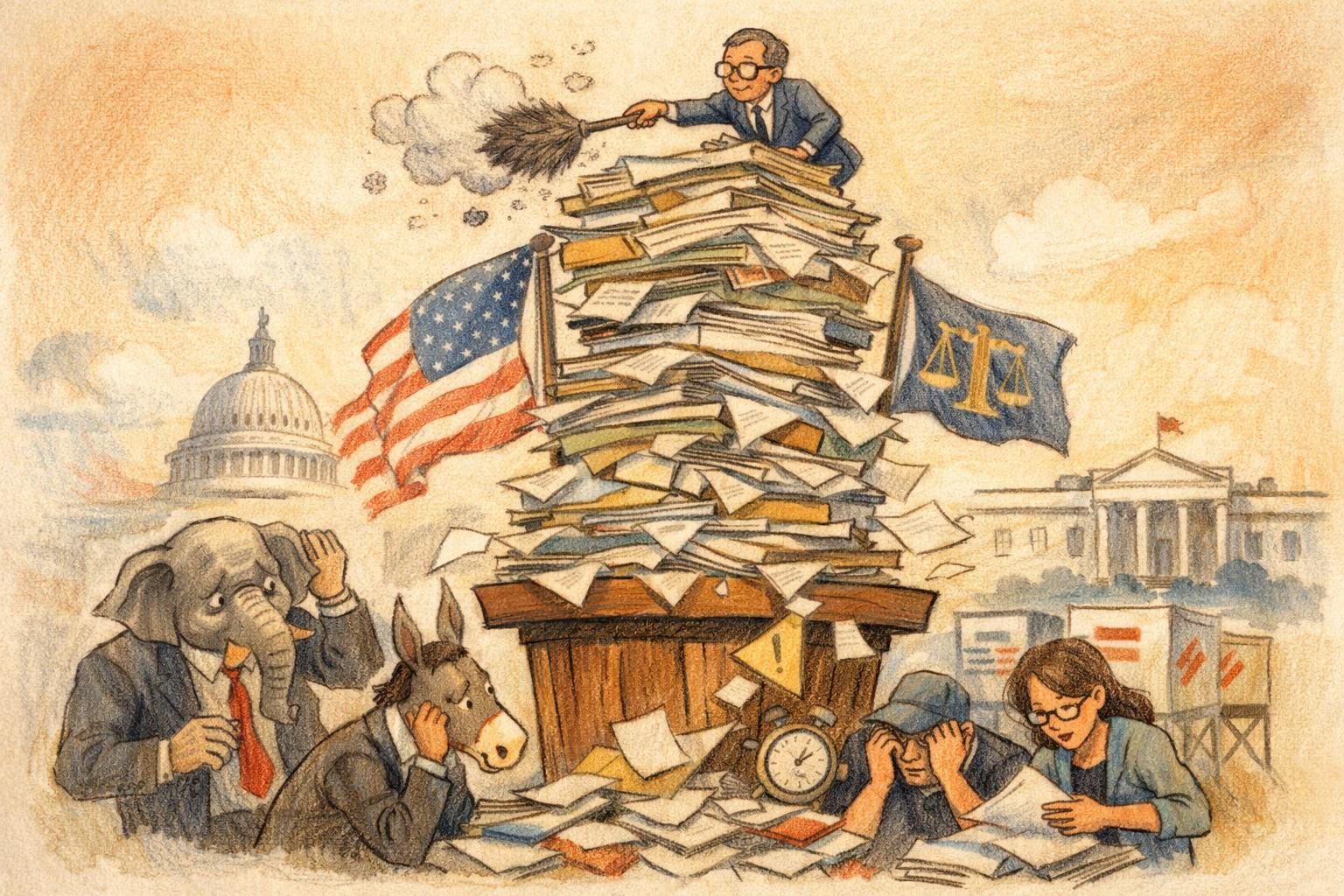
The Federal Election Commission’s latest pre-election reminder to local party organizations arrived on September 28, which is usually the kind of update that only compliance staff and election lawyers notice. But the timing matters. As the campaign season tightens and federal races move toward the stage where every filing, transfer, and coordination question can become a dispute, even a routine reminder from the agency takes on extra weight. The notice is not a dramatic new rule or a sweeping enforcement action, and it does not pretend to be one. Still, it is a useful marker of where the system stands: parties and committees are entering the period when small mistakes can become public headaches, and the agency responsible for warning them is once again forced to do much of its work through guidance rather than force.
That is part of what makes the reminder notable. On its face, the message is basic campaign-compliance housekeeping, the sort of thing the commission periodically issues when an election cycle is about to make ordinary rules suddenly consequential. Local party organizations, especially those with lean staffs and overlapping responsibilities, often need that kind of nudge because the terrain is crowded with requirements that can be easy to miss under pressure. Disclosure obligations, contribution limits, coordination boundaries, recordkeeping expectations, and the timing of reports all become more fraught when campaigns are moving fast. The FEC’s reminder does not change any of those rules, but it does underscore that they remain in force and that the agency expects party groups to pay attention now rather than later. In a healthier regulatory environment, that might be unremarkable. In the current one, it reads as a sign that the commission is trying to prevent predictable errors before they become enforcement cases, complaints, or excuses.
The bigger issue is the backdrop against which the reminder landed. The FEC has spent years under criticism for being too slow, too divided, and too constrained to police campaign finance with much consistency. It is a body built to operate through bipartisan agreement, which sounds sensible until partisan deadlock turns routine oversight into a chronic problem. That dynamic leaves the commission with a strange mix of responsibilities and limits: it can publish reminders, interpret rules, and respond to questions, but it often struggles to move decisively when violations or disputes arise. The result is a system where the regulated community is expected to stay compliant even as the referee is frequently unable to act with much speed or certainty. That tension is not new, but every fresh reminder from the agency seems to shine a light on it. The message is effectively: the rules are still here, even if the institution enforcing them is operating with one hand tied behind its back.
The commission’s ongoing legal disputes add another layer to the picture. The FEC’s legal-resources page continues to track court cases involving the agency, including SMPS v. FEC, docketed as 26-336, which serves as another reminder that campaign-finance law remains entangled in litigation as much as administration. The existence of active cases is not unusual for a body that sits at the intersection of politics and regulation, but it does help explain why simple reminders can matter more than they seem. When the law is being debated in court, when enforcement is often delayed or contested, and when the agency itself is under pressure from both critics and litigants, plain-language guidance can become one of the few tools left to keep the system from veering further into confusion. That does not mean the guidance is enough. It plainly is not. But it is a way for the FEC to signal continuity and to tell party organizations, in effect, that uncertainty in Washington does not suspend their obligations in the field.
For local party organizations, the practical message is straightforward even if the politics behind it are not. The pre-election period is when compliance mistakes tend to multiply, especially for groups that are juggling candidate support, fundraising, vendor relationships, and reporting deadlines all at once. The FEC’s reminder suggests the agency expects those groups to be especially careful about the normal hazards of election season and to avoid treating the coming weeks as an administrative free-for-all. The commission is not announcing a crackdown, at least not in the material it posted, and it is not claiming that new violations are inevitable. Rather, it is acknowledging that the calendar itself creates risk, and that the risk is highest when organizations are moving money and messaging quickly while trying to keep pace with a volatile political environment. In that sense, the notice is mundane only in the narrowest bureaucratic sense. As a signal of the state of campaign compliance, it is anything but.
The broader lesson is that campaign-law season rarely arrives with fanfare; it arrives as a series of warnings, reminders, and disputes that build on one another until the machinery starts to creak. The FEC’s September 28 update fits that pattern. It does not solve the agency’s structural limitations, and it does not resolve the disputes that continue to dog federal election law. What it does do is reveal the condition of the system in a small but telling way. The watchdog is still barking, even if it has trouble biting. Local party organizations are being told, once again, to mind the rules before the election calendar makes every oversight more expensive. And the fact that such a reminder feels necessary says almost everything about the state of campaign compliance right now: the rules are intact, the pressure is rising, and the institution tasked with keeping order is still doing a lot of shouting from the porch because the fence is full of holes.
Comments
Threaded replies, voting, and reports are live. New users still go through screening on their first approved comments.
Log in to comment
No comments yet. Be the first reasonably on-topic person here.