
Court Backs Pentagon’s Risk Label for Anthropic
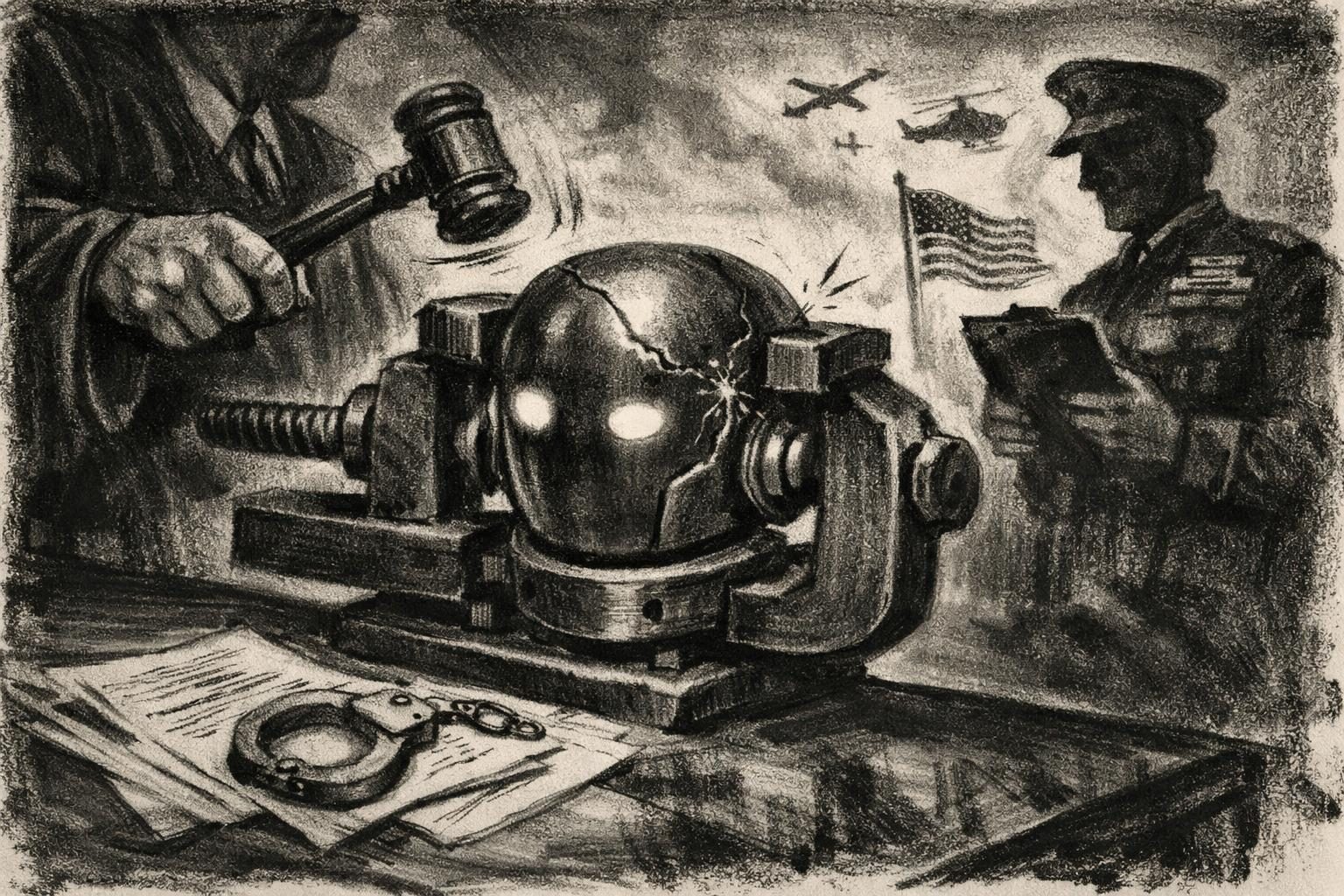
A federal appeals court has sided with the Pentagon in a dispute that, on its face, sounds like a niche procurement fight but in practice reaches into the future of artificial intelligence contracting, defense purchasing, and the government’s ability to police its own supply chains. The panel rejected Anthropic’s challenge to the military’s decision to treat the company as a supply-chain risk, leaving the designation in place and giving the defense establishment a clear procedural win. For Anthropic, the ruling is more than a courtroom loss. It is a reminder that the company’s ambitions to sell itself as a trustworthy, high-end partner to government agencies can still be checked by the blunt machinery of national-security oversight. For the Pentagon, the outcome reinforces a simple but consequential point: when it comes to guarding sensitive systems, it retains broad discretion to decide which vendors belong inside the perimeter and which ones do not.
The dispute lands at a moment when AI companies are moving fast into federal work while the rules around trust, security, and procurement remain uneven. Firms like Anthropic are trying to position themselves as essential infrastructure for agencies that want advanced models without taking on unnecessary risk. That pitch depends heavily on credibility, especially in the defense world, where even a hint of instability or supply-chain concern can become a barrier to contracts and renewals. The court’s decision does not settle every question about how these labels are used, but it does suggest that the Pentagon has substantial room to make and defend its own judgments. In practical terms, that matters because a risk designation can affect how a company is viewed across the defense marketplace, even if the underlying facts are disputed. Once a label like that exists, it can shape assumptions before anyone gets to the merits of a particular contract.
The broader policy issue is that the federal government is trying to catch up with a category of company that did not exist in its current form a few years ago. AI developers now sit close to data systems, command tools, analytical platforms, and procurement pipelines that are increasingly relevant to national security. Yet the legal and bureaucratic standards for deciding who counts as “trusted” have not fully evolved alongside the technology. That gap leaves agencies improvising with old tools, including risk labels, internal reviews, and procurement restrictions, to manage a new kind of vendor. Supporters of that approach can argue that caution is exactly what should happen when the stakes include defense systems and sensitive information. Critics can counter that the process is opaque, inconsistent, and potentially vulnerable to overreach, especially when the rules are being written on the fly. The appeals court ruling does not resolve that tension, but it does show which side currently has the stronger institutional hand.
There is also a reputational element here that should not be brushed aside as mere Silicon Valley sensitivity. A company whose business model depends on being taken seriously by government buyers does not want to carry a government-issued risk tag in a market where trust is everything. Even if the designation is only one part of a larger procurement picture, it can still function as a warning signal to contracting officers and agency lawyers who are already inclined to move cautiously. At the same time, the Pentagon is not pretending that its mission is to flatter the industry. Its job is to protect systems, maintain oversight, and avoid becoming dependent on vendors it thinks could create downstream vulnerabilities. That creates an awkward but increasingly common political reality: the state is treating major AI firms less like inevitable partners in modernization and more like entities that need supervision. The court’s ruling gives that approach a measure of legal cover, which may encourage more aggressive scrutiny in the future. And as AI companies press deeper into federal business, this case looks less like an isolated dispute than an early test of how much friction the government is willing to impose before it lets the next generation of tech inside the fence line.
Comments
Threaded replies, voting, and reports are live. New users still go through screening on their first approved comments.
Log in to comment
No comments yet. Be the first reasonably on-topic person here.