
Federal appellate courts opened the day with a fresh stack of orders and opinions
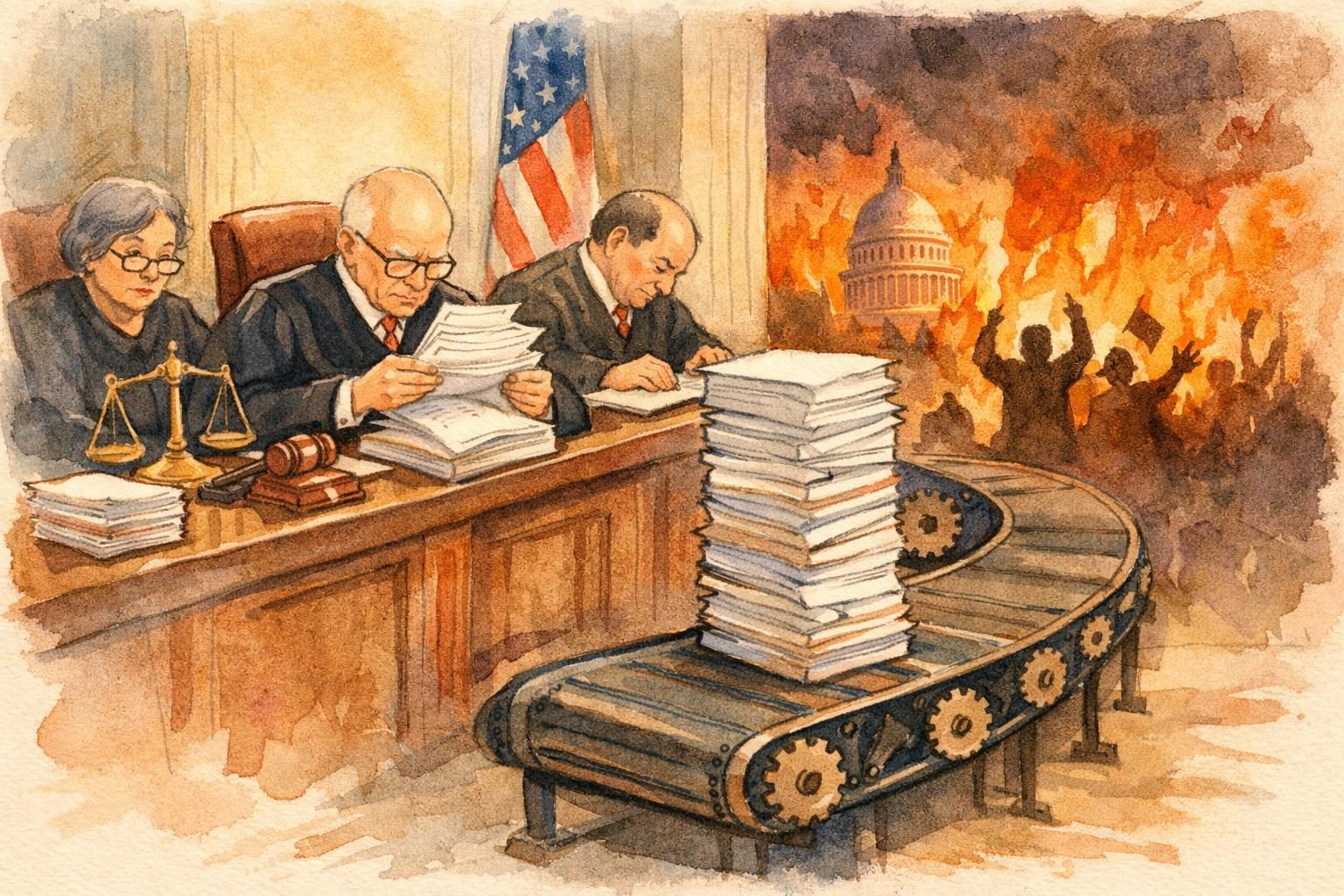
The Federal Circuit opened September 28, 2026, with another routine-but-important dump of orders and opinions, a reminder that the appellate machinery keeps turning no matter how noisy the rest of Washington becomes. The day’s posted materials included decisions in cases such as Angelly v. United States and Crider v. Collins, along with a new order in In Re Abdel-Karim. None of that is the sort of development that tends to command immediate public attention, but it is exactly the kind of courthouse business that can decide whether a veteran keeps pressing a benefits claim, whether a contractor gets another day in court, or whether an agency’s position survives one more round of review. On paper, this is just docket housekeeping. In practice, it can mean the difference between a dispute ending and a dispute dragging on for months or years longer.
That is why even a small batch of fresh appellate action deserves notice. The Federal Circuit sits in a specialized corner of the judiciary, but its work has consequences that reach well beyond the small circle of lawyers who live with patent disputes and government claims every day. It is one of the places where the federal administrative state meets concrete legal consequence, and where procedural rulings can quietly alter the trajectory of a case. A nonprecedential order may not reshape the law in a headline-grabbing way, yet it can still determine whether a filing survives, whether a dismissal stands, or whether a litigant gets another chance to argue the point. For claimants already frustrated by long waits and layered bureaucracy, that matters as much as the larger doctrine behind it. The courts may be acting in ordinary mode, but ordinary mode is often where the system’s real power is exercised.
The timing also underscores a broader truth about the federal courts: they keep producing decisions even when the political branches are absorbed in their own spectacle and dysfunction. That continuity is easy to overlook, but it is one of the few stabilizing features left in a government that often seems to reward noise over competence. The appellate process does not care whether the news cycle is dominated by scandal, intraparty warfare, or another round of public meltdown. Judges still review the record, clerks still process the paperwork, and litigants still wait for answers. In a sense, a docket update is the legal world’s version of a heartbeat monitor. It is not dramatic, but it tells you the institution is still alive and still making decisions that matter to real people.
There is also a practical reason to watch these postings closely. Federal appellate orders can ripple outward into agencies, contractors, veterans, and government lawyers who have to revise strategy after every new ruling. A single opinion can validate a lower tribunal, narrow a procedural path, or send a dispute back for another pass through the system. Even when the court does not produce a sweeping precedential opinion, the cumulative effect of its daily work is significant. It builds the record of how federal law is being applied in real time, and it gives outsiders a clearer view of which disputes are moving, which are stalling, and which are being quietly trimmed away. For now, the significance of the September 28 releases is straightforward: the Federal Circuit is still doing its job, the docket is still active, and the government-related cases that depend on these rulings are still moving through the pipeline whether anyone outside the courthouse is paying attention or not.
Comments
Threaded replies, voting, and reports are live. New users still go through screening on their first approved comments.
Log in to comment
No comments yet. Be the first reasonably on-topic person here.