
House and Senate move as Trump orders troops to protect ICE sites in Portland
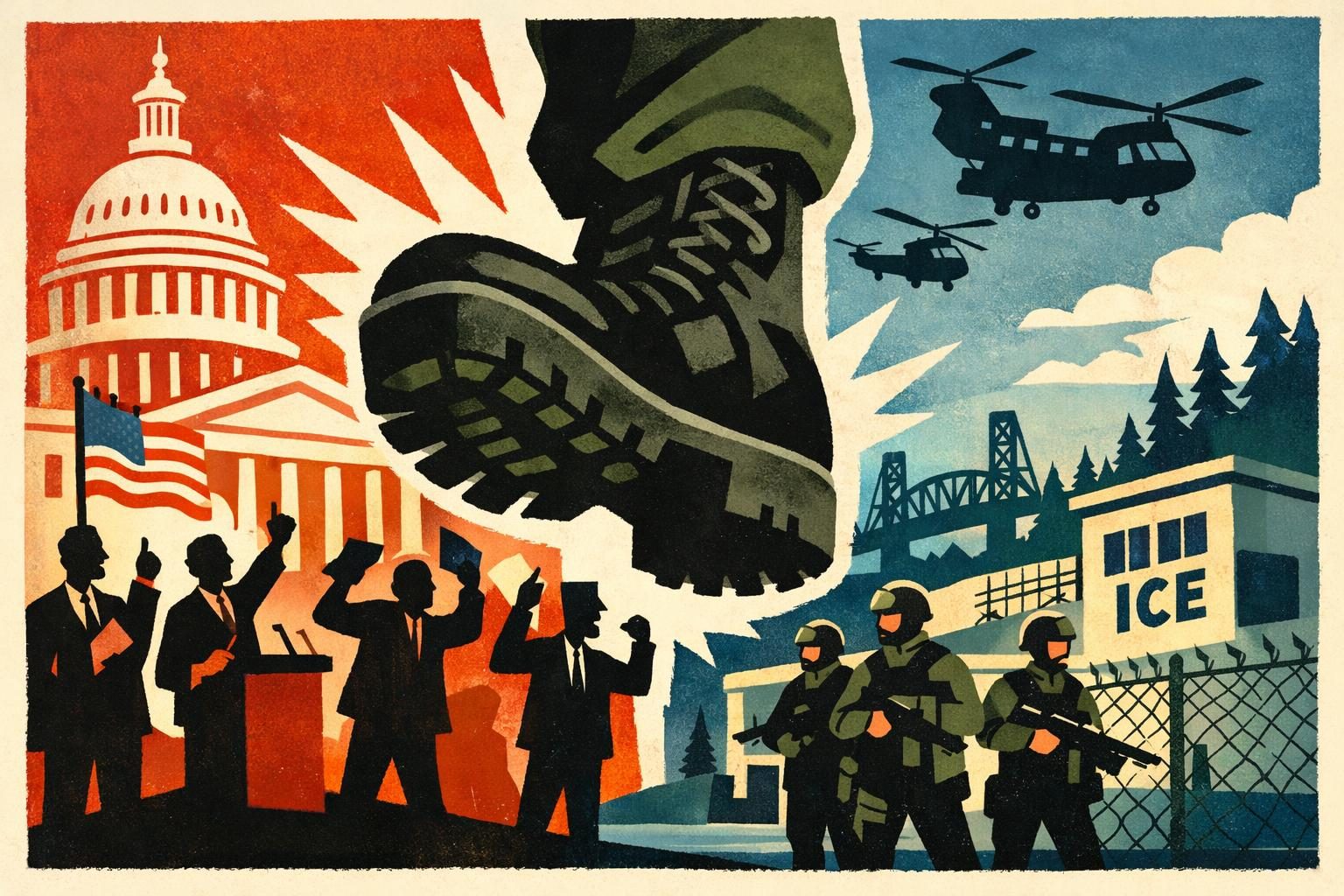
President Donald Trump’s decision on September 27 to direct military support for Immigration and Customs Enforcement sites in Portland turned a local enforcement confrontation into a national political problem almost overnight. The order, reflected in the official presidential record, was issued at the request of Homeland Security Secretary Kristi Noem and instructed the Secretary of War to provide the troops. By September 28, the issue had already begun moving through congressional business, with the House back in session and receiving messages from the Senate while the White House was still casting the action as a matter of ordinary public safety. That framing did not hold up for long. Putting troops into the middle of a domestic immigration dispute is not a neutral administrative step, and it immediately raises questions about how far the administration believes presidential power extends.
The practical effect of the move is less about Portland alone than about the signal it sends. The administration is treating a conflict over ICE facilities as a matter that can justify military involvement, which blurs the line between law enforcement support and political force projection. That distinction matters because once troops are used in a domestic setting, the issue no longer sits only inside immigration policy; it becomes a question of federalism, civil liberties, and the limits of executive authority. Oregon officials are already positioned to challenge the premise, and that is no surprise given how quickly these kinds of decisions invite court fights. Even if the White House insists the deployment is meant to protect property and personnel, the broader message is that local resistance is being recast as a security threat. That is a familiar and politically potent move, but it is also one that can deepen the conflict it claims to solve.
Congress is now pulled into the matter whether it wants to be or not. The timing matters because the House and Senate were both active on September 28, which means the order did not land as a distant policy announcement but as a live event while lawmakers were already conducting business. When the executive branch moves first and explains later, legislators are left reacting to a decision that has already changed the facts on the ground. That creates pressure not only on members who oppose the deployment, but also on those who may support stronger immigration enforcement in principle and still worry about the precedent. Once the federal government uses military resources in a domestic enforcement standoff, the question becomes who can restrain that choice and by what means. Congress has tools, but they are often slow, political, and contingent on whether enough members are willing to turn concern into action.
The White House is likely to argue that this is simply a public-safety measure, and supporters will almost certainly describe it as a show of strength. Critics, however, are already seeing something else: an effort to normalize military involvement in a domestic political fight and to turn immigration enforcement into a stage for executive force. That distinction is not cosmetic. A troop deployment may be justified as support for federal personnel, but it also risks appearing as intimidation, especially when the administration is already in open conflict with local and state officials. The legal questions are immediate, but so are the political ones, because the move feeds a larger pattern in which the White House answers resistance with escalation. If the goal was to calm a volatile situation, sending troops into the picture is an unusually aggressive way to do it. If the goal was to make a point about presidential authority, the administration appears to have chosen a very expensive and very public method of making it.
Comments
Threaded replies, voting, and reports are live. New users still go through screening on their first approved comments.
Log in to comment
No comments yet. Be the first reasonably on-topic person here.