
Congress gets a formal notice on military action against Iran
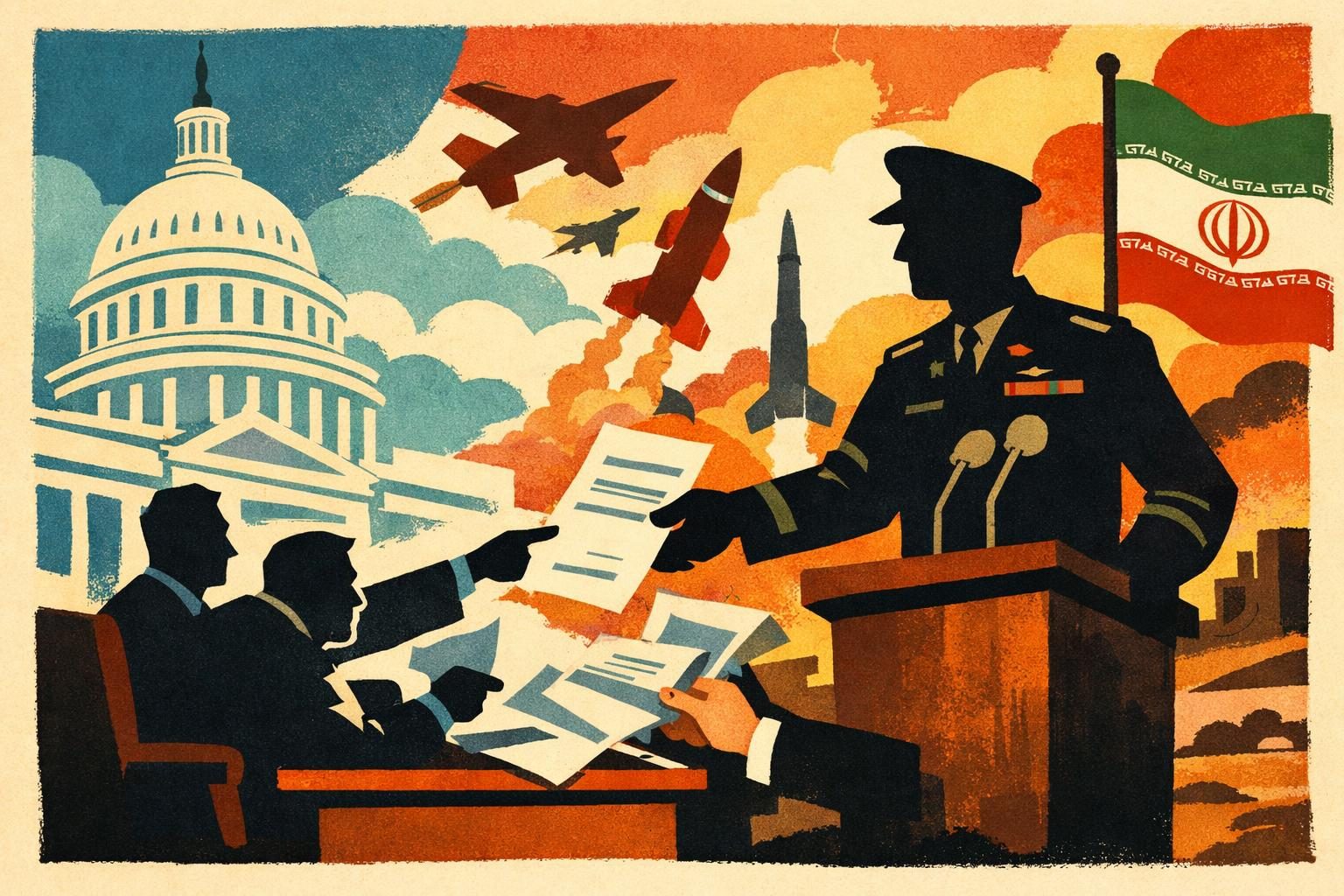
The House record for Sept. 4 shows the administration formally notifying Congress about military action that began on Sept. 1 against Iran, turning a fast-moving national security episode into a very ordinary-looking but deeply consequential paper trail. That matters because, in Washington, the paper trail is often where the real fight begins. A notification of this kind does not answer every legal question by itself, but it does put the executive branch’s account into the official record and forces lawmakers to decide whether they are satisfied, skeptical, or furious. For the moment, the most important fact is simple: the administration has now acknowledged in the congressional record that military action was commenced. That makes the constitutional stakes harder to wave away as a theoretical argument about future contingencies.
The notification also revives a familiar and unresolved battle over war powers, which is to say the tug-of-war between presidential initiative and congressional authority that never really ends in Washington. Presidents of both parties have long argued that urgent military decisions sometimes have to be made quickly, with Congress informed afterward, while lawmakers regularly insist that consultation is not the same thing as authorization. That tension is not new, but each fresh use of force brings it back into focus with just enough force to make everyone rediscover the Constitution. The administration can argue that the action was necessary, lawful, and consistent with its view of executive authority, but that position is only the opening move in a much longer fight. Once a formal notice lands, the question stops being whether something happened and becomes whether the branch that did it had the right to act on its own.
For members of Congress who think the executive branch has been sidelining them, the notice provides a concrete document to point to rather than a vague complaint about being left out of the loop. That distinction matters because war powers debates can otherwise dissolve into process theater, where officials exchange sweeping statements about national security while avoiding the harder question of who signed off on what. A formal notice gives critics a place to start pressing for hearings, briefings, legal opinions, and any other records that might clarify how the administration is justifying the operation. It also gives them political leverage, because lawmakers do not need to prove that the action was illegal in order to demand a public explanation of why it was undertaken and why Congress was not asked to play a larger role in advance. In practical terms, the notice creates a new moment of accountability, even if no one in the executive branch is eager to call it that.
The larger significance is that this is exactly the sort of issue that can go from technical to combustible once the first round of questions gets asked in public. War powers disputes rarely stay contained to one notification letter, because the legal argument quickly expands into a broader contest over precedent, trust, and the scope of presidential power. If lawmakers decide to push, they can use the notice to demand hearings, challenge the administration’s interpretation of its authority, and force other officials to defend the operation in detail. If they do not push, the episode risks becoming another example of Congress objecting in principle while accepting the practical reality after the fact. Either way, the record now clearly ties the administration to the Sept. 1 action and makes the separation-of-powers conflict harder to avoid. The notification does not resolve the issue, but it ensures the issue is no longer abstract, and in Washington that is often how a dormant dispute becomes the next constitutional headache.
Comments
Threaded replies, voting, and reports are live. New users still go through screening on their first approved comments.
Log in to comment
No comments yet. Be the first reasonably on-topic person here.